

By Jessica Wehner & Eduard Usov · Originally published on nghm.hypotheses.org
The monthly newsletter of the Working Group on Contemporary History and Historical Migration Research at the University of Osnabrück
By Eduard Usov & Jessica Wehner
After a short summer break, the Tracker editorial team returns with an August–September double issue of the NGHM Newsletter.
Rarely have so many dimensions of historical work converged as they did in August and September: research trips and workshop travel from Cologne, London, and Vienna to Oregon; the communication of research findings in the form of essays on the blog or new books; direct exchange with colleagues at conferences; and the beginning of new historical work in the shape of a new collaborative project. What defined these months above all was the tension between looking back — at our research themes of conflict, flight, expulsion, and suppressed memory — and looking forward: toward new methods, new collaborations, new interpretations.
Our August and September double issue of the newsletter reports on the team’s wide-ranging activities.
Insights
At the beginning of August, Prof. Dr. Christoph Rass set out on a research trip to Oregon, which took him to Eugene, Corvallis, Salem, and Portland for three weeks. The trip was part of Sub-project A3 of the Collaborative Research Centre (SFB) 1604 “Production of Migration” and pursued a precise research question: What became of the figure of the ‘guest worker’ in the Willamette Valley — and how did those affected respond to this term, imported from the German ‘Gastarbeiter’?
Of particular relevance were the PCUN Records at the University of Oregon — the archive of Pineros y Campesinos Unidos del Noroeste, the farmworkers’ union based in Woodburn. The collection came into being through an arrangement effort in 1999, an acquisition of approximately 240 linear feet of material in 2010, and several years of processing work that ultimately led to the opening of the collection — today comprising around 80 linear feet — in 2014. For a project on the production of migration categories, this very process of the collection’s formation was itself already part of the findings. Individual sources stood out: for instance, an undated typescript from 1981 showed how the Oregon Coalition Against the Reagan Immigration and Refugee Plan adopted the new term ‘guest worker’ in quotation marks and immediately equated it with the Bracero Program of 1942 to 1964 — not through argumentation, but through punctuation. Sixteen years later, in 1997, the same equation appeared on picket signs at a demonstration outside the Jackson County Justice Building in Medford: “GUEST Worker IS Legalized Slavery” and “NO BRACERO Program HR 2377 IS RACIST”. Those affected made the political attempt at categorization publicly visible.
The archival trip thus yielded initial substantiated findings for a larger corpus: ‘Bracero’ appeared in 166 records, ‘guest worker’ in 142, ‘campesino’ in 138 — and ‘trabajadores huéspedes’ in only four. The interpretation of this distribution remains to be undertaken and is likely to provide further insights into the ways in which an exported figure encounters organized resistance.
Work then continued at the Special Collections and Archives Research Center at Oregon State University in Corvallis. There, the focus was on the records of the Oregon Extension Service — the agricultural advisory service that organized the recruitment of 15,136 Mexican workers under the Bracero Program between 1942 and 1947. The collection spans 137 cubic feet — approximately forty linear shelf meters — and nowhere within it is the program referred to by name. This was simultaneously the point of departure and the result of the week: terms such as “bracero”, “Mexican”, or “immigrant” do not appear in the finding aid. Anyone wishing to locate this material must search using the language of the bureaucracy — with “farm labor” and its variants.
An important interlocutor was Natalia Fernández, curator of the Oregon Multicultural Archives at OSU. She reflected openly on the power dimension of archival decisions: whoever collects determines what is preserved. The digital photograph collection relating to the Braceros in Oregon, for instance, is an artificial, curatorially constructed collection — assembled from five separate holdings, whose images were originally promotional material for the program. What is most easily visible today is thus partly a result of the campaign that brought these men to the country.
A telling contrast was provided by comparison with the PCUN union records from Eugene, which Rass had examined the previous week. There, terms such as “guest worker”, “racist”, and “slavery” appeared — along with real individuals, not abstract units of labor. The differing grammar of the two collections is not a research problem but a finding: the language of migration research and the language of administration diverge — and it is precisely this gap that constitutes the actual subject of the project within the framework of Collaborative Research Centre 1604 in Osnabrück.
The third week of the archival trip yielded three pointed answers to the central research question: who names labor migration, with what terms, and what are the consequences? The stops in Salem, Woodburn, and Portland revealed different perspectives on the production of migration categories — a core theme of the Collaborative Research Centre 1604 “Production of Migration” at the University of Osnabrück.
At the Oregon State Archives in Salem, the language of administration and law predominated. In files from the offices of Governors Atiyeh and Goldschmidt, migrants — predominantly people from Mexico — were consistently described as “temporary alien workers”. Particularly illuminating was a memo from legal adviser Bob Oliver dating from 1982, produced in the context of the failed Simpson-Mazzoli bill: the governor’s office’s primary concern was not the living or working conditions of those affected, but rather the fiscal implications of a potential legalization for the state budget. A further finding showed that the state labor administration had itself documented its failure to reach the Spanish-speaking population.
In Woodburn, Christoph Rass met with Larry Kleinman and Ramón Ramírez, two founding members of the farmworkers’ union PCUN. The conversation in Risberg Hall — a hall named after Kleinman’s grandparents — made clear why there are archival collections in which migrants themselves are given a voice at all: the early activist Cipriano Ferrel had insisted that the movement was making history and therefore needed its own archive.
The weeks thus demonstrated vividly that migration categories emerge simultaneously on multiple levels — in administrative language, in the balancing of political interests, in civil society resistance, and within the communities themselves. Those who read these layers together understand why terms such as “guest worker” or “bracero” are never neutral — and why their history continues to reverberate into the present.
There and Back Again from Oregon, Christoph Rass continued on to Vienna: At ICDAR 2026, the twentieth edition of the International Conference on Document Analysis and Recognition, Christoph Rass delivered the second of three keynotes on 1 September 2026 in Vienna. Under the title “From Archives to Algorithms and Back: What Historians Need from Document Understanding”, a historian stepped before a plenary of computer scientists — and placed not historical findings at the centre, but the question of what document understanding fundamentally means when the subject matter is twentieth-century administrative records.
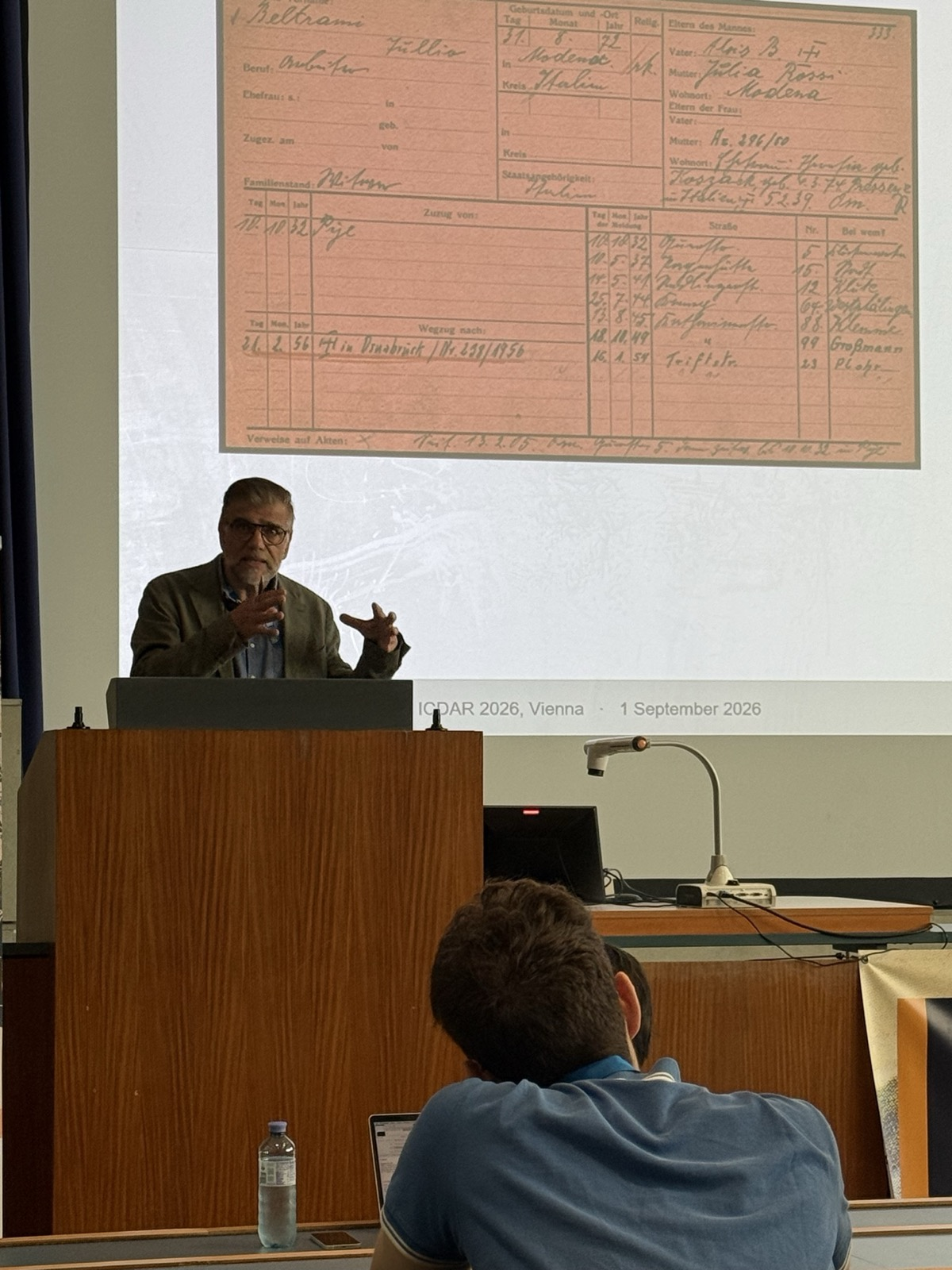
The contribution was embedded in a cooperation between the NGHM and the Pattern Recognition Group at TU Dortmund under Gernot A. Fink that had grown since 2018. The starting point was the machine-based indexing of historical card files at the Niedersächsisches Landesarchiv [Lower Saxony State Archive] — among them the Osnabrück Gestapo registry comprising approximately 50,000 cards and the foreign nationals registration card index comprising approximately 80,000 cards. What would previously have required years could be accomplished in months with the aid of handwriting recognition. The shift to open, non-proprietary solutions was not a matter of technical preference but of research-policy necessity: historical data as cultural heritage must not disappear behind commercial subscription barriers.
The keynote focused on three aspects: how administrative categories come into being and what happens to them on the way to becoming machine-readable data; the three sites at which tools of document analysis take effect in historical research; and, finally, a concrete proposal for how a system can distinguish between the read value and the officially produced category that this value represents. The latter marks the decisive difference between the computer science and the historical concept of category: whereas document analysis asks for a ground truth, critical historiography is interested in the process of production itself — the decision that an authority made about a person and reproduced over decades.
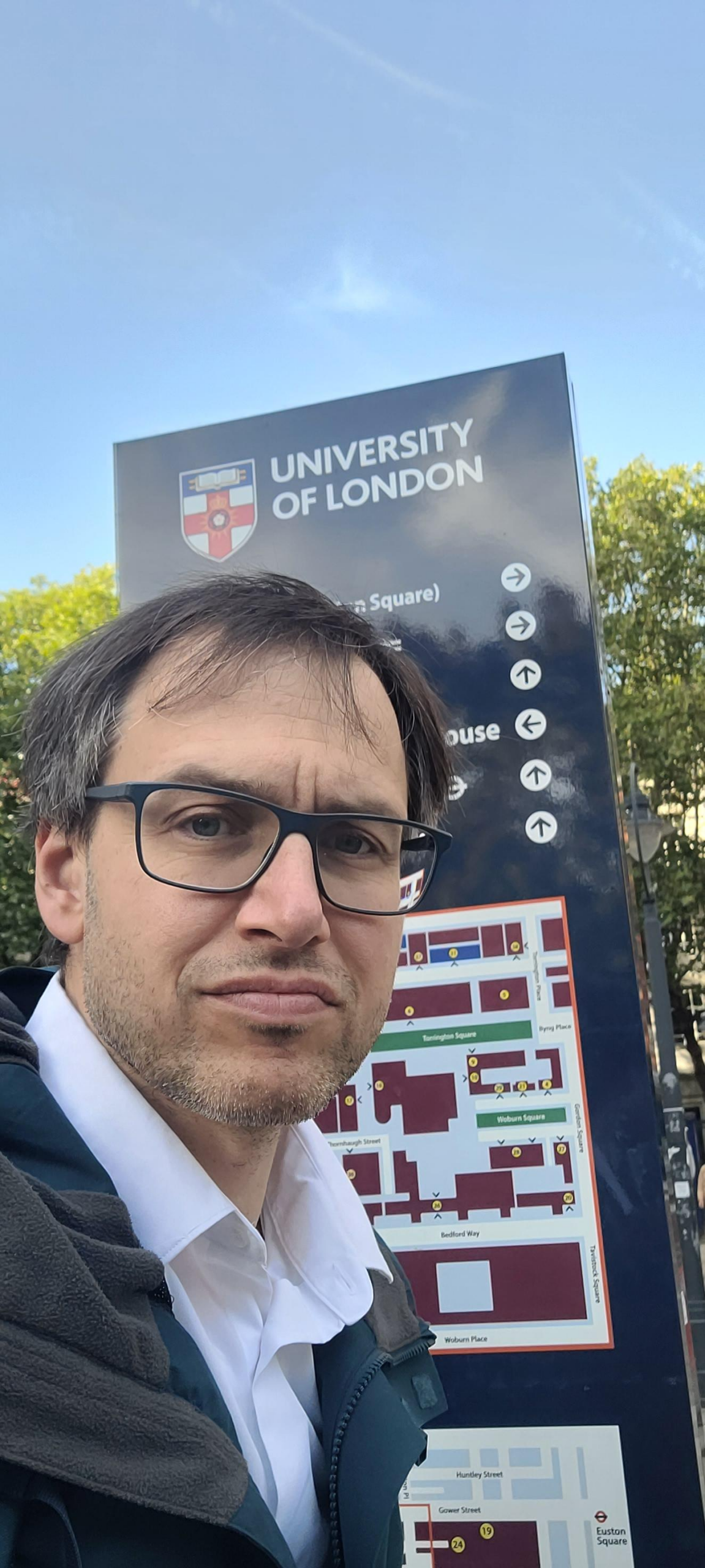
Sebastian Musch, meanwhile, was drawn to London: on 17 September he delivered a paper there at the conference Refugee Academics and their Networks, organised by the Research Centre for German & Austrian Exile Studies (University of London) and the Gesellschaft für Exilforschung e. V. [Society for Exile Studies], entitled “The Republic of Reference Letters: Community and Networking among German Refugee Classicists in the U.S.” Already in 2024, Sebastian Musch had presented on this exile biography at Harvard University as part of the event “Refugees (Not) Welcome: European Exile Scholars at Harvard in the 1930s and 1940s” and thus continues the engagement with Werner Jaeger begun at that time.
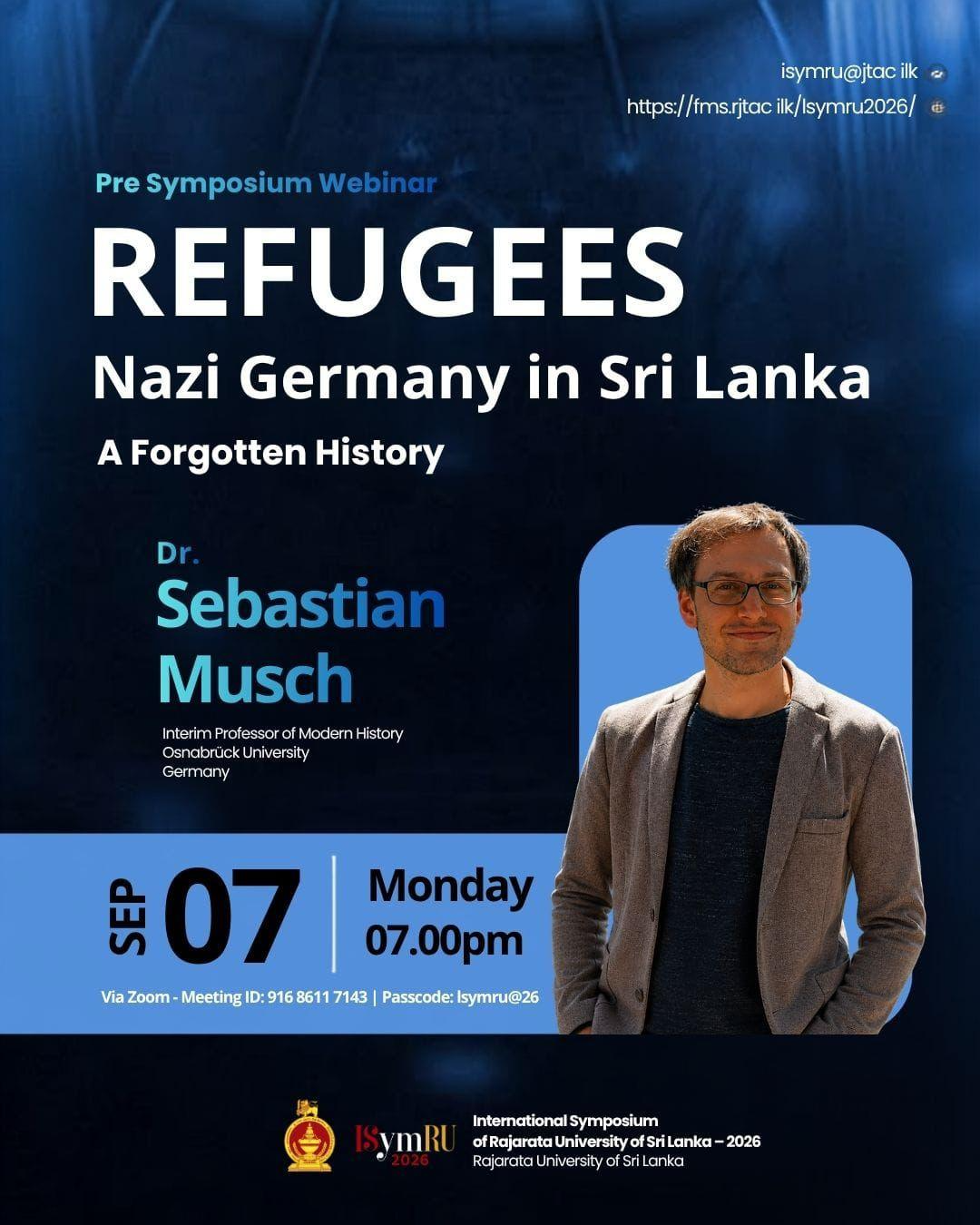
Additionally, on 7 September Sebastian Musch conducted a webinar on the topic “Refugees from Nazi Germany in British Ceylon. A Forgotten History.” This continues the collaboration with Rajarata University. As early as October 2024, Manoj Samarathunga from the Rajarata University of Sri Lanka had been a guest at our institute and presented his research on the topic Transactional Intimacy and Migration Aspirations: Analyzing the Relationships Between Sri Lankan Beach Boys and Foreign Tourists in the “IMIS-Talks” series. The flight to South Asia, in particular to British Ceylon (Sri Lanka since 1948), during the period of National Socialist persecution has been a focus of Sebastian Musch’s research for several years. It was the subject of a paper at the University of Cambridge in February 2025 as well as his essay “Jewish Migration from Germany to British Ceylon in the Context of the Second World War: Orientalism and the Place of Ideas in the Migration Regime”. We are therefore pleased that we have been able to further develop our scholarly collaboration with colleagues from Sri Lanka.
In Osnabrück itself, too, scholarly exchange took centre stage with a conference:
On 24 and 25 September, the closing conference of the project “Die ‚Emslandlager’ als Konfliktlandschaft in Transformation” [“The ‘Emsland Camps’ as a Conflict Landscape in Transformation”] took place. The focus was on the digital resources developed within the project and on the question of how the historical sites of the former “Emsland Camps” and their transformation can be digitally documented and made visible. In two panels, the “Emsland Camps” as a conflict landscape and the possibilities and challenges of digitality and participation were discussed. In addition, Imke Selle presented key findings from her dissertation. Central to this were the practices of students who, as part of the project, worked on the digital documentation of the former camp sites.
The conference brought together perspectives from historical scholarship, history education, and memorial site work. At a public evening event, the project results were presented during a poster walk and at media stations.
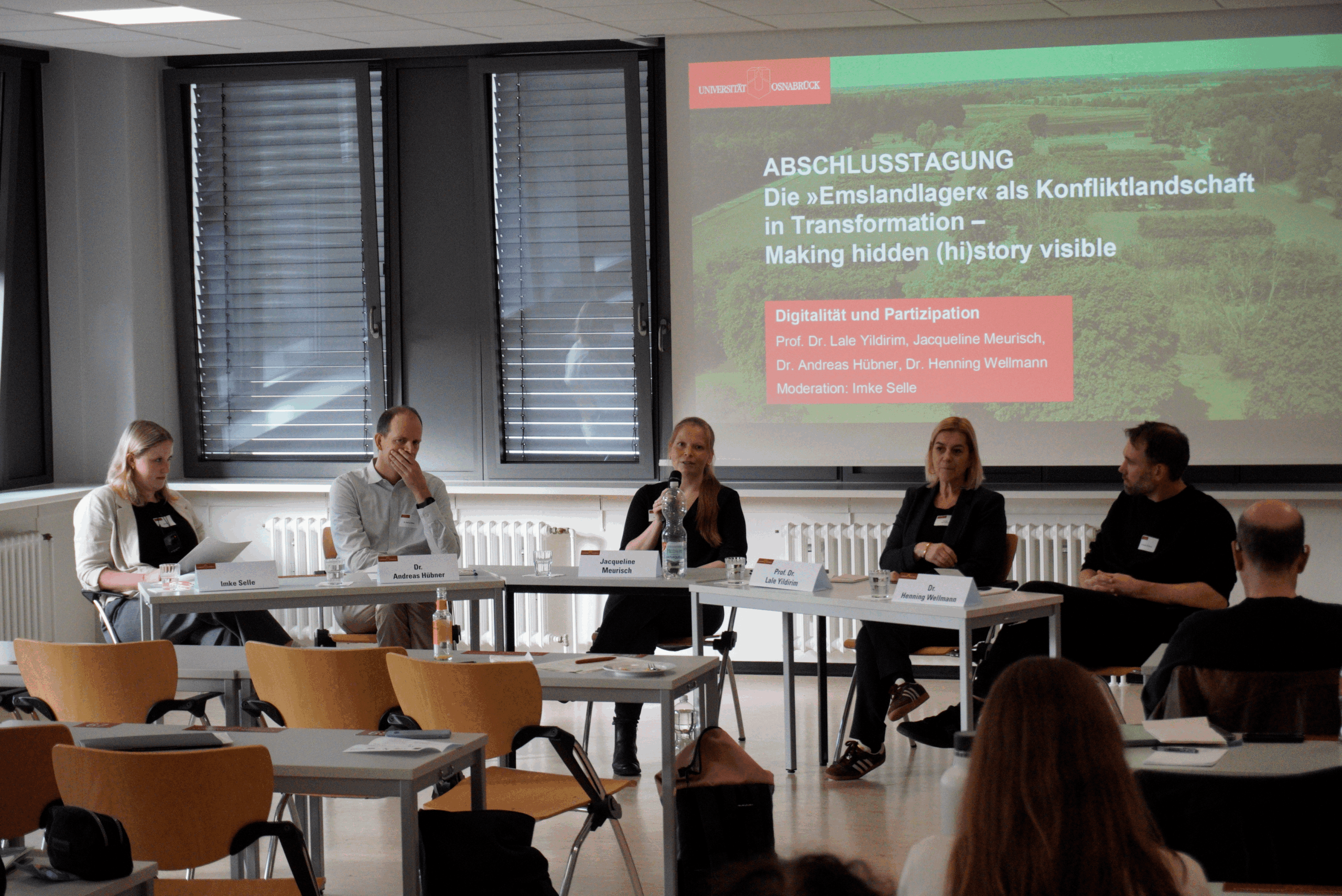
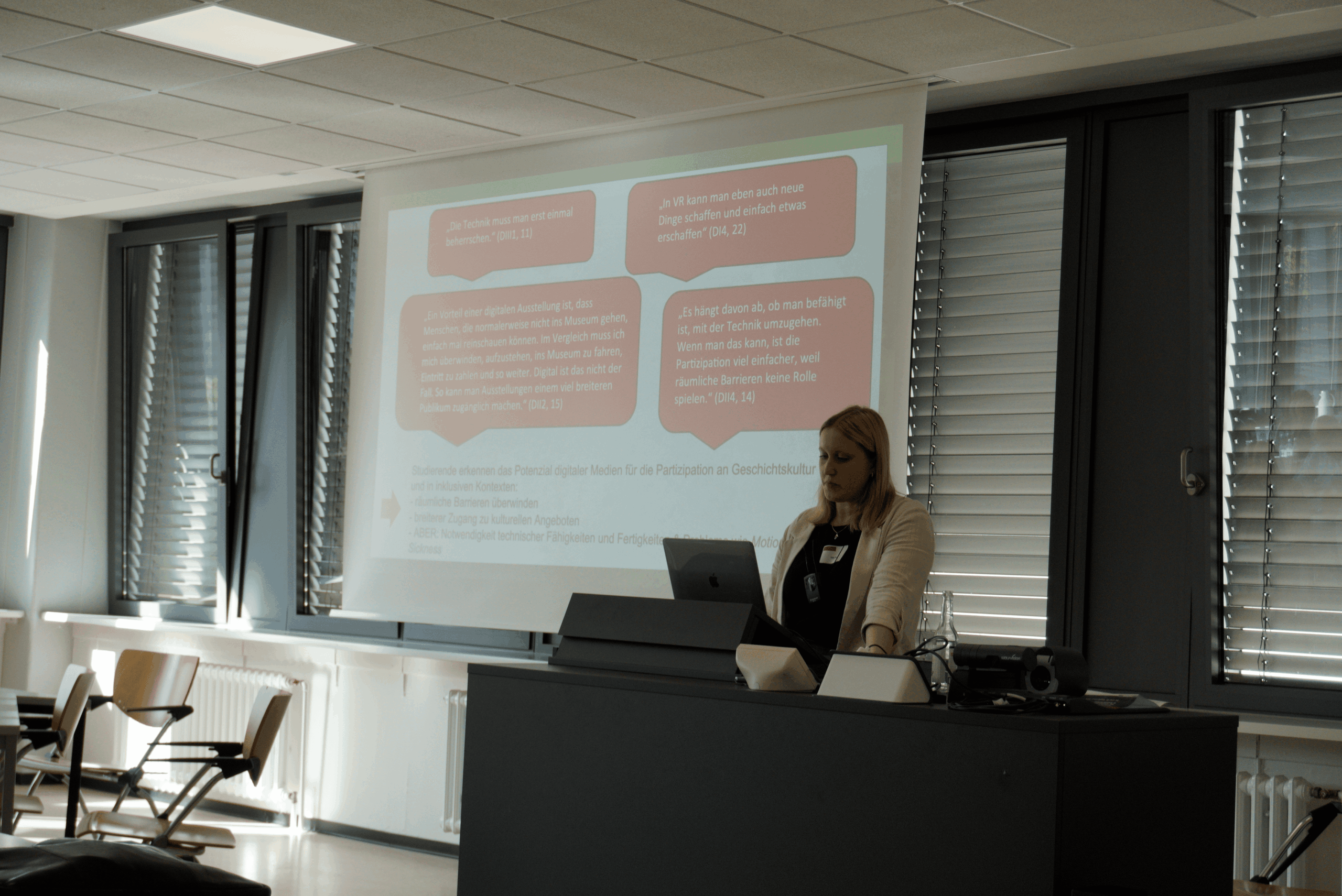
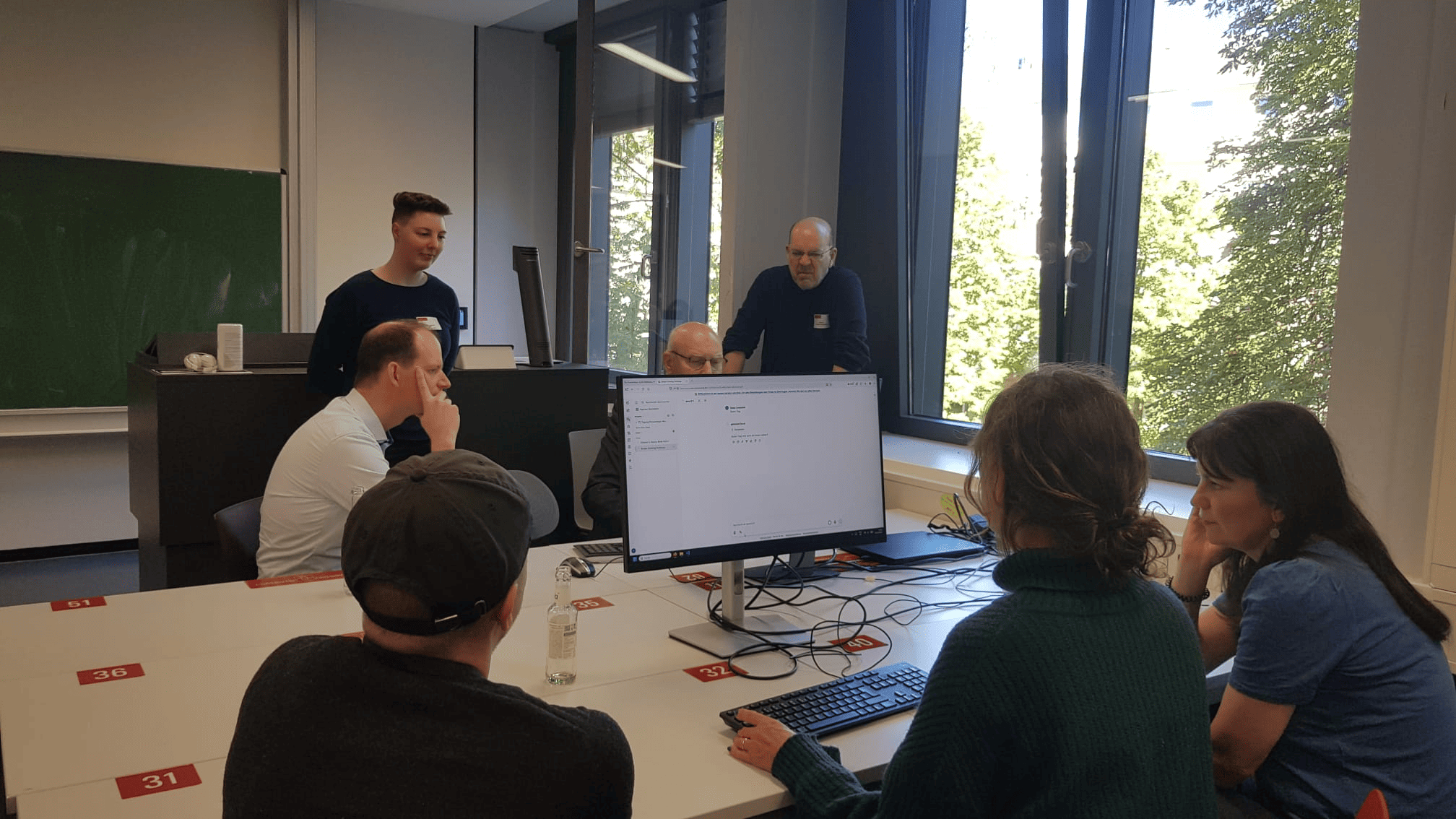
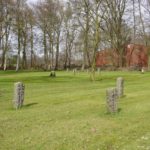
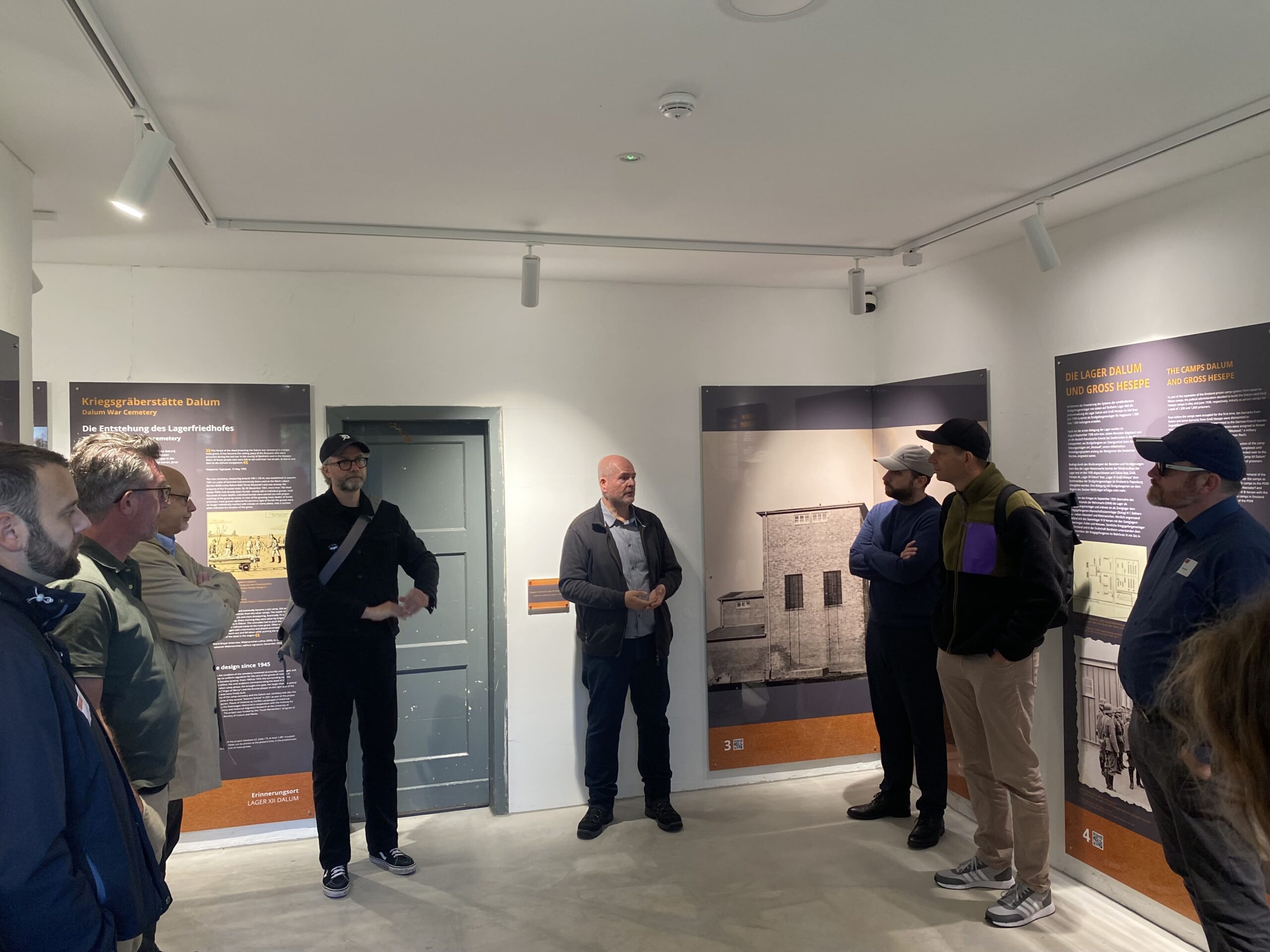
On the second day, an excursion was led to the memorial site of the Dalum Camp and its camp cemetery. In addition to engaging with the historical site, the focus also included practical questions of digital documentation. A subsequent workshop addressed the further processing of digitized materials into 360° virtual tours. A detailed report on the conference will follow shortly. The team extends its particular thanks to the support of our student assistants – Gesa Landwehr, Marlene Schurig, Hannah Foth, Johannes Pufahl, and Lennart Blömer – for the successful organization of the conference.
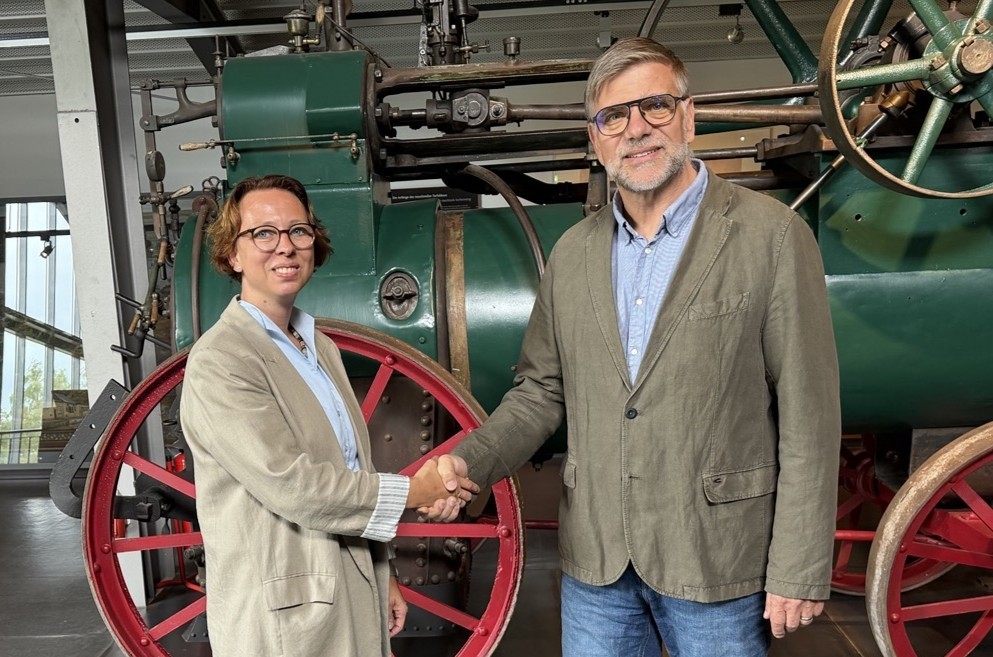
Where one project ends, a new one invariably begins for Team NGHM: A new research project of the Chair for Contemporary History and Historical Migration Research at the University of Osnabrück examines how societies can depart from a development path once taken – and selects for this purpose a location that is as concrete as it is illuminating: the Bourtange Moor in the Emsland region. In August 2026, the Lower Saxony Ministry for Science and Culture approved, within the framework of the Pro*Niedersachsen programme, the project »Moorlandschaften als Interventionsräume« [Peatland Landscapes as Spaces of Intervention], which over the coming three years will investigate the socio-ecological transformation of this landscape between 1945 and 2025. The cooperation partner is the Emsland Moormuseum in Geeste; work commenced in October 2026.
The historical point of departure was as straightforward as it was provocative: what had been regarded for a century as the civilizational development of »wasteland« – drainage, peat extraction, cultivation – is today considered the destruction of a central climate resource. Peatlands cover only three to four percent of the global land surface, yet bind approximately one third of the carbon stored in soils. During the twentieth century, the Bourtange Moor had undergone two opposing transformations: first a phase of massive development, which reached its peak with the Emsland Plan after 1950, then, from the 1970s onward, a counter-movement driven by the environmental movement, conservation policy, and the climate debate. Both movements were state-planned, scientifically legitimized – and yet historically in need of explanation.
Theoretically, the project combines three approaches: the concept of the »intervention landscape«, hitherto applied primarily to authoritarian regimes and here transferred for the first time to democratic planning processes; the approach of the Interdisciplinary Working Group Conflict Landscapes, which interweaves the material and discursive dimensions of a landscape; and a model of path dependency, which explains why development paths persist even when their preconditions have long since ceased to exist. The comparison with the Netherlands, where the rewilding of the Bargerveen began as early as the late 1960s – roughly two decades earlier than in Germany – offers a particularly sharp analytical lens.
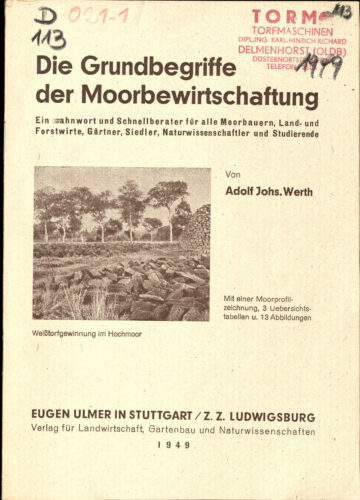
Empirically, the project draws on the approximately 18,500 objects comprising the collection of the Emsland Moormuseum, on archival holdings from the Emsland District Archive, the Lower Saxony State Archive, and the Dutch Drents Archief, as well as on interviews with contemporary witnesses. The analysis follows three interrelated methodological approaches: discourse analysis, network and collective biography analysis, and GIS-supported land-use reconstruction. On the museum’s side, Dr. Tanja Hasselberg, who has served as director of the Emsland Moormuseum since June 2025, is responsible for the cooperation; in the coming winter semester she will also take on a teaching appointment at the Historical Seminar of the University of Osnabrück.
Whether conditions can be derived from the Emsland under which democratic societies are genuinely able to abandon established paths – this question extends far beyond regional history and renders the project one of considerable contemporary relevance.
History@SFB
On 28 July, Christoph Rass, Annika Heyen, and Leonie Stoll travelled to Cologne to record podcast episodes for the second season of »Production Site«, the podcast of the Collaborative Research Centre 1604 »Production of Migration«. The episode in production carries the working title »Die Place Changer« [The Place Changers] and was produced in cooperation with the association 180 Grad Wende – an initiative that has been working since 2012 with young people from marginalized communities in the Cologne districts of Kalk and Mülheim.

The episode’s title was to be taken literally: “Place” referred both to a location and to the social position one occupies. Those who change both usually do so in a single movement — and this was precisely the guiding question of the day. Rather than research explaining practice, practice was asked what it knows about migration that a research consortium does not.
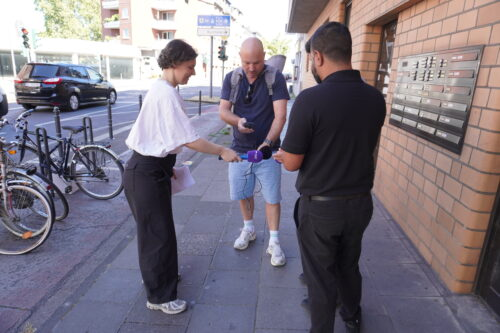
The recording day was divided into two parts. In the first part, Leonie Stoll, a research associate in the sub-project Reflexive Migration Research in the Museum, was guided through the neighborhood by Alparslan Korkmaz and Samir Abrar. Kalk revealed itself as a place full of contradictions: a vibrant, open district in which, at the same time, around one third of children and young people are growing up in poverty — the highest figure of all nine Cologne city districts. Apprenticeship places and prospects were lacking, and surveillance cameras on the main street generated a sense of insecurity. The association counters this with needs-oriented, low-threshold counseling, whose impact is reflected in inconspicuous signs: clients recommend the initiative to others, become active themselves, or return to share their successes.
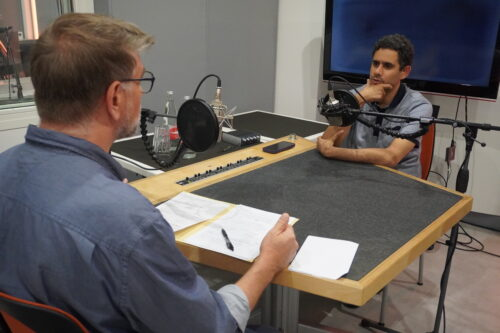
In the second part, Christoph Rass, who leads the sub-project Ihr seid Gastarbeiterkinder [You Are Guest Worker Children] together with colleagues, spoke at the Sounds Fresh studio in Cologne with Mimoun Berrissoun, the founder and director of the association. Berrissoun identified a structural contradiction: the association’s relationship-building work requires duration and trust that develops over years in one place — yet its funding comes through time-limited grants that must be repeatedly reapplied for. A rethinking of the funding system, Berrissoun argued, is a prerequisite for more effective work.
Sound for the recording day was provided by Matthias Milberg of the Bielefeld Podcastfabrik, while Kim Aaliyah Gerlach from VirtuOS at the University of Osnabrück handled the video documentation, which is set to feed into a short film about the transfer project. The finished episode is planned for the second series of “Production Site” and promises to call the very concept of “migration” into question — an invitation to discover the first series now.
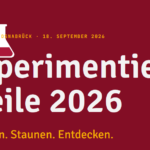
On 18 September, the Chair of Chemistry Education invited interested residents of Osnabrück to the Experimentiermeile 2026 [Experimentation Mile 2026] at the Ledenhof. Alongside numerous projects from the natural sciences, the project “FuturMig — Wissenschaftsraum ‘Zukünfte der Migration'” [FuturMig — Research Space ‘Futures of Migration’], based at IMIS, and the Transfer Project of the Collaborative Research Centre 1604 “Production of Migration” were also represented, offering visitors insights into the work of the humanities and social sciences.
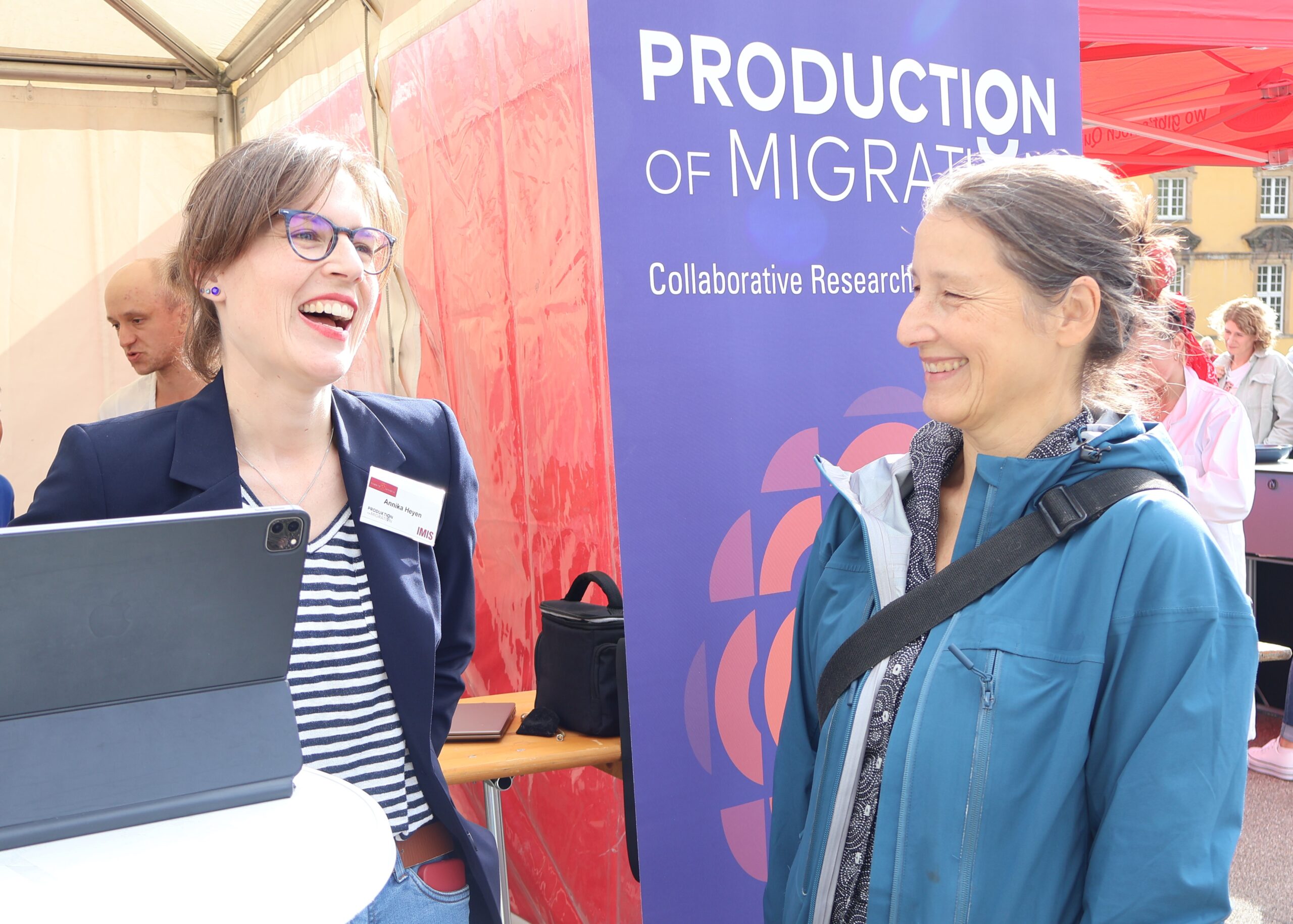
The transfer project “Reflexive Migration Research in the Museum” — specifically Annika Heyen, Tim Ott and Johannes Pfahl — brought their VR headsets along and invited visitors to the Experimentiermeile to take part in the “Changing Places” experiment. In this experiment, participants are shown digital versions of the Osnabrück Peace Hall in virtual reality. The experiment investigates how the perception and identification potential of historically charged places change when they look different from usual.
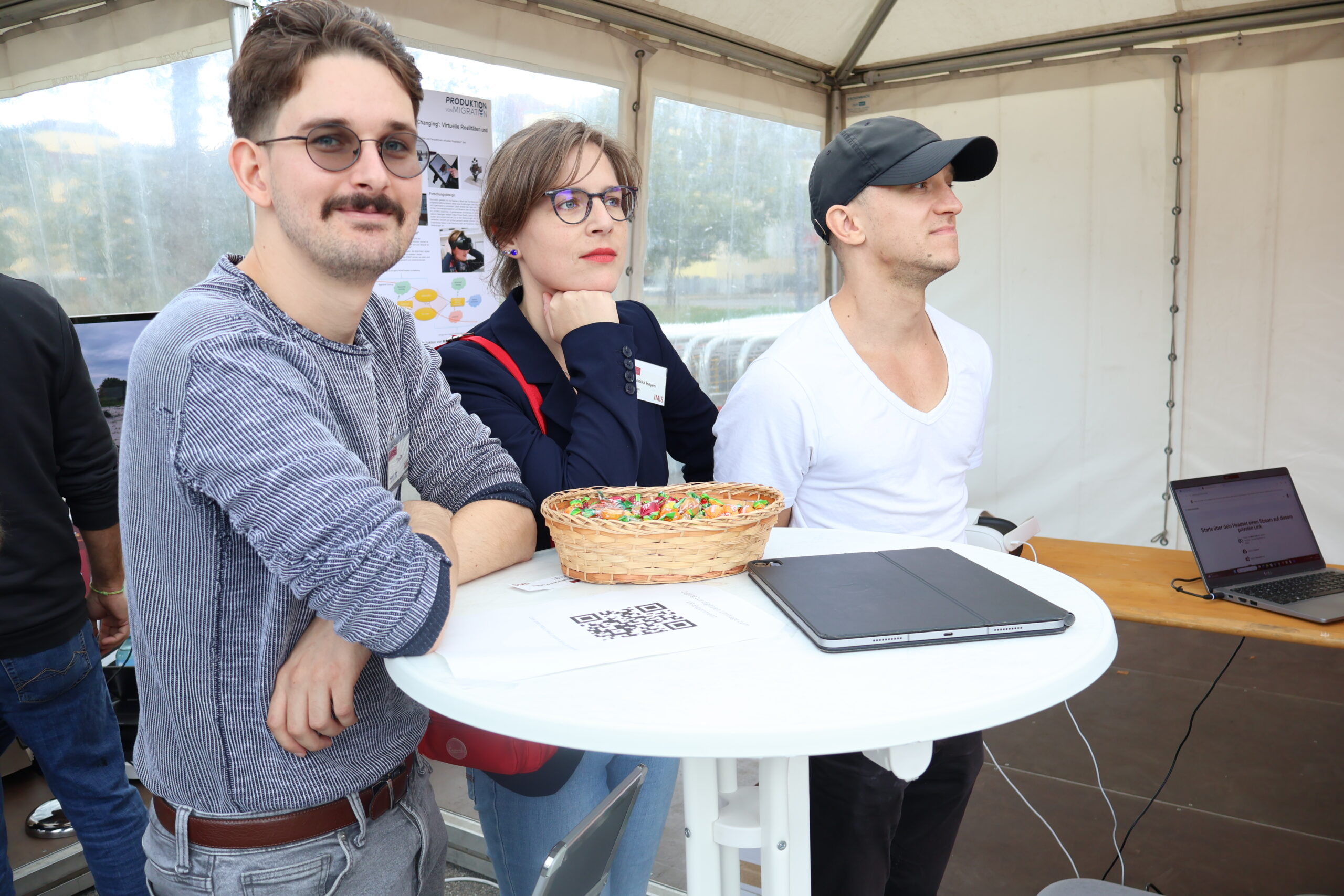
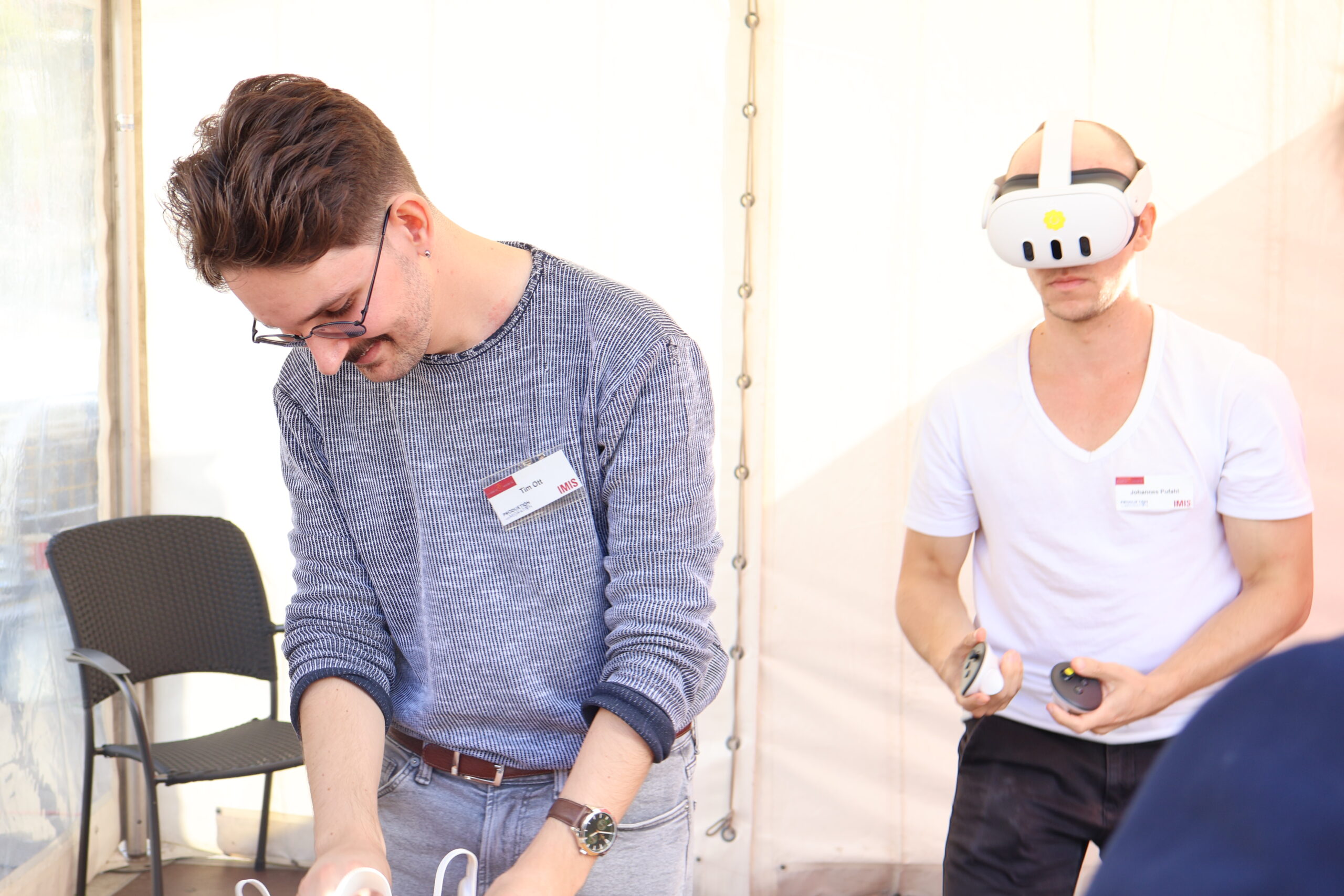
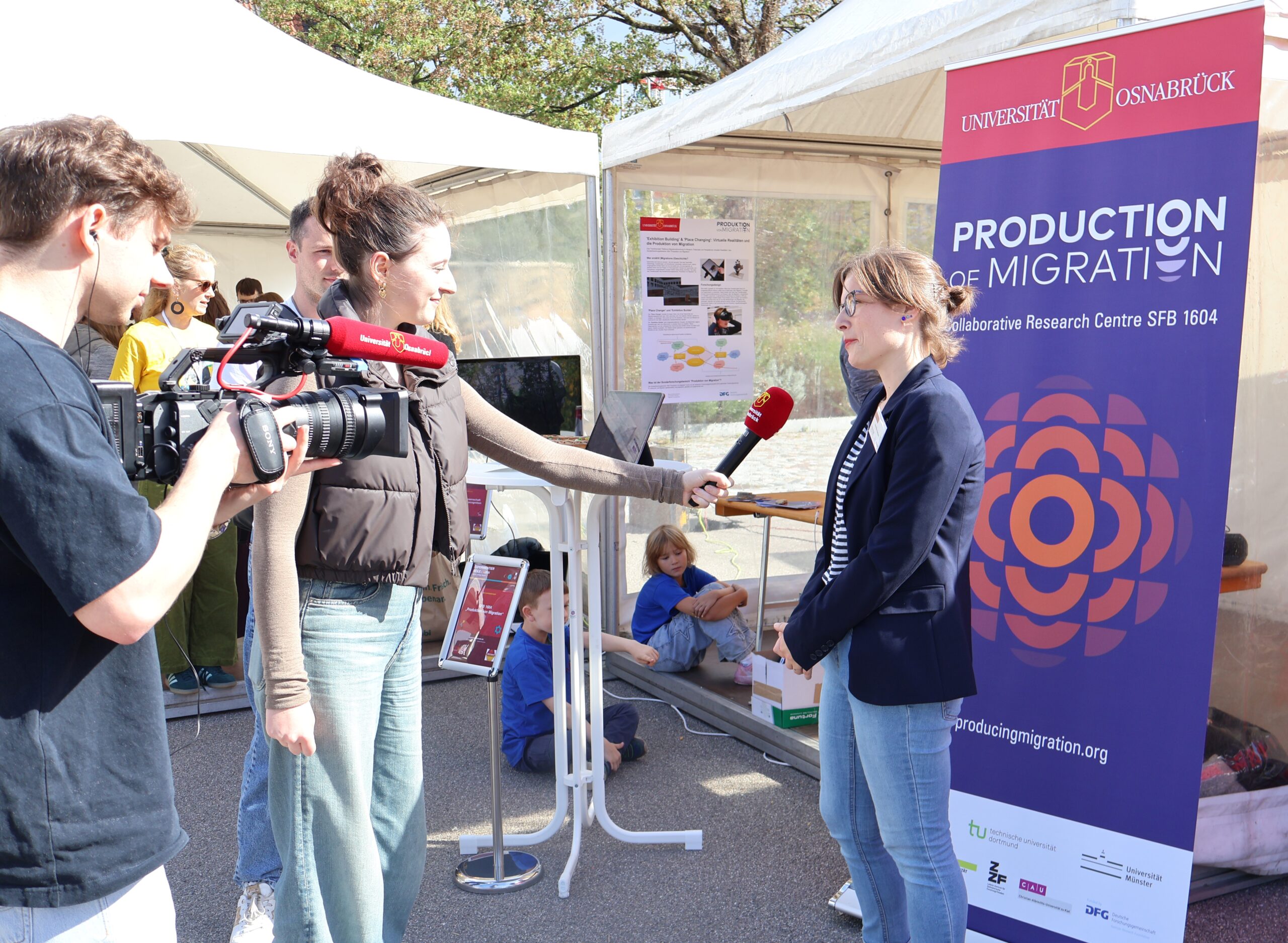
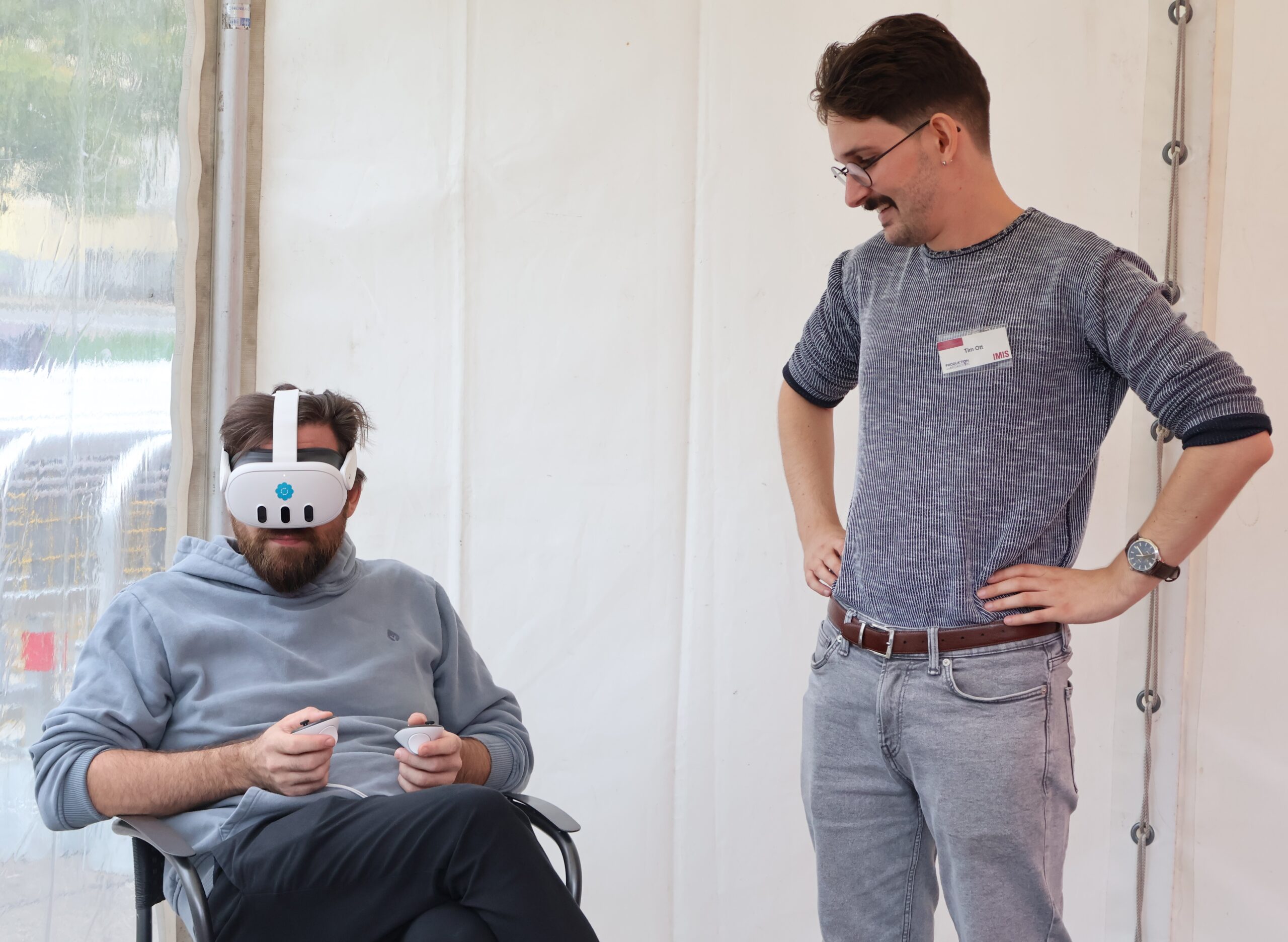
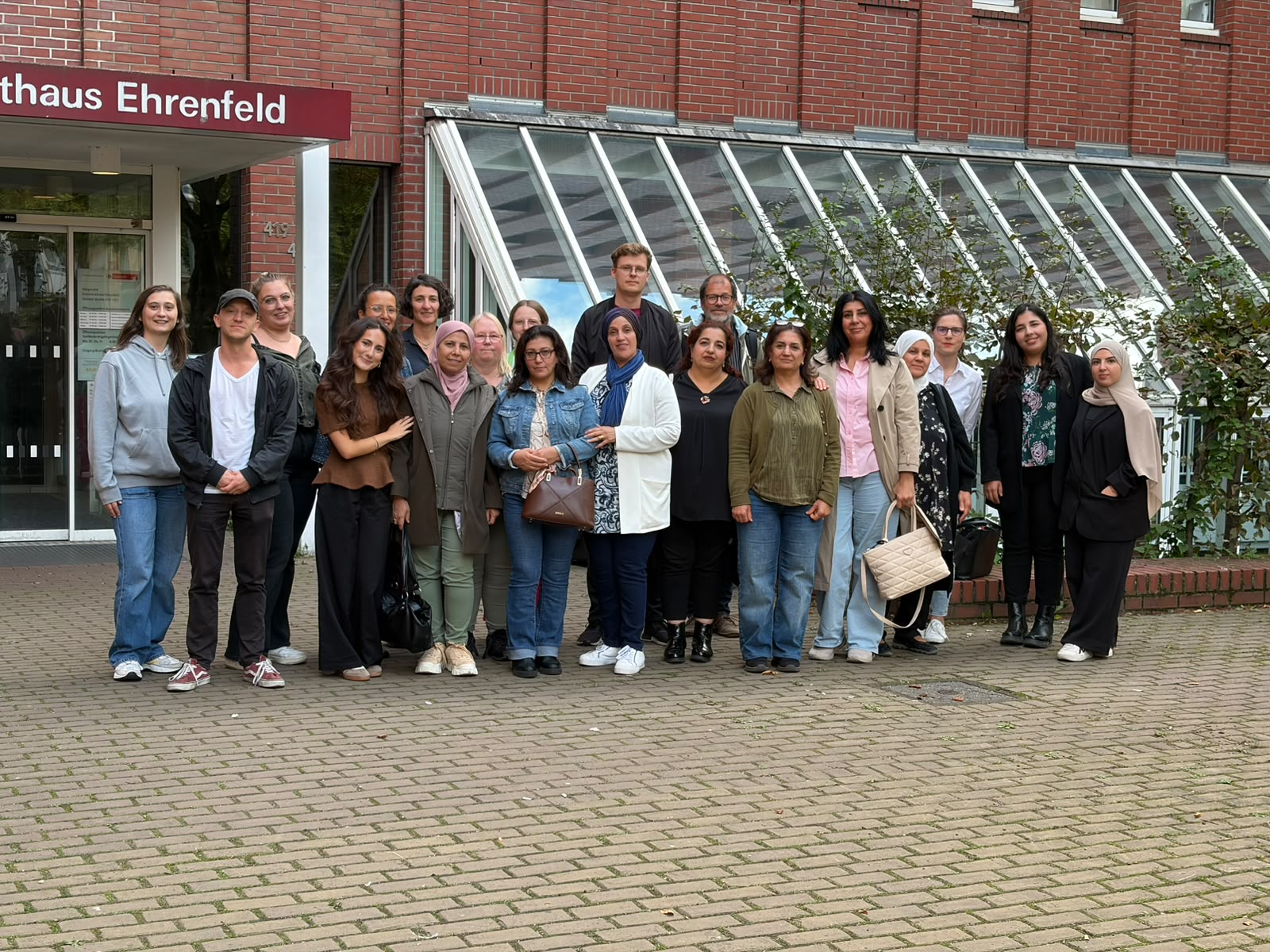
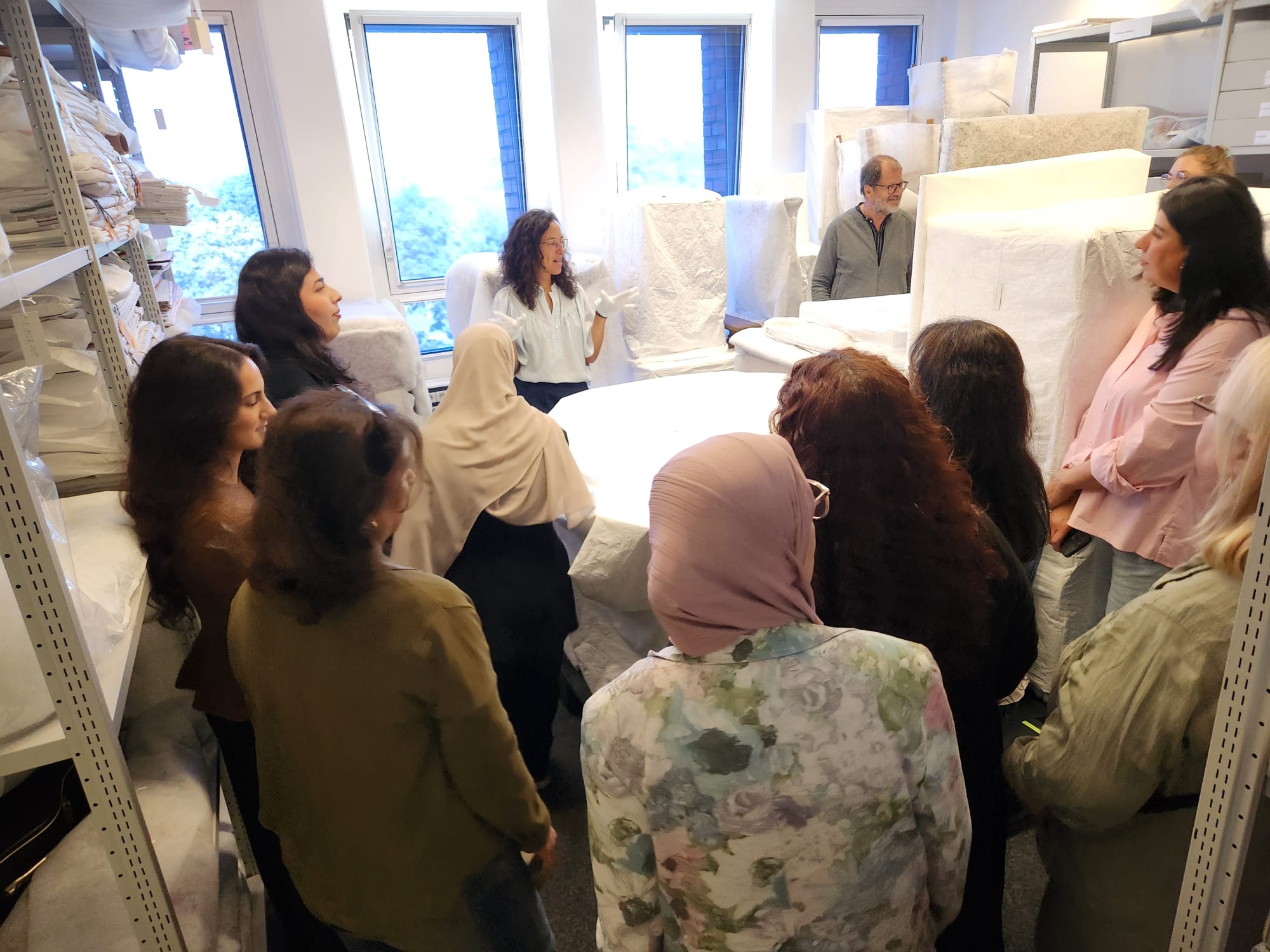
On September 23rd, the Transfer Project team, together with the Stadtteillabor in the Hustadt district (Bochum) under the direction of Christiane Falge, visited DOMiD in Cologne. As part of the Transfer Project’s “Exhibition Building” workshop, participants engaged with topics of exhibition design, the collecting of objects, and the construction of narratives in telling past and present histories. They also digitized objects they had brought with them as well as objects made available from DOMiD’s holdings, and exchanged views on the history or histories behind the items. By the end of the day, the group — guided by Bebero Lehmann from DOMiD, student research assistants Johannes Pufahl, Denise Klaus, and Jakob von den Driesch, as well as Annika Heyen — had developed a concept for a new VR application centered on the work of the Stadtteillabor and the Stadtteilgesundheitszentrum in the Hustadt district. Also present were Timos Zdoupas from VirtUOS, who documented the day on film, and Jens Schneider from the ReflexLab of SFB 1604, who observed the proceedings and in doing so produced qualitative data for the project evaluation.
Notes
In August, the essayistic contribution “A problem of the present – a conference for the future? The 1943 Bermuda Conference on the “Refugee Problem” re-read from the perspective of a Migration Historian” by Annika Heyen appeared on the blog. In her blog post, she ventured a thought experiment: she examined the Bermuda Conference consistently from the perspective of historical migration research — and in doing so encountered surprisingly new interpretive possibilities.
The contribution placed a fundamental methodological question at its center: How far can a researcher depart from established narratives of Holocaust research without slipping into a counter-history? Heyen argued that shifting the analytical lens — away from the question “Why were the Jews not rescued?” toward “How did states regulate and control mobility under wartime conditions?” — opens up a view onto a broader field of actors and longer-term institutional developments.
In addition to publications on the blog, there were also new books on the desk:
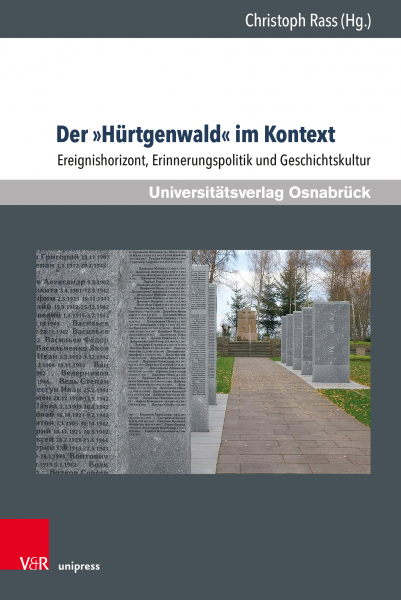
The third volume of the series “Konfliktlandschaften” [Conflict Landscapes] had appeared — and it posed a fundamental question: How does violence become history? Edited by Christoph Rass and produced by the Interdisciplinary Working Group Conflict Landscapes, »Der ›Hürtgenwald‹ im Kontext. Ereignishorizont, Erinnerungspolitik und Geschichtskultur« [»The ›Hürtgenwald‹ in Context. Event Horizon, Memory Politics, and Historical Culture«] did not take the military operations of 1944/45 themselves as its subject, but rather the retrospective construction of the ‘Battle of Hürtgen Forest’ as a narrative. For no one had fought under that name — it emerged only in retrospect, combining a series of individual military operations into one coherent large-scale event and emotionally charging a place that has since been marketed as the ‘Verdun of the Eifel’.
With fourteen contributions in three thematic sections, the volume brought together a broad spectrum of perspectives. The first section was devoted to the musealization of war and violence, the second to the event history and memory politics surrounding the Hürtgen Forest, while the third gave voice to regional actors who have been resisting revisionist narratives on the ground for years. This editorial decision altered the character of the volume: what might have been external academic critique became instead a dialogue that took local contestations over historical interpretation seriously and rendered them visible.
The volume simultaneously marked the conclusion of one research project and the beginning of something new: the series will be continued with volumes on the Emsland camps and on moorland landscapes as spaces of intervention, in which Imke Sofie Selle is significantly involved. Anyone wishing to understand under what conditions a society is capable of revising a historical narrative entrenched over decades — and how difficult it finds this — will find in this volume an uncomfortable but illuminating answer.
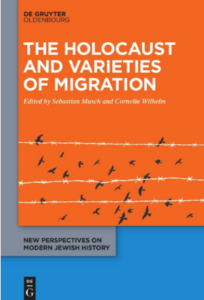
Also published is the edited volume The Holocaust and Varieties of Migration, edited by Sebastian Musch and Cornelia Wilhelm, released by De Gruyter and available here in open access. The volume originates from an international conference held in 2023 at the Georg-von-Vollmar-Akademie in Kochel am See. In addition to Sebastian Musch and Cornelia Wilhelm, the volume features contributions from Zofia Trebacz, Susanne Heim, Wendy Lower, Ayelet Eva Herbst, Hana G. Green, Edith Raim, Iris Helbing, Annika Heyen, Peter Gatrell, and Tony Kushner. In their introduction “Introduction: Forced Migration and Flight Before, During, and After the Holocaust”, Sebastian Musch and Cornelia Wilhelm ask how various forms of flight, expulsion, deportation, resettlement, internment, and postwar migration during the Second World War and the Holocaust were not merely consequences of violence, but in manifold ways constituted part of its preparation, organization, and execution. Representing NGHM alongside co-editor Sebastian Musch is Annika Heyen, with her contribution “‘Conceived Reluctantly, Brought to Birth Grudgingly, Straitjacked from Birth.’ The Bermuda Conference, the World Jewish Congress, and the Emergence of the Postwar Migration Regime.”
For H-Soz-Kult, Sebastian Musch has reviewed the book Between Borders. The Great Jewish Migration from Eastern Europe by Tobias Brinkmann. “A new standard work,” is his conclusion.
Blog Posts in August and September
Eduard Usov & Jessica Wehner: NGHM-Tracker (8/26), 03 August 2026.
Annika Heyen: History@SFB 1604 | »Die Place Changer«: Podcast recordings at the 180 Grad Wende in Köln-Kalk., 05 August 2026.
Christoph Rass: Willamette Depesche #1 | The Arrival of a Figure. ›Guest worker‹ and ›bracero‹ in the PCUN Records, 1981 to 1997., 07 August 2026.
Christoph Rass: NGHM reads | 12 | Sofsky: Die Ordnung des Terrors (1993), 10 August 2026.
Annika Heyen: A problem of the present – a conference for the future? The 1943 Bermuda Conference on the “Refugee Problem” re-read from the perspective of a Migration Historian, 11 August 2026.
Christoph Rass: Willamette Depesche #2 | Second Week in the Extension Service Records, Corvallis., 15 August 2026.
Christoph Rass: Willamette Depesche #3 | Who Names Whom? Salem, Woodburn, and Portland., 24 August 2026
Christoph Rass: NGHM reads | 13 | Scott: Gender and the Politics of History (1988), 27 August 2026.
Imke Selle & Team NGHM: Closing Conference: “The ‘Emsland Camps’ as a Conflict Landscape in Transformation” on 24 and 25 September 2026, 31 August 2026.
Christoph Rass: Keynote | ICDAR 2026 Vienna | Historical Scholarship and Document Analysis in Dialogue, 04 September 2026.
Christoph Rass: NGHM reads | 14 | Jordan: Theorien und Methoden der Geschichtswissenschaft (2021), 07 September 2026.
Team NGHM: NGHM researches | From »Wasteland« to Climate Protector: New Cooperative Project with the Emsland Moormuseum Approved., 10 September 2026.
Christoph Rass: NGHM reads | 15 | Wilkerson: The Warmth of Other Suns (2010), 11 September 2026
Team NGHM: Out Now | Konfliktlandschaften Volume 3: Der Hürtgenwald im Kontext., 14 September 2026.
Sebastian Musch: OUT NOW | The Holocaust and Varieties of Migration, 20 September 2026.
Team NGHM: Gaps in the Culture of Remembrance | Between Commemoration and Suppression. Panel Discussion on 1 October at the vhs Osnabrück., 29 September 2026.
Christoph Rass: NGHM reads | 16 | Ulrich Herbert: Das Dritte Reich. Geschichte einer Diktatur (2016), 29 September 2026.
Annika Heyen: History@SFB 1604 | The Transfer Project with its VR Experiment “Changing Places” at the Experimentiermeile 2026 at the Ledenhof, 30 September 2026.
Outlook & Upcoming Events

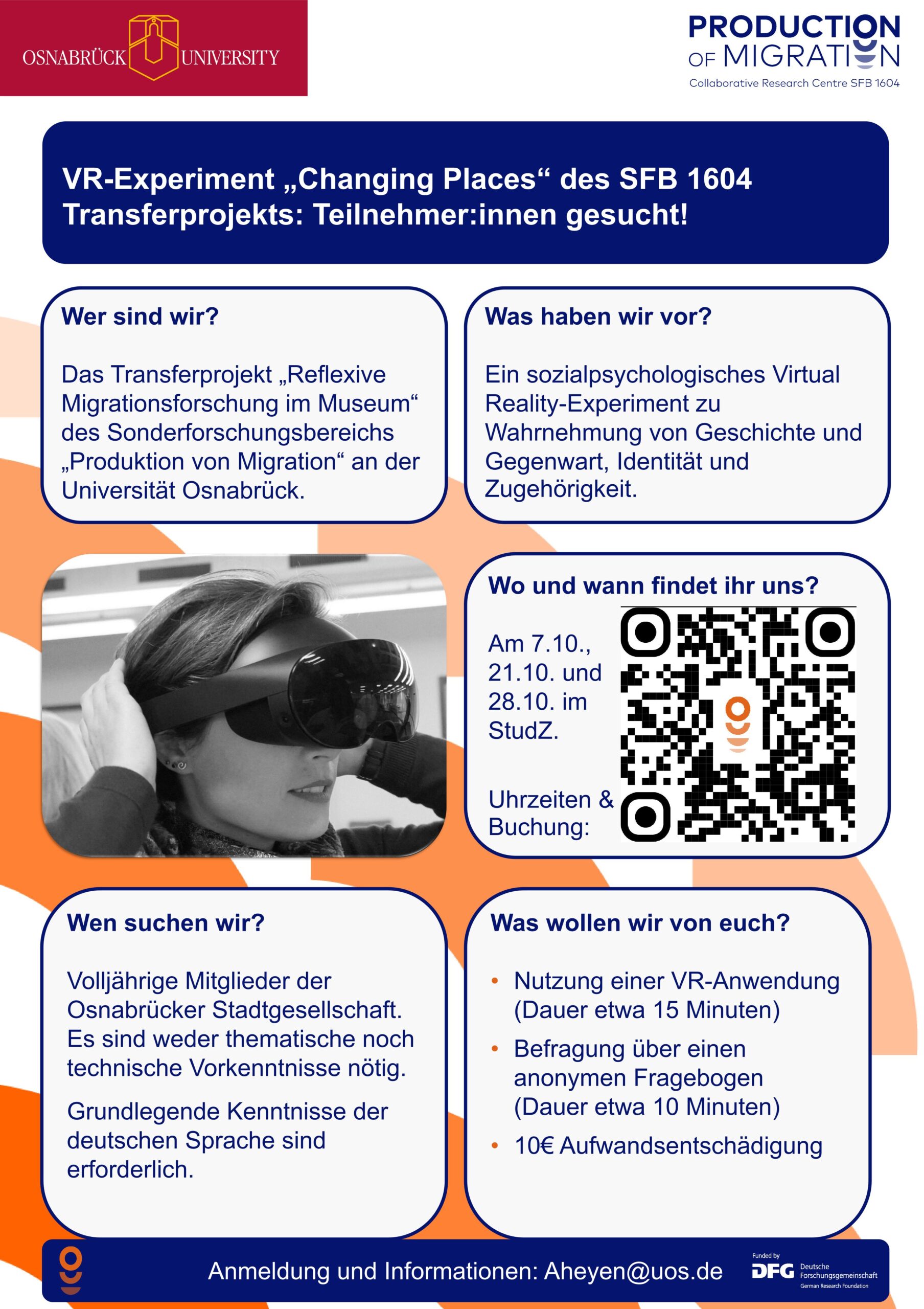
As part of the transfer project “Reflexive Migration Research in the Museum” of the Collaborative Research Centre 1604 “Production of Migration,” interested participants are invited to take part in the VR experiment “Changing Places” on 7 October, 21 October, and 28 October, each from 12 to 6 p.m. at the Studierendenzentrum (StudZ). The experiment explores the perception of historical and historically charged places in which details have been altered. Appointments can be booked here.
Find the original post at NGHM-Tracker (9-10/26) on nghm.hypotheses.org.
This post was automatically translated from the German original.