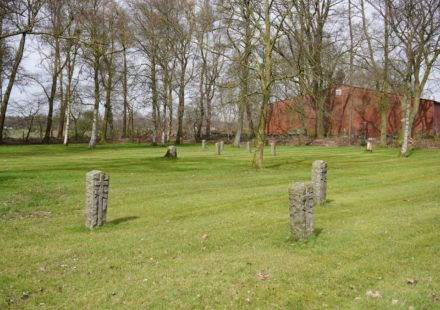
Sites of Violence, Traces, and Digital History Culture | »The ›Emsland Camps‹ as a Conflict Landscape in Transformation«, Osnabrück and Dalum, 24 and 25 September 2026.

Beneath an industrial estate near Dalum lie the unmarked graves of approximately ten thousand Soviet POWs. How do we read landscapes that conceal more than they reveal? A new conference project confronts this question head-on. — Translated from…
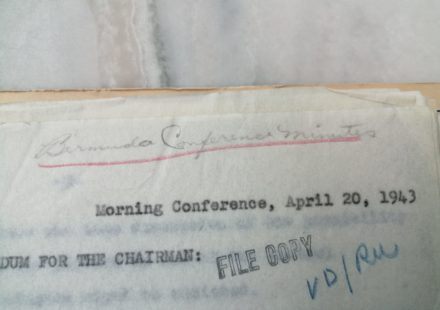
A problem of the present – a conference for the future? The 1943 Bermuda Conference on the “Refugee Problem” re-read from the perspective of a Migration Historian
What happens when a migration historian re-examines the 1943 Bermuda Conference — long studied through a Holocaust studies lens? Annika Heyen's new essay tests how fresh disciplinary perspectives can unlock overlooked dimensions of well-tr... —…
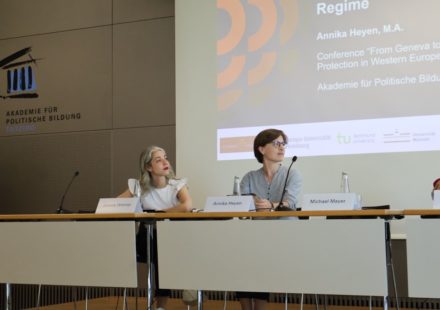
Team NGHM in Tutzing | Conference “From Geneva to Schengen
From June 29 to July 1, 2026, Jessica Wehner and Annika Heyen attended the international conference "From Geneva to Schengen. Shaping Immigration and Refugee Protection in Western Europe, 1951-1994" at the invitation of Michael Mayer (Akademie für…
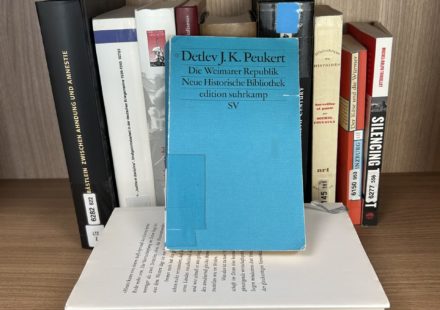
NGHM reads | 10 | Detlev Peukert: Die Weimarer Republik (1987)
Detlev Peukert's 1987 study reframed Weimar not as democracy's failure, but as modernity's self-inflicted crisis. The tenth title on our reading list — and still essential reading. — Translated from nghm.hypotheses.org
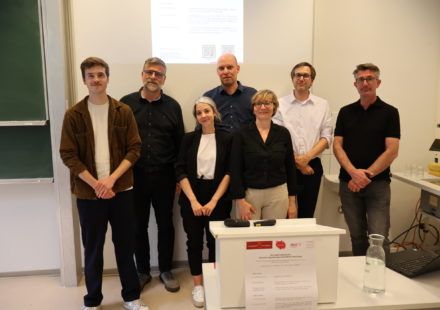
Report | Sixth Tiny Desk Colloquium: Displaced Persons, Urban Migration Policy, and the Historiography of the Refugee Regime
The most recent Tiny Desk Colloquium of the Chair of Contemporary History and Historical Migration Research, convened under the direction of Dr. Sebastian Musch, brought together five contributions ranging from West German postwar justice and digital…
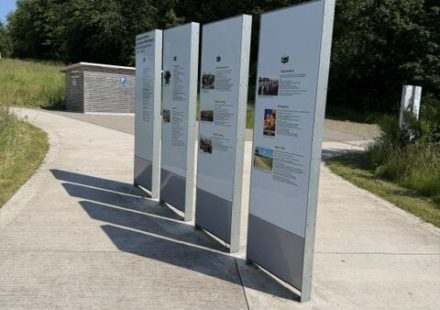
Production of ‘Volksgemeinschaft’. Notes on a Conference in Hameln
The conference From 18 to 20 June 2026, the Dokumentations- und Lernort Bückeberg invited participants to Hameln, to the premises of the Zedita, in cooperation with the Stiftung niedersächsische Gedenkstätten and the Institut für Didaktik der…
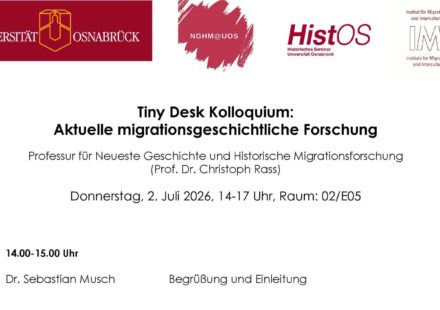
Announcement: Tiny Desk Colloquium on 2 July 2026: Current Research in the History of Migration
On 2 July 2026, the sixth edition of the NGHM Tiny Desk Colloquium will take place. Once again, young historians from the University of Osnabrück will have the opportunity to present outstanding theses, and our guests will have the chance to present and…
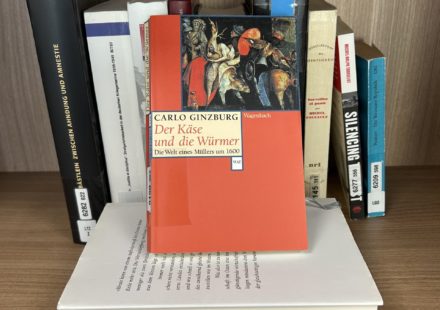
NGHM reads | Carlo Ginzburg: The Cheese and the Worms (1976)
What can we learn from the words of a Friulian miller about the world of the late sixteenth century, and why from his words in particular? Carlo Ginzburg's The Cheese and the Worms, the next title on the NGHM reading list, is one of the classic texts of…
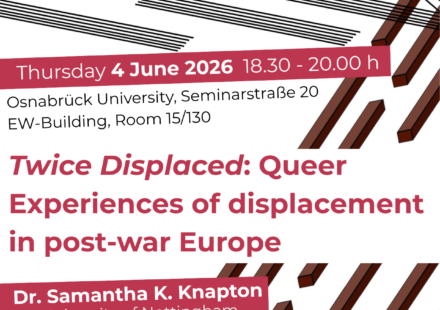
Invitation: Lecture by Dr Samantha Knapton on Queer Experiences of Displacement, 4 June
On June 4 (6:30 pm), the Working Group on Modern History and Historical Migration Studies warmly invites you to a public evening lecture at 15/130. Samantha Knapton from the University of Nottingham will deliver a lecture in English titled "Twice…
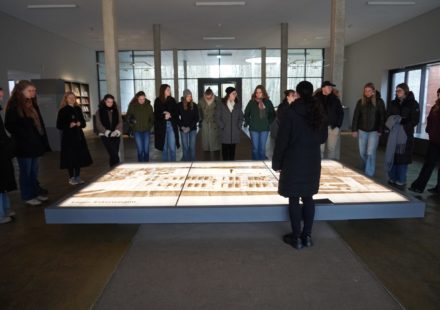
There and Back Again | Excursion to the Esterwegen Memorial
An excursion report by Leonie Schwiers and Greta Petersen On November 28, an excursion to the Esterwegen Memorial, which has existed since 2011, took place under the leadership of Imke Selle and with support from Ilka Schwerdtfeger. In the preparatory…
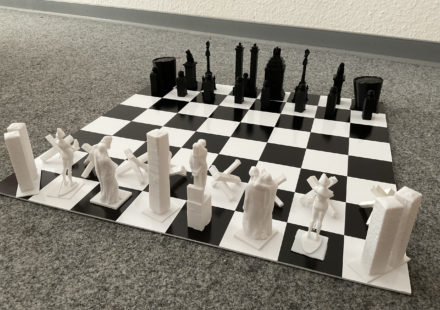
Making History Production ‘Playable’ | The “Osnabrück Peace Chess”. Negotiating Memory in Game Format.
In the context of the interdisciplinary LehrZeit project "Research, mediate, exhibit. Virtual learning spaces in historical studies" at the University of Osnabrück, students together with Imke Selle, Prof. Dr. Christoph Rass, Prof. Dr. Lale Yildirim &…
Right-wing Populist Politics of History for Destabilising Democratic Systems | Summary of the Essay by Valentin Loos in Historia Prima, 2. 2025
This post is an abridged version of an essay in the second issue of Historia Prima, which appeared in May 2025 under the title "'What we are experiencing here is 1933 on a global level, that is, the total seizure of power.' The Functionalization of…
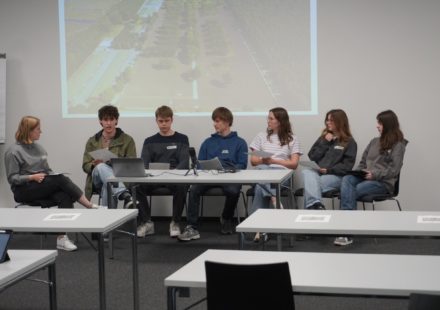
Digital Public History Workshop “The ‘Emsland Camps’ as a Conflict Landscape in Transformation
On 5 June 2025, a workshop took place at the Esterwegen Memorial with students from years 11 and 12 of Georgianum Lingen. The event was conducted as part of the project "The 'Emslandlager' as a Conflict Landscape in Transformation. Research-based…
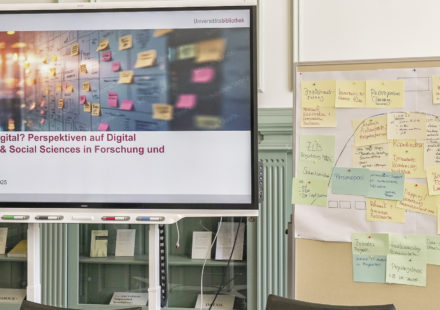
Digital Humanities at the University of Osnabrück. University Library Workshop with Cultural and Social Sciences in May 2025
The social sciences and humanities have already been undergoing a profound transformation for several years, driven by the ubiquitous and constantly accelerating digitisation of knowledge, culture and communication. This transformation has entered a new…