
By Christoph Rass · Originally published on nghm.hypotheses.org
The third week of my archival journey took me from Salem through Woodburn to Portland: two archives and two conversations. The week yielded three answers to the central question of this journey — who names labor migration how, when, why, and with what consequences, thereby producing the ›figures of migration‹. In Salem, people are named as a legal figure and as a cost variable: ›alien workers‹. In Woodburn, it becomes clear why there are source collections in which those so designated speak for themselves. And in Portland there is a state report from 1957 that records the words the different groups of agricultural workers within the Latino/Latina community used to refer to one another in the 1950s.
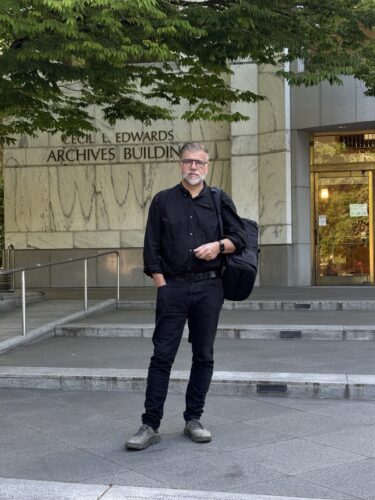
The second dispatch concluded in Corvallis, in the records of the Extension Service, the agricultural advisory service of Oregon State University that administratively organized the Bracero Program in Oregon — the recruitment of Mexican agricultural workers that ran from 1942 to 1964 under an agreement between the United States and Mexico. From the implementing agency, we now move to the political level at which decisions about such programs were made: from the question of what a category looks like in practice to the question of who decides which categories are to become relevant to the process. For the Collaborative Research Centre 1604 ›Production of Migration‹ [Sonderforschungsbereich 1604 ›Produktion von Migration‹], an Osnabrück-based research consortium studying the emergence and effects of migration categories, I am tracing the figures under which labor migration is administered, contested, and remembered — designations such as ›bracero‹, ›guest worker‹, or ›alien worker‹.
Salem: ›Alien Workers‹
Monday morning was devoted to the Oregon State Archives in Salem, a division of the Office of the Secretary of State, which — despite the title — is of course not a department of foreign affairs: the officeholder is directly elected in Oregon and is responsible, alongside elections and auditing, for the archives as well. I had ordered numerous archival boxes from the records of Governors Atiyeh and Goldschmidt; the second collection the archivists on site were able to make available to me immediately in full as a digital download!
A first intriguing finding comes from the spring of 1979. At that time, the Governor’s office was negotiating a legislative initiative that would vest in the governors the authority to determine whether domestic workers were available — the very determination upon which the admission of foreign workers into agriculture was to be made contingent. Throughout, the file refers to the people in question (primarily those migrating from Mexico) as ›temporary alien workers‹. Bob Oliver, the Governor’s legal counsel, in a memorandum dated April 30, 1979, with the subject line ›Alien Workers‹, sets two considerations against each other — the trouble with the unions and the gain in jurisdiction for the state:
»On the one hand, you as Governor would be accepting a hot potato — a responsibility which might cause you to take actions displeasing to organized labor. On the other hand, my philosophy is that we should seize every opportunity to exercise authority at the state or local level.«
Three days later, Atiyeh writes to Mark O. Hatfield, Oregon’s senator in Congress, stating that he personally endorsed the concept, and adds a procedural request: there was no provision specifying the method by which a governor should determine the availability of domestic workers, and »uniform methods among the states« would be desirable. The subject of the file is not who comes and under what conditions, but who determines the need for recruitment and according to what procedure.
The second finding comes three years later. In 1982, Congress was deliberating on the bill put forward by Senator Alan Simpson and Representative Romano Mazzoli, which, alongside employer sanctions for hiring undocumented workers and a legalization of their residence status, also provided for new rules governing temporary foreign agricultural labor; the initiative failed on this occasion, and reform of United States immigration legislation would not become law until 1986, as the Immigration Reform and Control Act. On November 4, 1982, the same Bob Oliver wrote a memorandum in this context to Gerry Thompson in the Governor’s office:
»Estimates of the number of illegal aliens in the United States vary from 3 to 12 million, and in Oregon from 6,000 to 50,000. Up to now, this issue has directly impacted the Governor’s office primarily on occasions when the Immigration and Naturalization Service attempts to round them up, and we are contacted by ranchers and farmers, and other employers, who express concern about ›harrassment‹ of their workers who are legal residents. …«
The memorandum itself names the principal concern: »I believe our main concern ought to be fiscal impact on state government«. Based on an assumption of 20,000 ›illegal aliens‹ living in the state, the social welfare administration projected, in the event of legalization, costs of 3.2 million dollars in social assistance and education expenditure under the General Fund for the 1983–1985 biennial budget. Its division responsible for social welfare, the Adult and Family Services Division, recommended rejection in the accompanying briefing paper, »because of the substantial financial burden that it will present to the state and local governments«. In the advice prepared for the Governor, the line in 1982 thus pointed toward a No on Simpson-Mazzoli, justified solely on the grounds of the costs of including legalized immigrants in the social welfare system.
A third vignette illustrates how the administration defined its own limits. In 1979, the Employment Division, the state’s labor administration, advised against the state taking over the CETA-303 program on its own account — the federal program that financed employment promotion for migrant and seasonal workers. The memorandum justified this on the grounds that many of those affected were Spanish-speaking and that such programs had traditionally been run by organizations whose staff shared a similar linguistic and cultural background to the people in question: »The Employment Division has no such identification«. The agency thus placed on the record its own assessment that it was not reaching the Spanish-speaking population, while in Woodburn an organization of precisely this type had been operating since 1977: the Willamette Valley Immigration Project.
Woodburn: the Risberg Hall
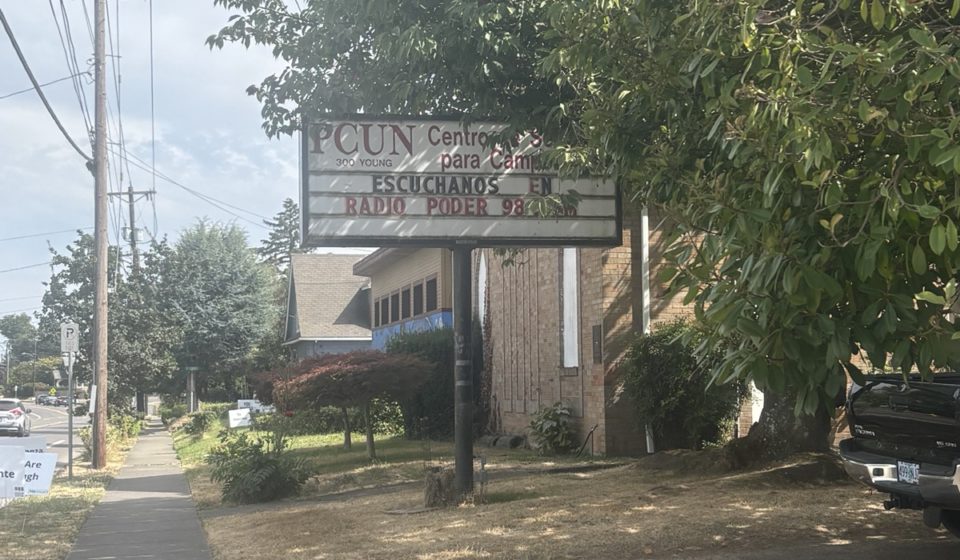
On the afternoon of that same Monday, I spoke in Woodburn with Larry Kleinman and Ramón Ramírez, two of the founders of PCUN, Pineros y Campesinos Unidos del Noroeste, the farmworkers’ union in Oregon. We sat in the Risberg Hall, one of the union’s meeting rooms, and even the location itself tells a story of organizational history: it bears the name of Kleinman’s grandparents, Edward and Sonia Risberg. Both were members of the International Workers Order, a left-wing mutual aid and insurance organization for immigrants.
PCUN emerged from that same Willamette Valley Immigration Project of 1977 and was founded as a union in 1985. The decision to begin with legal assistance and only then to organize as a union was made at the Colegio César Chávez in Mount Angel, the first accredited, Chicano-led four-year college in the United States, which the second dispatch addressed briefly.
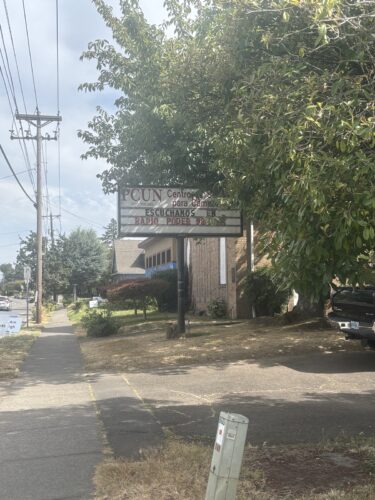
Larry Kleinman described the framework of PCUN’s union work in conversation as follows: farmworkers are (still) excluded from national collective bargaining law, and Oregon has no procedure that obliges agricultural enterprises to engage in collective bargaining. An organization working under these conditions generates pressure through boycotts, publicity, litigation, and legislation; there is now a specific term for its position — ‘labor adjacent’ — denoting an organization that operates like a union without having its procedural rights. During the phase most directly relevant to my research question — from the 1980s through the early 2000s — first the Immigration Project and then PCUN carried the regional resistance against efforts to re-establish a recruitment program for agriculture. Since 2011, the movement’s records have been held at the University of Oregon in Eugene, where I spent my first archival week. Ramírez and Kleinman attribute the existence of this collection to their fellow activist Cipriano Ferrel, who had insisted early on that the group was making history and had to conduct itself accordingly; this required the formation of its own archive. That is the week’s finding with respect to the second question of this journey: alongside the words themselves, I am tracing how collections relating to migration and marginalized social groups come into being at all, enter archives, and become accessible.
My two interlocutors also offered a compelling answer to the question posed in the first two dispatches — what words were used to describe this labor migration, and who set those words. That the movement wrote ‘bracero’ on its placards in the 1980s rather than ‘guest worker’ was explained by Kleinman in terms of lived experience: ‘bracero,’ the word for the contract workers recruited under the program, had been tangible and had resonated within the community. Ramírez added that memory of the program had remained within families, since those affected had been the fathers and grandfathers of those born in Oregon who continued the struggle against discrimination in the 1980s and 1990s. The slogan of a 1997 rally — that a ‘guest worker program’ was legalized slavery — appears from this vantage point less as an overstatement than as a revealing indication that mere relabeling does not eliminate racist practices and attributions but merely disguises them.
Portland: the Oregon Historical Society
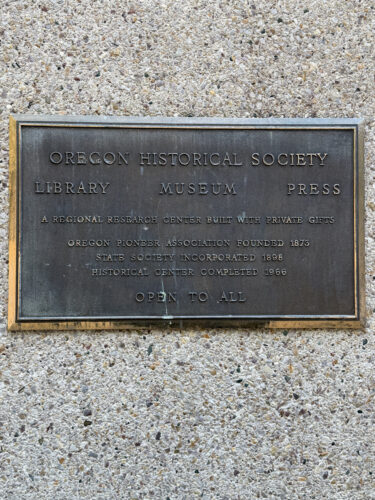
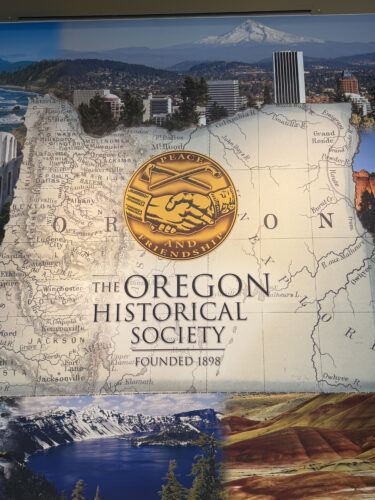
From Tuesday to Friday I worked in the Research Library of the Oregon Historical Society (OHS), the library of a private, non-profit historical society founded in 1898 that simultaneously holds the largest collection on the history of the state (Engeman 2026). For my archival study, what interests me most about this institution is how it deals with its own collecting history. The collection page of the library states the essentials on this point: the early acquisitions had placed »the pioneer, settler-colonial experience« at the center, and »the biases and omissions of our early collecting continue to remain evident across the library’s collections«.
The library responds to this with two measures: an acquisitions policy intended to represent a greater diversity of experiences and perspectives in the future, and the revision of cataloging — that is, of the descriptions through which a collection becomes findable. The term for this revision is ‘reparative cataloging,’ and it requires clarifying with communities how they refer to themselves, and weighing access to the historical record against potential harm.

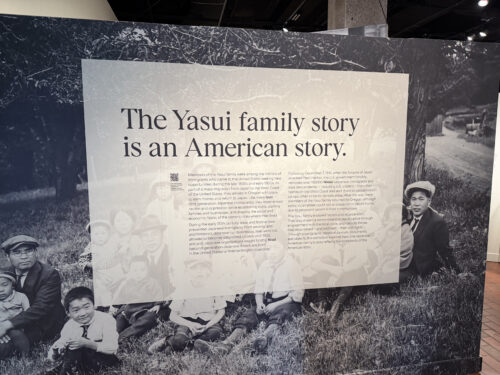
How thoroughly the Historical Society reflects on its own position is illustrated by a second decision. Two weeks after the racially motivated double murder on a Portland light rail train in May 2017, the advisory board of the Oregon Historical Quarterly resolved to respond, through the means of the journal, to what the journal itself described as an increase in publicly voiced claims to White supremacy. In 2019, the special issue White Supremacy & Resistance appeared, edited by Darrell Millner and Carmen Thompson. Among those on the advisory board that accompanied the volume was Natalia Fernández, curator of the Oregon Multicultural Archives, with whom I had spoken the previous week in Corvallis. »The OHQ special issue is not neutral on the subject of White supremacy,« a blog post by the institution states explicitly, and since February 2021 the volume’s twelve essays have been freely available online.
On Friday I spoke with Brian Stauffer, the Library Director, about collecting policy, opening up access, and this particular form of institutional sponsorship. The analysis of this conversation belongs in my archival study and will feed into my book on archives in migration societies.
The Records of the Stella Maris House
The most significant Portland finding lies in the collection of the Stella Maris House, a Catholic lay organization for social work in Portland (Mss 1585), which came to the table on Thursday after I had cancelled a second day in Salem. Its folders afforded me insights into the situation of the 1950s and 1960s.
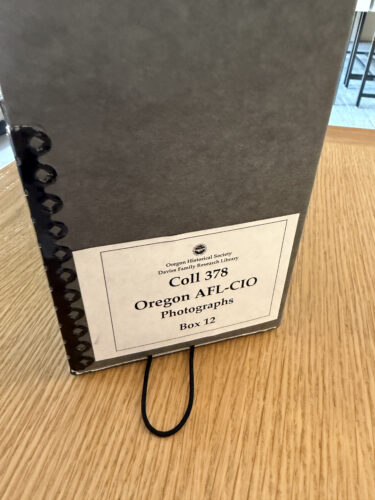
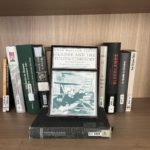
The oldest layer is a report by the Oregon Bureau of Labor, the state’s labor authority, from 1957: ‘Vamonos pal Norte (Let’s Go North). A Social Profile of the Spanish Speaking Migratory Farm Laborer’. It thanks by name farm workers who provided information, including “Susana R. Luckenbough, Portland University student, who has been a migrant farm worker for the past 20 years.” For 1957, it counts a Spanish-speaking migrant labor force of 11,000 to 12,000 persons in Oregon, plus 800 ‘Mexican Nationals’ recruited through an international agreement in the preceding year. It consistently distinguishes between ‘imported laborer’, those recruited through the agreement, and ‘domestic laborer’, the Spanish-speaking farm workers resident in the country, and it records the words each group used to describe the other:
“The imported laborer and the Spanish-speaking laborer working in the same area frequently create a general feeling of antagonism and jealousy. This is essentially based in the following contributing factors: (1) imported laborer appears to have better living and working conditions (2) imported laborers develop or inspire more community interest and acceptance (3) domestic laborer calls imported labor ‘surumatos’ which is a derogatory term to describe the people from interior Mexico. And, imported laborer calls domestic labor ‘pochos’ which is also derogatory term for natives or residents of Spanish-speaking background …”
The second dispatch showed how a government agency sorts people by origin and legal status. Here are the words with which those being labeled label one another: ‘surumatos’ for those recruited from the interior of Mexico, ‘pochos’ for those already settled in the United States — classifications by region of origin and belonging that run parallel to the state’s categories while operating according to their own criteria. And the hierarchy recorded in the report runs contrary to the one later invoked against recruitment programs, according to which contract workers were precisely the most rightless in the fields: here it is the contract workers who are attributed the better accommodations and the greater attention from local communities, while the domestic workers are left at a disadvantage.
Five years more recent is a circular from the National Advisory Committee on Farm Labor, dated February 1962. The committee, a national reform coalition based in New York, explains therein why there are hardly any contract workers under Public Law 78 left in the Northwest — the statute that had formed the legal basis of the Bracero Program since 1951:
“Ten years ago the employment of Mexican workers under Public Law 78 in the Pacific Northwest was widespread. Wages were very low and living conditions in many places were intolerable. This changed as state and federal employment officers began making concerted efforts to ensure that farm employers were actually trying to attract domestic workers. … As wages rose, the ‘shortage’ of domestic labor disappeared and bracero labor in the Northwest became rare.”
This is, some three decades earlier, the same economic argument deployed in the campaigns with which the movement fought against new recruitment schemes in the 1990s: the alleged shortage of domestic labor disappears as soon as wages rise. On one side stands the improvement of working conditions; on the other, the procurement of exploitable labor.
Why Oregon occupied a special position within this system is explained by a staff bulletin of the Oregon Employment Service, the state’s public employment agency, from 1964. Roscoe West, responsible within the agency for farm labor placement, summarizes therein a national farm labor conference held in February 1964 at which the expiration of Public Law 78 was announced; in 1963 alone, “almost 187,000 Mexican nationals, or braceros” had entered the country. West addresses the growers of his own state: Oregon had most recently employed only around 350 contract workers per year, yet depended year after year on nearly 20,000 domestic migrant workers. These workers came from precisely those states that had relied most heavily on braceros, and those states would henceforth compete more vigorously for their own labor supply — and thus compete with Oregon. “Oregon may be at the end of the chain, but the chain reaction will still affect the last link.”
A further layer of findings connects Portland with Salem. Within a collection of press releases, three articles from the Oregonian, Portland’s daily newspaper, dated 2 May 1967, lie side by side: on a minimum wage bill, on mandatory inspection of migrant labor camps, and on Secretary of Labor Willard Wirtz, who calls the exclusion of farm workers from collective bargaining rights “an affront to the American principle of equal justice under the law.” The minimum wage bill in the first article is steered through committee by a state senator named Victor Atiyeh — the same Atiyeh whose gubernatorial records, twelve years later in Salem, deal with ‘alien workers’.
Atiyeh, born in Portland in 1923, was himself the child of immigrants from the Ottoman Empire, from what is today Syria and Lebanon, and with him an Arab American held a gubernatorial office in the United States for the first time (Moore 2025). In the Salem files I examined, none of this appears; origin there is a category reserved for those being administered.
Jobs with Justice, 2006
A leap of four decades, and into a different collection at the Oregon Historical Society: the records of Portland Jobs with Justice, a coalition of trade unions and social movements, which document its collaboration with immigrant organizations for the years 2006 to 2014. Here the term ‘guest worker’, to which this journey is dedicated, has shifted in meaning. An undated compilation of topics, goals, and priorities for dialogue with community organizations lists “Overcoming divisions around guest worker programs” and, under federal policy proposals, “Creating guest worker programs where undocumented workers are treated fairly.” An email from June 2006 assembles objections for workshops with union members, including the assertion that such a program merely continues the Reagan-era strategy of flooding the labor market with workers and breaking the unions. What a decade earlier had appeared as an accusation on PCUN placards is here treated as one position among several, to be worked through in facilitated discussions.
A First Assessment
The week’s findings point to the structuring of the archival record. The state handles the matter as a question of procedure and cost, and registers people as ‘alien workers’ — as a legal figure and a budgetary line item. The movement preserves its own documents and thereby creates its own archival legacy and a voice in the production of history; the impetus was Cipriano Ferrel’s insistence that its own sources matter. The historical society holds what lies between these two actors, from Catholic social work to trade union coalitions, and openly addresses the gaps and biases that its own origins inscribed into the archive.
The 1957 report adds to this the dimension that is the most significant of the week for the question of the ‘production of migration’: the work of categorization does not end at the community’s boundaries. ‘Surumatos’ and ‘pochos’ sort the same fields that the state orders with ‘Mexican Nationals’ and ‘alien workers’ — only according to different criteria, by region of origin and belonging rather than by legal status. Anyone studying the figures of migration is therefore not dealing merely with an administration that categorizes and a population that is categorized, but with a field on which many actors produce ‘figures of migration’.
Farewell to Oregon
My final image from this trip shows the scanner I worked with for three weeks, sitting on an empty table. All the files read? Hardly. For three weeks I traced the expression ‘guest worker,’ and it appeared least of all where the recruitment program was administered: it is absent from the folder titles of the Extension Service in Corvallis, as is ‘bracero,’ even though that same service implemented the program; in the Governor’s office in Salem, the people are called ‘alien workers.’ The movement that fought in the 1980s against plans for a new recruitment program, however, identified ‘guest worker’ early on as a translation from Europe intended to serve as a relabeling of immigration from Mexico. PCUN itself never used the category to describe labor migrants; the union refused precisely that linguistic sleight of hand which policymakers sought to deploy in the political and media discourse surrounding the reform of immigration law. ‘Guest worker’ arrives in 1997 with full force as a term of political struggle, as an indictment at a rally against a new reform package: such a program, it was declared, amounted to legalized slavery. Nearly a decade later, a coalition of unions and immigrant organizations in Portland employs the same expression in its working papers, and does so in two ways: as a goal, to establish such a program on fair terms, and as an objection, that it merely perpetuates the wage-cutting of the Reagan years. Whether the trajectory of this expression through the archival holdings can be traced in the way that the first glimpses from three weeks of frenetic archival work suggest will be decided by reading the files in Osnabrück.
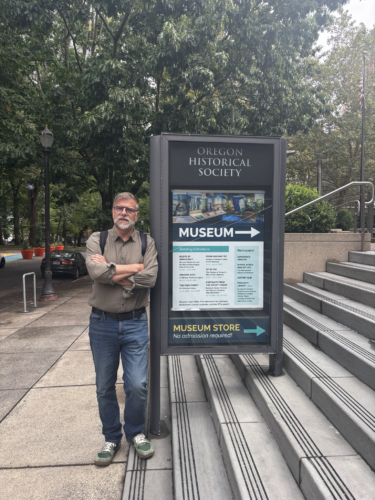

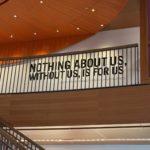
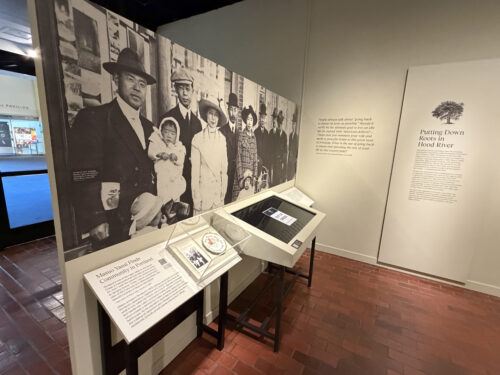
The polyphony for which the library strives in its cataloguing practices can, incidentally, already be witnessed in the museum of the same institution. The permanent exhibition ‘Experience Oregon’, which opened in February 2019, was developed by the Oregon Historical Society in collaboration with nine of the state’s Indigenous nations. Their representatives stipulated one condition that shapes the entire visit: it was not sufficient to stand at the beginning of the exhibition because they had been there first, for they were still there. Since then, the narrative returns again and again to their voices. The exhibition also displays what is painful — a Ku Klux Klan hood, for instance, behind glass. “Our job is to tell the truth. We’re not the tourism bureau,” Director Kerry Tymchuk has summarized this stance to the press.
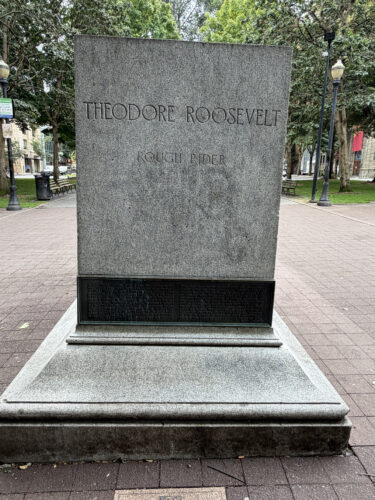
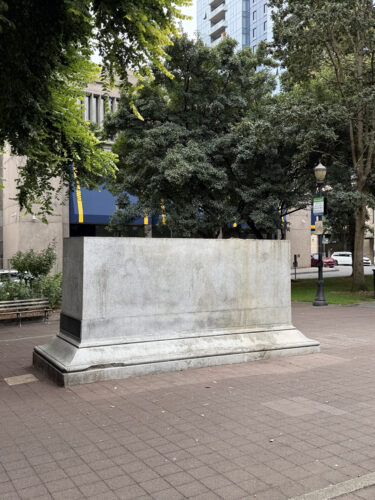
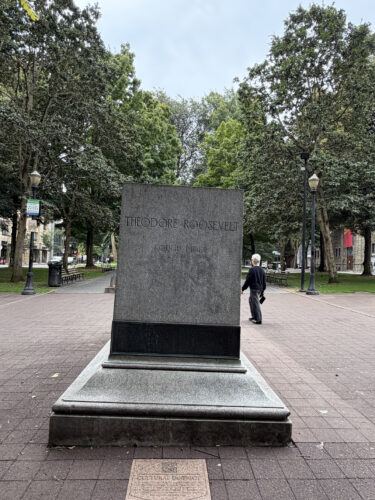
Outside the building, on the South Park Blocks, something equally remarkable is to be seen. An equestrian statue of Theodore Roosevelt had stood there since 1922; in October 2020, protesters pulled it down during a demonstration on Indigenous Peoples Day, along with a statue of Abraham Lincoln a few steps away. Roosevelt has been in storage ever since; the Lincoln statue was restored in 2025 and awaits re-installation. The city has decided to return both to their original locations, but with new interpretive plaques. The content of these plaques is still being publicly deliberated in 2026.
I photographed the empty space, because it illustrates what the Collaborative Research Centre is exploring digitally in its transfer project with DOMiD, the Cologne Documentation Centre and Museum on Migration in Germany: in one application of this project, the ‘Place Changer,’ users redesign real locations on screen in order to explore what memorial landscapes might look like otherwise, and who has the power to shape them. In Portland, this ‘place changing’ is no simulation. A city society negotiates on the very site itself whom it commemorates in public space, and the empty plinth is the current state of that negotiation.
Bibliography
- Engeman, Richard: Oregon Historical Society, in: The Oregon Encyclopedia, as of February 6, 2026 (for the institution’s legal status).
- Knutson, Ana / Hyatt-Evenson, Tania: Colegio César Chávez, in: The Oregon Encyclopedia, as of December 12, 2024 (for the contextualisation of the college).
- Moore, Jim: Victor Atiyeh (1923–2014), in: The Oregon Encyclopedia, as of March 7, 2025.
- Millner, Darrell / Thompson, Carmen (eds.): White Supremacy & Resistance, special issue of the Oregon Historical Quarterly, Winter 2019 (freely accessible since February 2021).
- The Oregon Historical Society Refuses to Gloss Over the Ugly Parts of the State’s Past, in: Willamette Week, February 10, 2021 (for details on the creation of ‘Experience Oregon’ and the quotation from Kerry Tymchuk).
- City of Portland: What’s happening with the City’s monuments?, portland.gov, as of August 2026 (for the current status of the Roosevelt and Lincoln statues).
- Rass, Christoph: Willamette Dispatch #1 | The Arrival of a Figure. ‘Guest worker’ and ‘bracero’ in the PCUN Records, 1981 to 1997, in: NGHM@UOS, August 7, 2026, DOI 10.58079/16nn9.
- Rass, Christoph: Willamette Dispatch #2 | Second Week in the Extension Service Records, Corvallis, in: NGHM@UOS, August 15, 2026, DOI 10.58079/16ny4.
Find the original post at Willamette Depesche #3 | Wer benennt wen? Salem, Woodburn und Portland. on nghm.hypotheses.org.
This post was automatically translated from the German original.