

By Eduard Usov & Jessica Wehner · Originally published on nghm.hypotheses.org
The monthly newsletter of the Working Group on Contemporary History and Historical Migration Research at the University of Osnabrück
By Eduard Usov & Jessica Wehner
July brought together on the NGHM blog a remarkable density of topics which, despite all their variety, repeatedly returned to the same fundamental question – how categories, narratives, and attributions are produced in history, and what it means to read them critically. At the same time, the month opened windows to the outside world: to Paris, where digital methods and migration history were brought into dialogue, and to Tutzing, where an international conference explored the history of the European refugee regime from Geneva to Schengen. And those who looked closely also discovered the unexpected – an animated card index that does not merely represent migration, and a newspaper notice from rural Georgia in 1943 that mirrored a National Socialist propaganda term in a startling way.
Our July edition of the newsletter reports on the team’s wide-ranging activities.
Insights
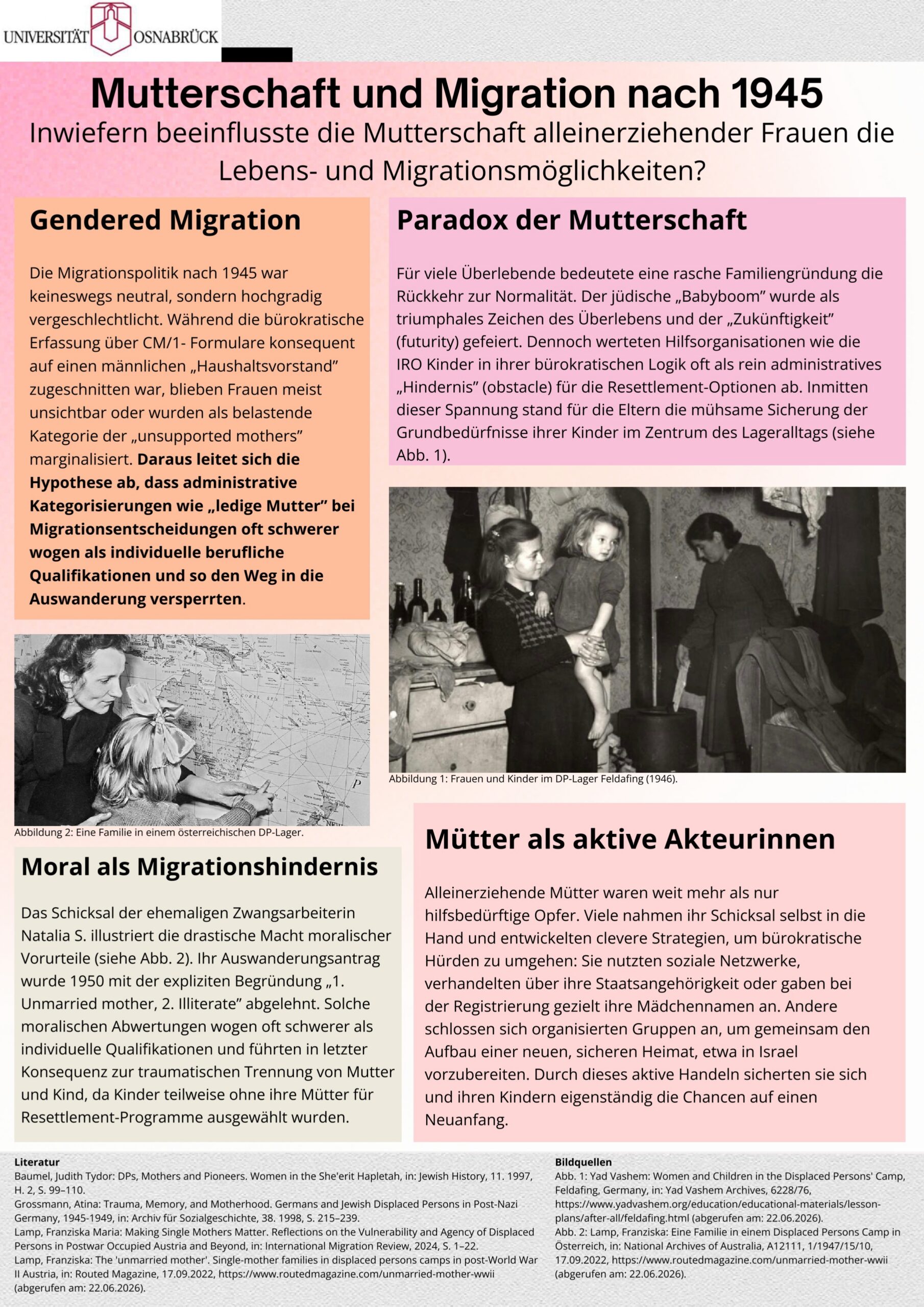
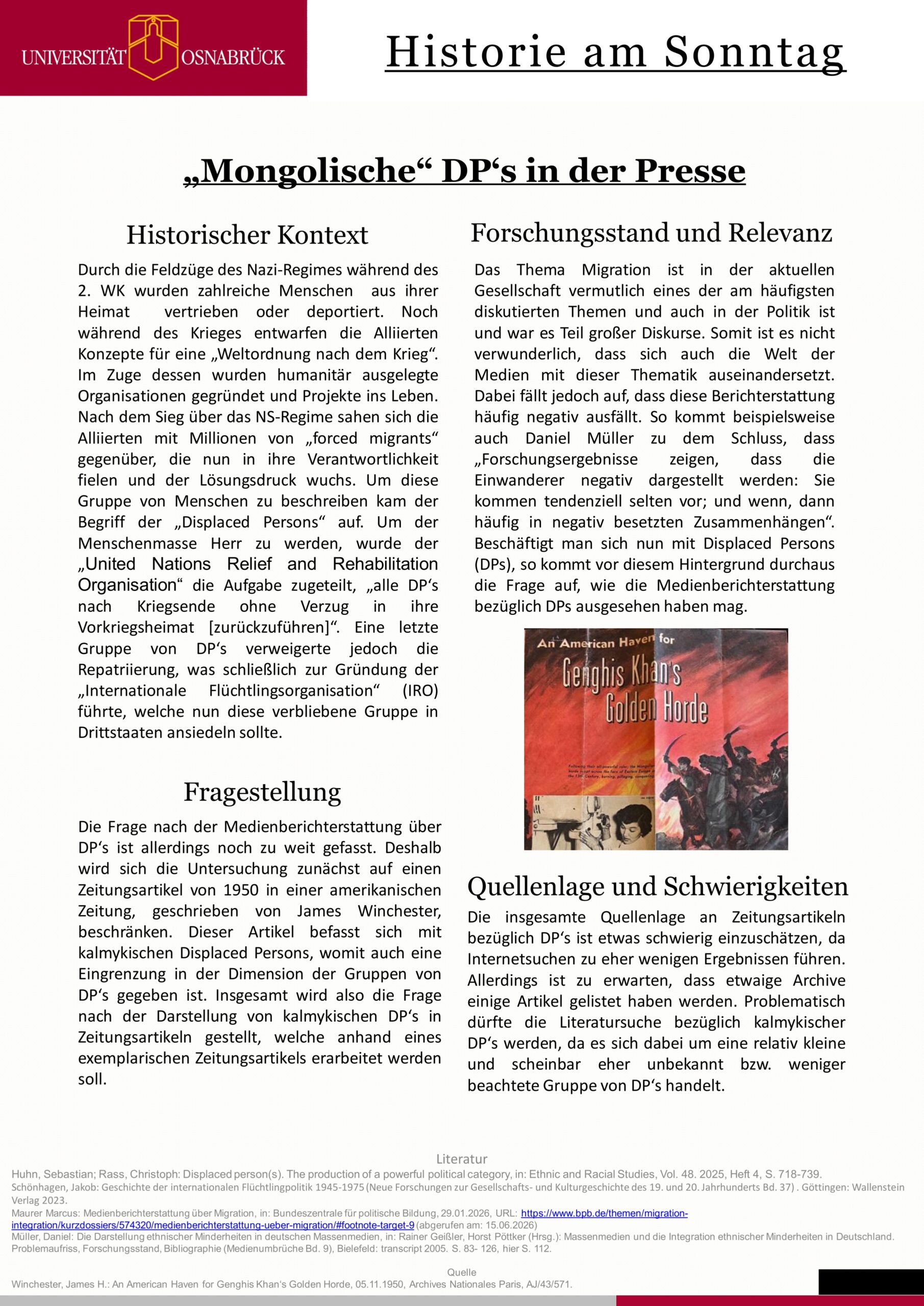
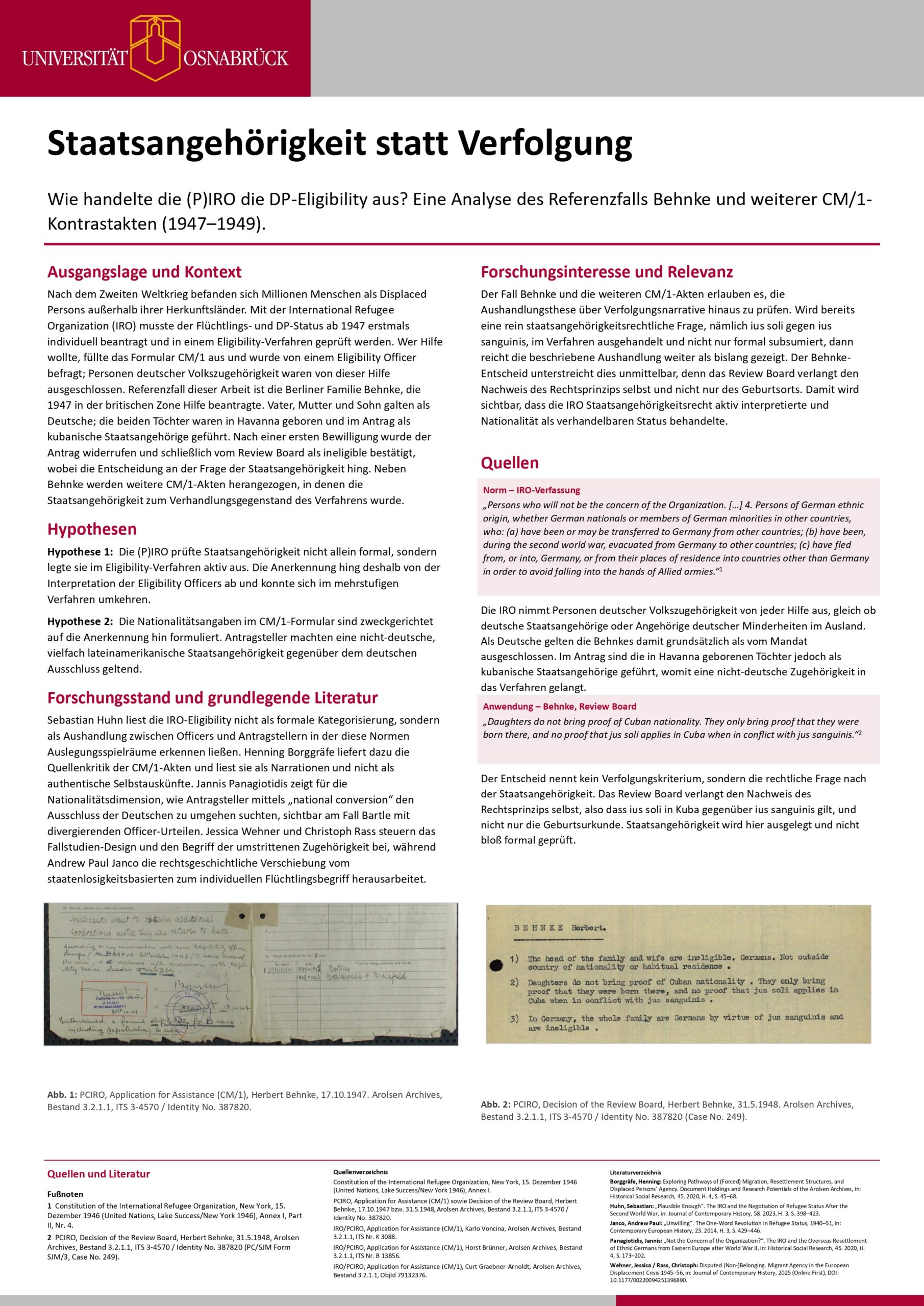
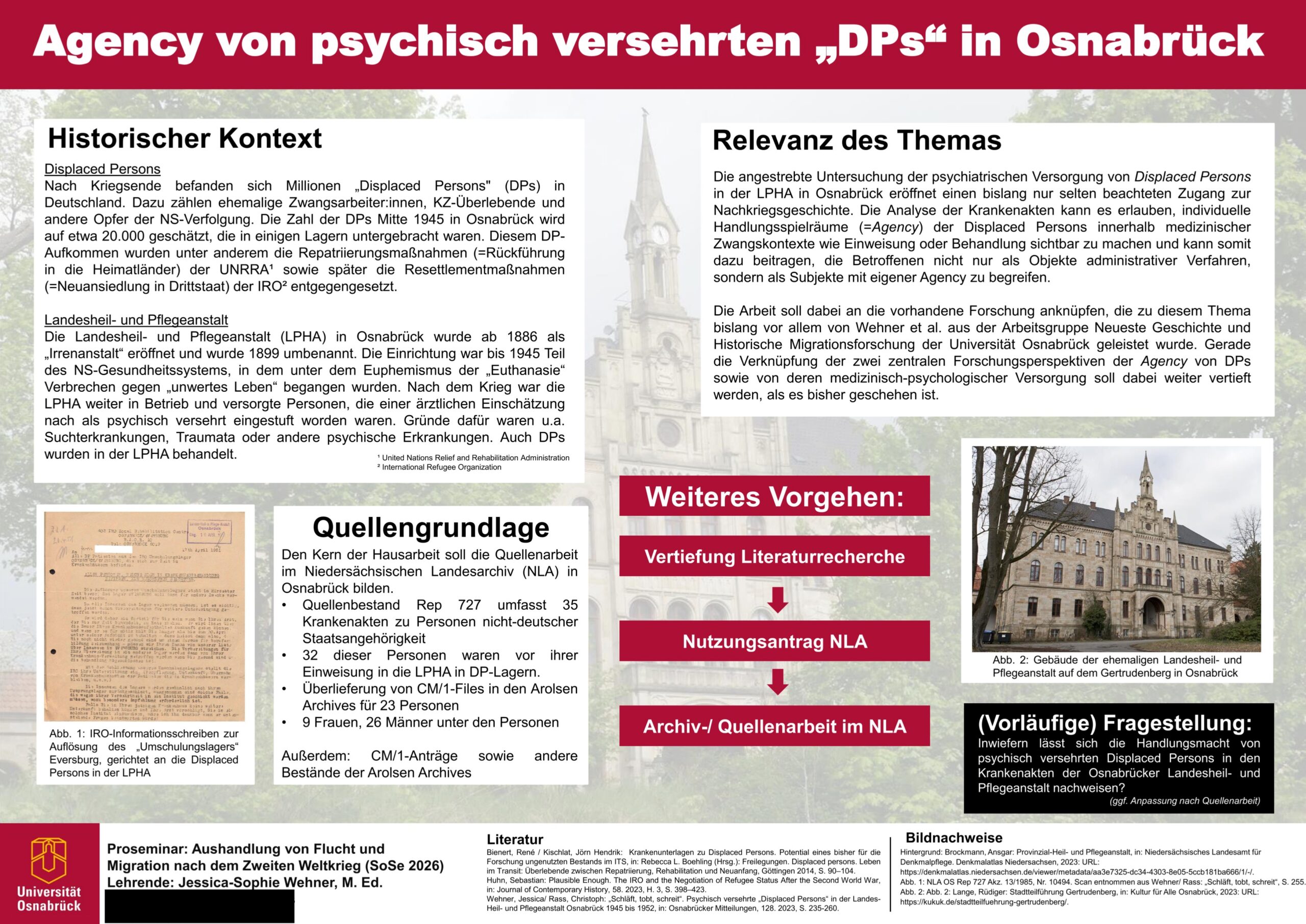
In July, the courses of the summer semester were drawing to a close: In the proseminar “Negotiating Flight and Migration after the Second World War”, led by Jessica Wehner, a poster presentation by students took place on 9 July. Together with members of Team NGHM, the students discussed their research projects. The proseminar addressed migration in the post-war years: after the Allies had ended the Second World War in Europe in May 1945 with victory over National Socialist Germany, challenges of a previously barely imaginable scale became apparent. Millions of people who had been deported, imprisoned, fled, and in some cases also voluntarily migrated during National Socialist rule and in the course of the Second World War found themselves in Europe outside their countries of origin. These refugees and Displaced Persons (DPs) constituted a highly heterogeneous group comprising various victim groups of National Socialism, Eastern Europeans who had fled the Red Army in the final years of the war and after its end, and in some cases also collaborators and war criminals who posed as DPs in order to evade prosecution by the Allies.
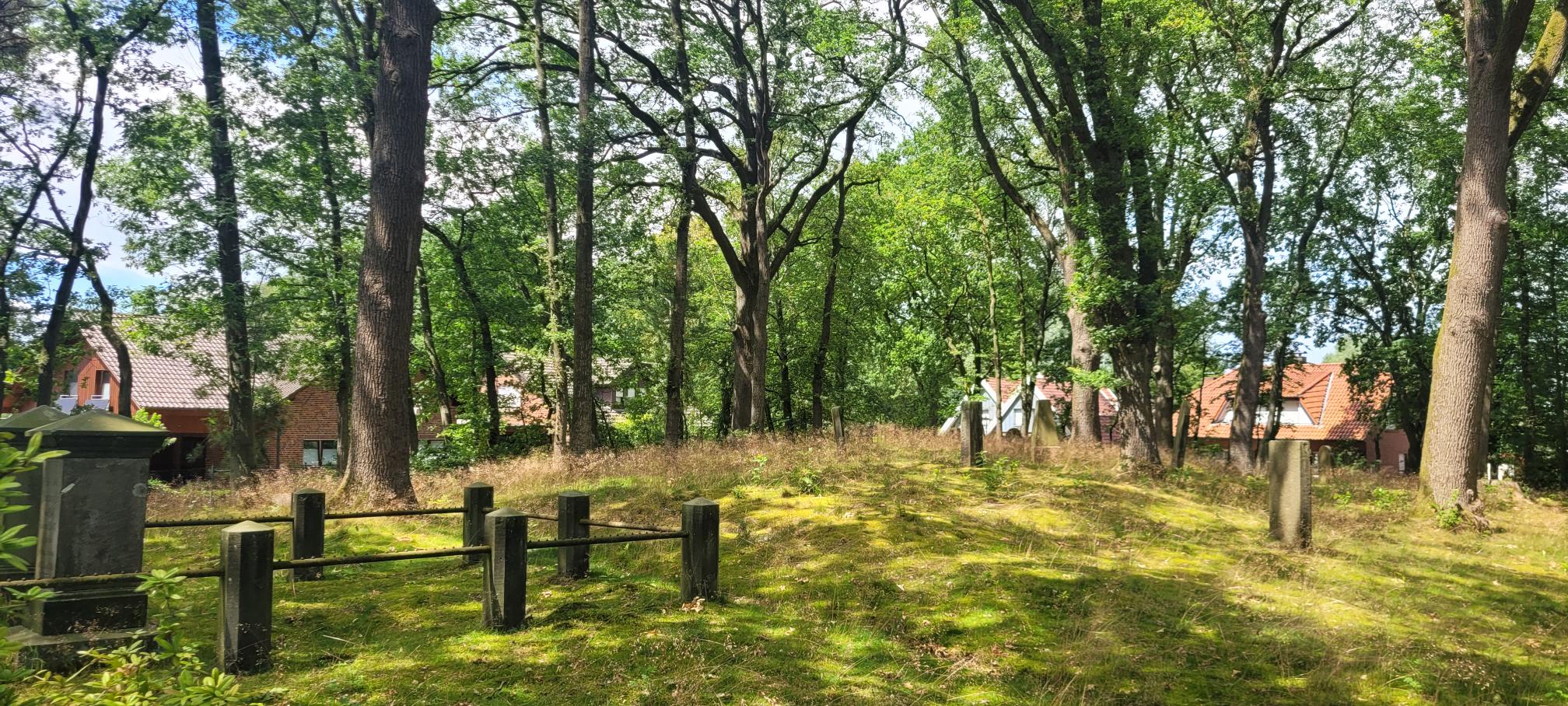
On 1 July, an excursion led by Sebastian Musch brought students from UOS to Neuenhaus (Grafschaft Bentheim) to visit the Günter-Frank-Haus. The Günter-Frank-Haus grew out of an initiative established in 2012 to commemorate the deportation of the last Jewish women and men of Neuenhaus. It was named in memory of Günter, the only Jewish child to grow up in Neuenhaus during the National Socialist era, who was murdered in Auschwitz in 1944 at the age of 16. An exhibition tells the history of the persecution and murder of the Jewish community of Neuenhaus. Christa Pfeiffer, one of the co-initiators of the Günter-Frank-Haus, guided us through the exhibition and subsequently to the Jewish cemetery in Neuenhaus. For the students, Jewish history was naturally the primary focus; at the same time, however, discussion also turned to the lengthy and difficult social negotiations and resistance that had long stood in the way of this commemorative initiative, and how it ultimately succeeded.
Academic exchange also featured prominently in July:
The sixth Tiny Desk Colloquium of the Professorship for Contemporary History and Historical Migration Research brought together five contributions that, despite their thematic diversity, pursued a common question: How are historical categories, narratives, and attributions actually produced? Under the moderation of Dr. Sebastian Musch, the spectrum ranged from West German post-war justice to digital public history and the politics of history in international organizations. The opening contribution came from Lennart Blömer, who presented findings from his bachelor’s thesis on the procedural construction of credibility in National Socialist trials. Lea Horstmann and Jannik Singer, representing a student group, introduced the digital exhibition opened in April — a project from the seminar of Dr. Sebastian Huhn that documents the largest European “old people’s home” for Displaced Persons in Varel. Dr. David Templin from the SFB 1604, Sub-project C1, examined the Frankfurt Office for Multicultural Affairs, founded in 1989, and demonstrated how municipal migration policy operated between claims to recognition and limited competencies. Dr. Maria Rhode (University of Göttingen) reconstructed approximately 460 Displaced Persons who studied in Göttingen from 1945 onwards using university sources, and argued for making gaps in the archival record explicitly visible. Perhaps the most surprising finding was presented by Dr. Sebastian Huhn: a three-volume history of the IRO, already accepted for publication by Oxford University Press, was halted in 1953 following an objection by the United States — the team was dismissed and the task reassigned. Drawing on Michel-Rolph Trouillot’s concept of the “Silencing of the Past”, Huhn interpreted this episode as the deliberate suppression of an inconvenient counter-narrative that continues to shape the founding narrative of the modern refugee regime to this day.
On 8 July, Sebastian Musch presented theoretical reflections for discussion at the colloquium of Cluster A of the Collaborative Research Centre 1604 “The Production of Migration”, concerning the biographical linkage between experiences of flight and the production of migration categories. These reflections originally appeared in his essay Statelessness as a Political-Existential Predicament in the Lives and Writings of Three German-Jewish Intellectuals, published in The Historical Journal. The central focus was the life and thought of Hannah Arendt, whose philosophical writings on flight and statelessness have fundamentally shaped the philosophical discourse on these subjects. For the CRC, these questions are important not only because they allow current debates to be historicized, but also because they illuminate the possibilities and opportunities of a genealogy of the production of migration. The example of Arendt provides a concrete basis for discussing how the production of figures of migration functions at the intersection of experiential knowledge, political practice, and scholarly reflection; what inclusions and exclusions it generates; and what it means for reflexive research practice that the most influential migration figures of the twentieth century were co-produced by authors who could not themselves disengage from the categorization processes they were analyzing.
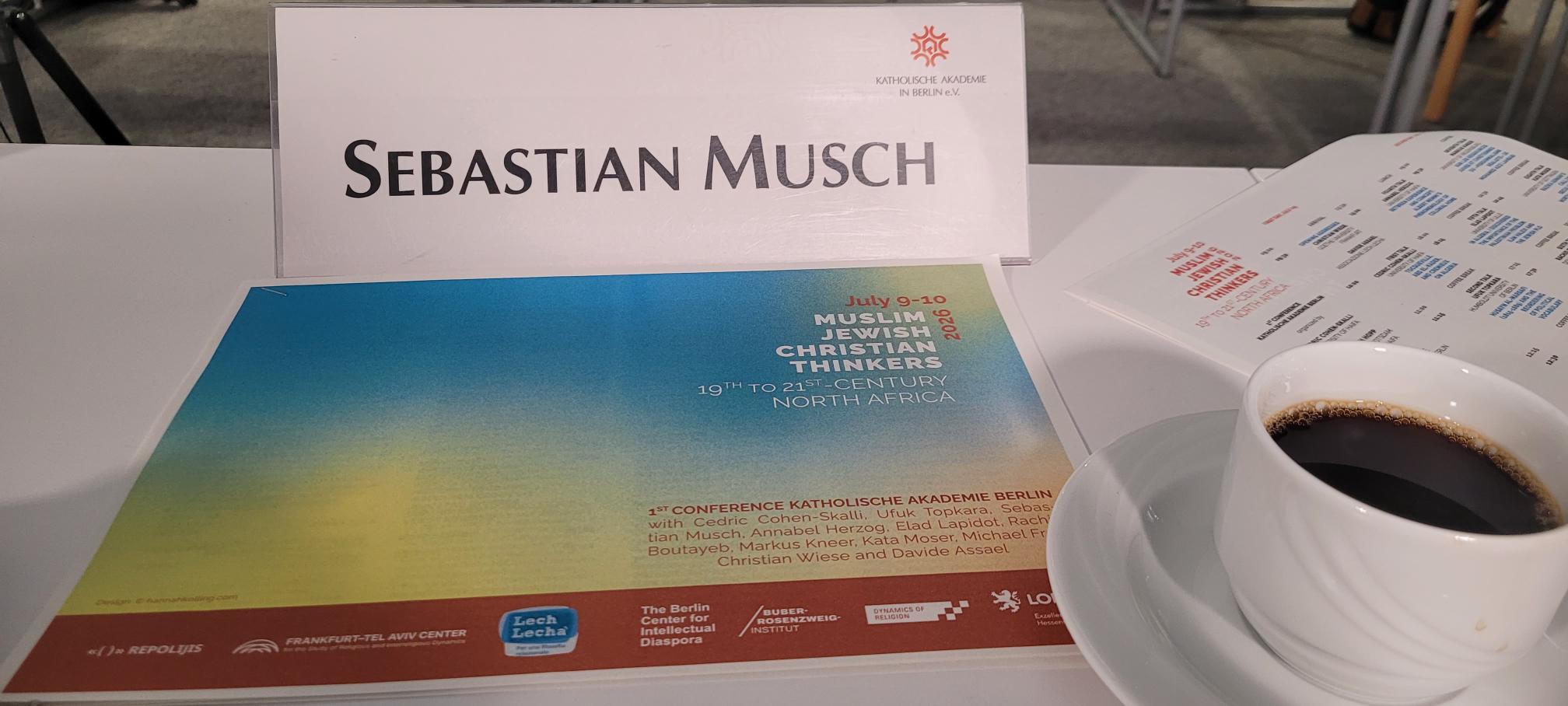
On 9 July, Sebastian Musch delivered a paper at the conference Muslim, Jewish, and Christian Thinkers in 19th- to 21st-Century North Africa at the Katholische Akademie Berlin. The paper “Essi mi appaiono come ebrei del tempio”: Italian-Jewish Philosophical Debates on the Origins of Ethiopian and North African Jewry under Fascist Colonialism addressed the extension of the fascist temporal regime to Ethiopian Jews (the so-called Falashas), who came under fascist rule following the colonization by Mussolini’s Italy.
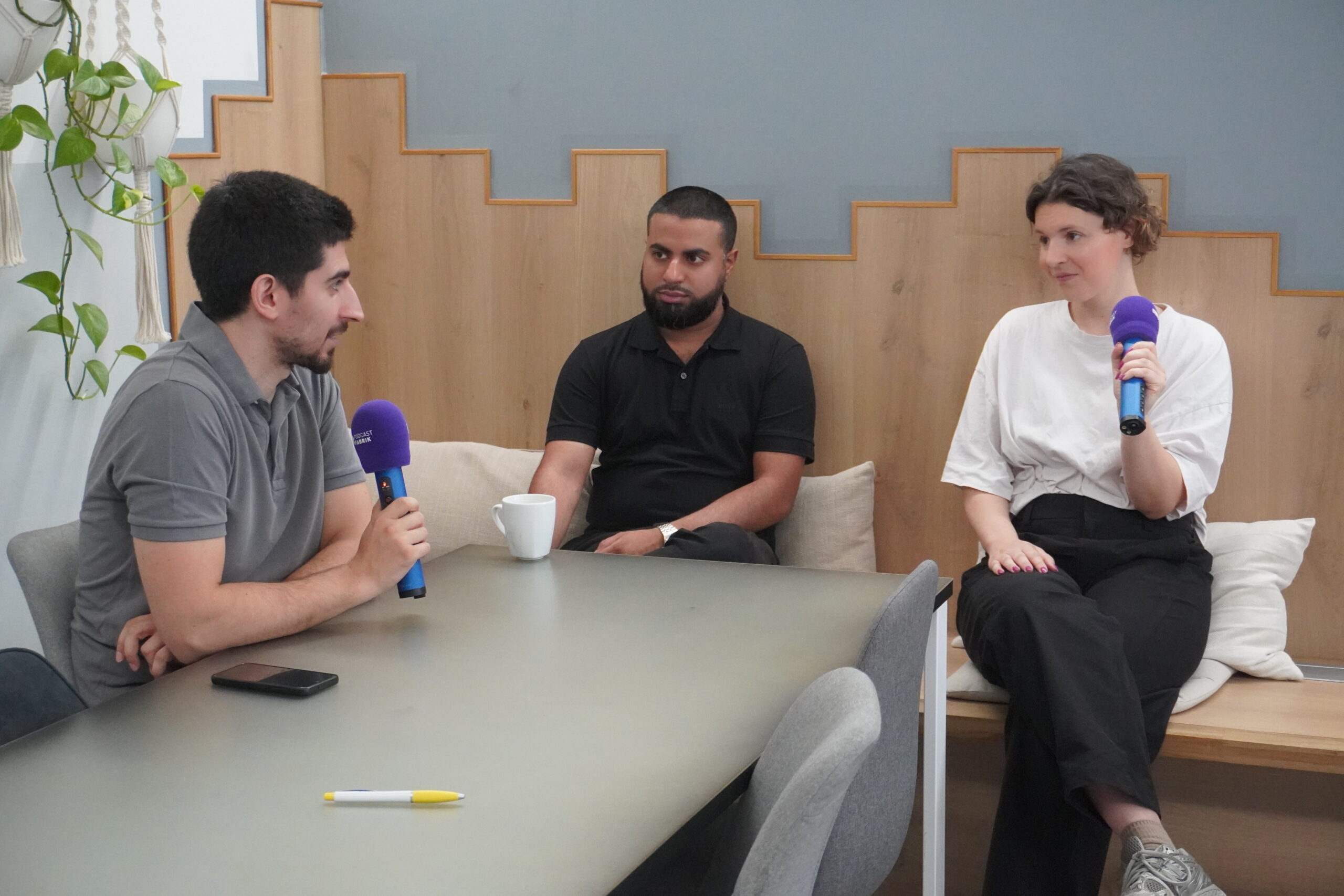
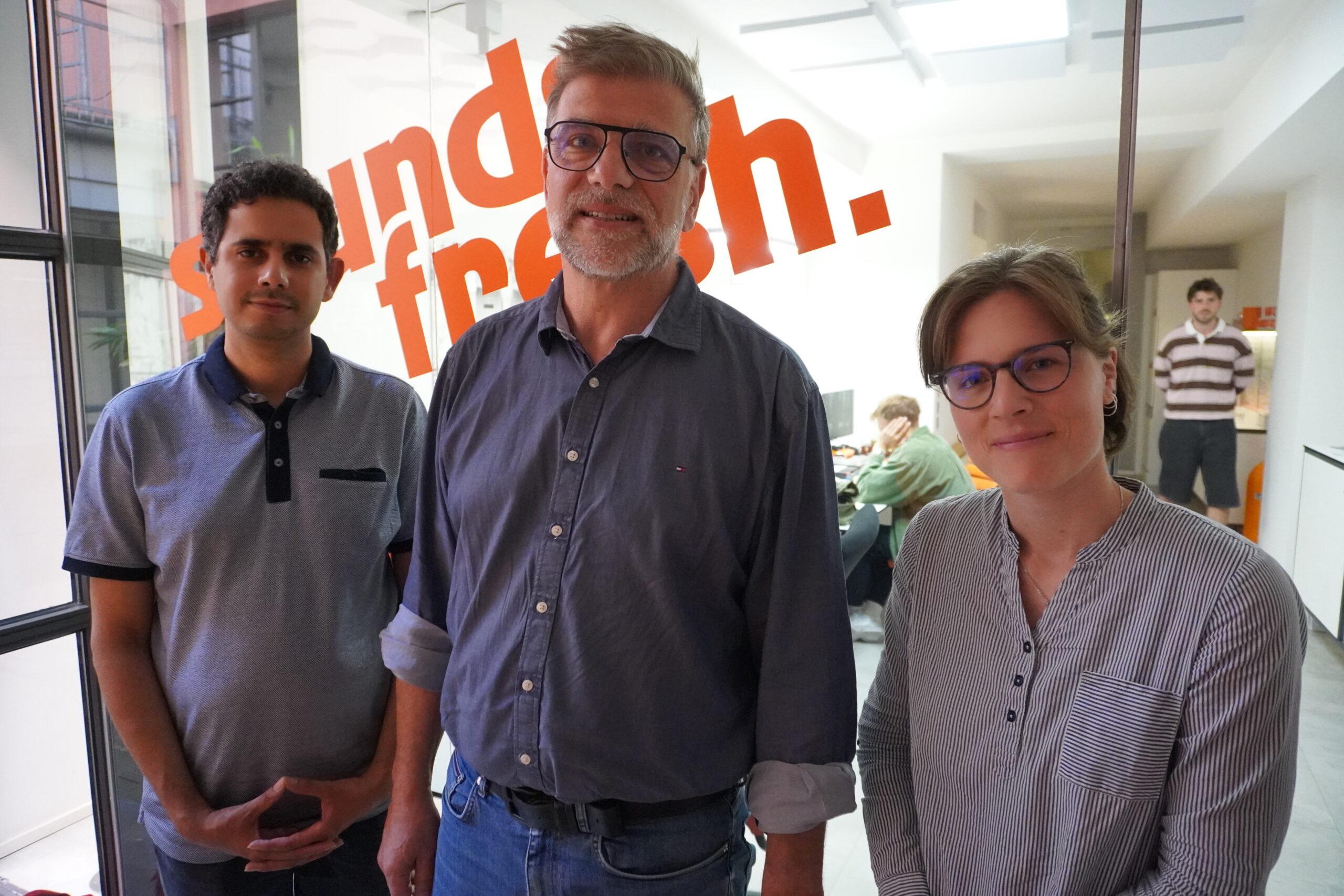
On 28 July, Christoph Rass and Annika Heyen, together with their CRC colleague Leonie Stoll (Project A2: The Production of the Discriminated in Anti-Racist Movements), visited 180 Grad Wende and the podcast studio Sounds Fresh in Cologne. The purpose of this visit was to record an episode with the association’s founder and director Mimoun Berrissoun, project coordinator for the “Azubi Buddy” programme Alparslan Korkmaz, and advisor Samir Abrar, for a joint episode of the SFB 1604 podcast “Production Site” under the title “Die Place Changer” [“The Place Changers”]. They were accompanied during the recordings by Matthias Milberg from the Bielefelder Podcastfabrik. Also present was Kim Aaliyah Gerlach from VirtuOS, who documented the day on film. The footage is intended to form part of a documentary film about the work of the transfer project “Reflexive Migration Research in the Museum” under the working title “Migration wird gemacht. Ein Reallabor in virtuellen Räumen” [“Migration is Made: A Real-World Laboratory in Virtual Spaces”].
On 22/23 July, Sebastian Musch delivered a paper entitled “Returning to the ‘Land of the Perpetrators’: Reassessing the Consolidation of Jewish Communities in Postwar Germany” at the workshop “Refugees, Returnees, Tourists. Migration and Entanglements in Spain and Germany in the Long Postwar Period” – organized by Jenny Augustin (University of Osnabrück), Ursula Hennigfeld (HHU Düsseldorf), and cooperation partner Inbal Ofer (Open University of Israel).
In his paper, Sebastian Musch discussed why the widely anticipated disappearance of Jewish communities in Germany after 1945 – whether through emigration or an ageing membership – did not come to pass. In fact, membership numbers stabilized at around 17,000 to 20,000. Scholarship refers to this as “consolidation” and, in seeking an explanation, frequently adopts the self-interpretations of contemporary witnesses. Sebastian Musch presented various theoretical approaches that help render this non-migration analytically tangible. The consolidation thesis prevalent in the research literature can thus be read as a production of non-migration. The paper concluded with a look at the 1990s: the immigration of Jewish quota refugees from the former Soviet Union was politically interpreted as a demonstration of trust in German democracy, and Jewish life was rhetorically addressed as a “gift.” The paper shows how a minority is here defined through its function for the majority society – and raises the question of whether scholarship on Jewish migration does not reproduce precisely this pattern.
Notes
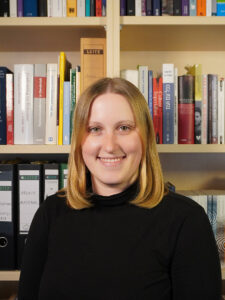
This month, Annika Heyen received good news: she has been accepted as a scholarship holder of the Zeitlehren Foundation with her doctoral project “The Bermuda Conference 1943: Negotiations for the Rescue of Jewish Refugees and Their Failure?” In addition to the general funding grant, the scholarship provides access to the Foundation’s network meetings and to academic exchange with other scholarship holders.
Imke Selle also received good news: for the final phase of her doctoral project “Practices of the Digital Production of Historical Culture Using the Example of the Emsland Camps,” she has been awarded a completion scholarship from the University of Osnabrück’s Women’s Advancement Pool.
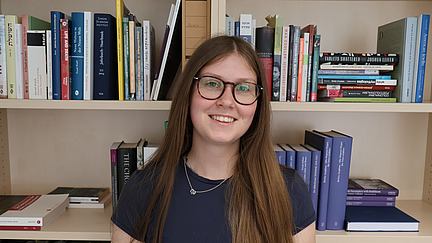
On 1 July, the NGHM team welcomed Leonie Schwiers as a new student research assistant. Leonie is studying German Studies and History in a two-subject Bachelor’s program and will be entering her fifth semester in the coming winter semester. She supports the core team in the areas of research and teaching.
The fifth edition of the Inside.NGHM series offered an insight into the academic career and research of Sebastian Musch. He described an unusual academic path: rather than History, he initially studied Jewish Studies and Philosophy in Heidelberg – a decision that grew out of a voluntary year in Israel and Hebrew language skills he had acquired alongside new immigrants from Russia, France, and Iran. His doctoral dissertation was devoted to the perception of Buddhism among German-Jewish thinkers, a topic that caught up with him unexpectedly following a teaching stint in Sri Lanka. His doctoral period took him to Haifa, Berlin, Berkeley, and Ghent – a period he described as intellectually liberating despite its precariousness. Musch came to Osnabrück through a biography project on Hermann Helfgott/Zvi Asaria funded by the Fritz Thyssen Foundation. Since 2021, he has been conducting research as Alfred Landecker Lecturer at the intersection of migration history and Holocaust studies. Central to his work is the question of how categories such as “refugee” or “displaced person” did not simply exist, but were actively produced in consulates, aid organizations, and at international conferences. The Collaborative Research Centre 1604 “Production of Migration” provides, as Musch noted, an analytical vocabulary that makes it possible to describe persecution and flight as the outcome of ordering processes.
Blog Posts in July
- Eduard Usov & Jessica Wehner: NGHM-Tracker (7/26), 1 July 2026.
- Christoph Rass: Notes from the DHIP-Summer University in Paris | Doing Migration History with Digital Methods, 3 July 2026.
- Christoph Rass: NGHM reads | 09 | Eric J. Hobsbawm: The Age of Extremes (1994), 5 July 2026.
- Team NGHM: Report | Sixth Tiny Desk Colloquium: Displaced Persons, Urban Migration Policy, and the Historiography of the Refugee Regime, 6 July 2026.
- Christoph Rass: Watching a Register Move | An Animated Card Index and the Production of Migration, 7 July 2026.
- Christoph Rass: NGHM reads | 10 | Detlev Peukert: Die Weimarer Republik (1987), 11 July 2026.
- Christoph Rass: NGHM reads | 11 | Frantz Fanon: Schwarze Haut, weiße Masken [Black Skin, White Masks] (1980), 19 July 2026.
- Annika Heyen & Jessica Wehner: Team NGHM in Tutzing | Conference “From Geneva to Schengen”, 21 July 2026.
- Christoph Rass: Discoveries | »Guests of the Reich«. An American Riposte to the Nazi Catchword ›Gastarbeiter‹, 1943, 23 July 2026.
- Team NGHM: INSIDE.NGHM | Sebastian Musch, 27 July 2026.
Outlook & Upcoming Events

In early August, Prof. Dr. Christoph Rass will be heading to Oregon for three weeks – to Eugene, Corvallis, Salem, and Portland, with a document scanner in his luggage and the firm intention of putting it to serious use.
The trip is part of Subproject A3 of the CRC 1604 and follows directly from “Inventing the Guestworker,” the book that Julie Weise and Christoph Rass are currently seeing through to press. In it, the two authors reconstruct how the figure of the ‘guest worker’ migrated into American immigration discourse: as a translation, from Congress, the ministries, the vocabulary of commissions, the media, and academia. What remains open is the other half of the same process. For a migratizing figure does not emerge only where it is named, but equally where it is used, adopted, contested, and inhabited – in labor disputes, in administrative correspondence, in the trade press of the agricultural sector, in the files of advisory centers and self-organized associations.
It is precisely this that Christoph Rass is searching for in the archives of the Willamette Valley, with a focus on the early 1980s: the years leading up to the Immigration Reform and Control Act of 1986. In what categories did producers and their trade press, state administration, trade unions, and a growing farmworkers’ movement contest the meaning – or, in our terms, the “production” – of migration? And what role did the then newly introduced figure of the “guest worker” play in this process?
The relevant records are scattered across multiple repositories: the PCUN Records in Eugene, the Extension Service files in Corvallis, the Governor’s papers in Salem, and the records of the Oregon AFL-CIO in Portland.
Whether the hypothesis holds – that the figure was not simply received locally but also renegotiated and remained persistently contested – will be decided by what emerges from the archival boxes.
Find the original post at NGHM-Tracker (8/26) on nghm.hypotheses.org.
This post was automatically translated from the German original.