History@SFB 1604 | »The Place Changers«: Podcast Recordings at the 180 Grad Wende in Cologne-Kalk.

By Annika Heyen, M.A. · Originally published on nghm.hypotheses.org
There are places where the question of what migration actually is does not arise theoretically, but must be answered practically every day. The Kalk-Mülheimer Straße in Cologne is one such place. On 28 July, Christoph Rass and Leonie Stoll recorded material there for the SFB 1604 podcast, “Production Site”, together with the association 180 Grad Wende, whose advisors have been working with young people in Kalk and Mülheim for thirteen years.
The episode carries the working title “Die Place Changer” [“The Place Changers”], and the title is meant literally. ‘Place’ denotes two things: the location and the position someone occupies in a society. Those who change both usually do so in a single movement. That is precisely what the association does, and precisely why the episode reverses the familiar direction: here, it is not research that explains practice, but practice that is asked what it knows about migration that a research consortium does not.
An association rooted in the neighbourhood
Under the motto “Niemanden zurücklassen: Gemeinsam Chancen schaffen” [“Leave no one behind: Creating opportunities together”], 180 Grad Wende has been working since 2012 to promote equal opportunities for young people from what the language of funding programmes calls ‘marginalised communities’. The initiative now also operates internationally; its focus nonetheless remains where everything began. In Kalk, the “Wendepunkt” [“Turning Point”] offers a drop-in centre where young people can receive advice not only on educational pathways, career entry, and other questions about their futures, but can also participate in empowerment and prevention workshops.

The context of this work can be quantified: in the Kalk district, around one third of children and young people grow up in poverty, the highest figure among Cologne’s nine city districts (Kölner Kommunalstatistik). Anyone who speaks about the prospects of young people in this neighbourhood is always also speaking about distribution.
Who recorded, and for what purpose
The episode is being produced within the transfer project “Reflexive Migrationsforschung im Museum” [“Reflexive Migration Research in the Museum”] in cooperation with 180 Grad Wende. Leonie Stoll is a research associate in sub-project A2 “Die Produktion der Diskriminierten in antirassistischen Bewegungen” [“The Production of the Discriminated in Anti-Racist Movements”]; she brings with her the question of how civil society actors not only suffer from categories of discrimination, but actively produce and shift them. Christoph Rass co-leads, together with colleagues, sub-project A3 “Ihr seid Gastarbeiterkinder” [“You Are Guest Workers’ Children”] as well as the transfer project.
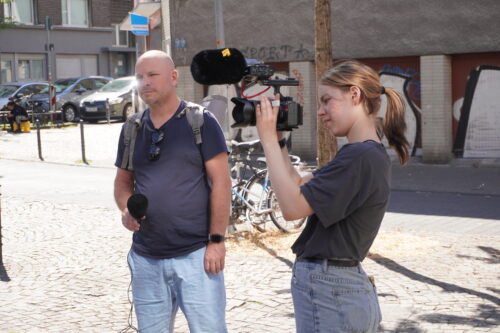
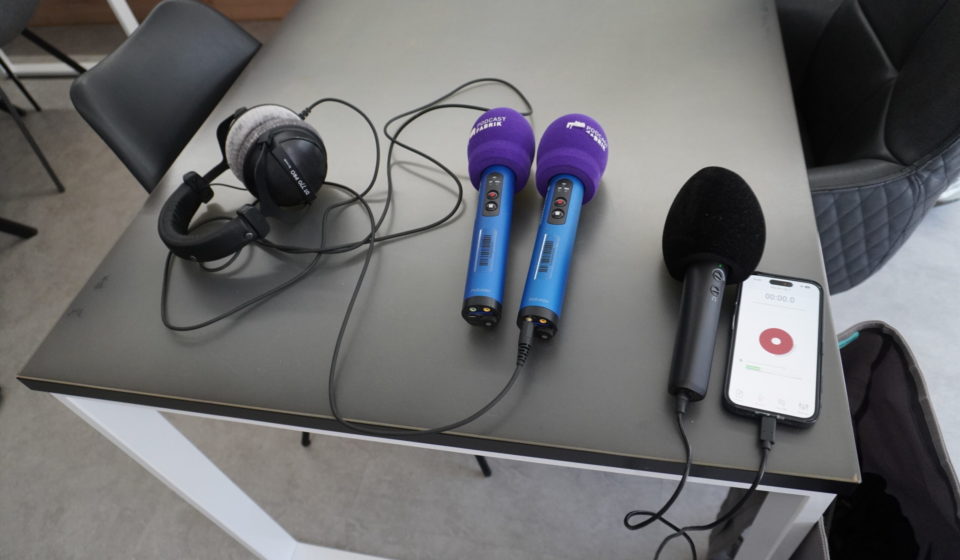
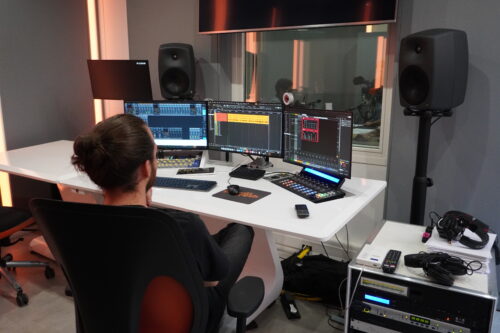
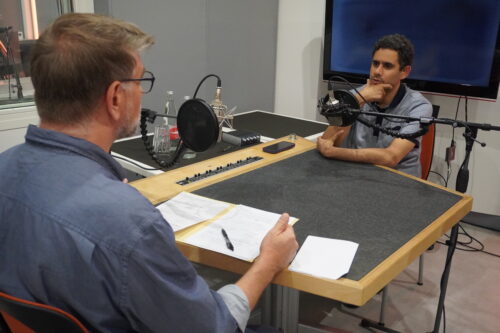
Matthias Milberg from the Bielefeld-based Podcastfabrik accompanied the recordings, particularly those made outdoors: on the busy Kalk-Mülheimer Straße, considerable effort was required to ensure that the speakers’ voices remained clearly audible. The interview with Mimoun Berrissoun was subsequently recorded at the Cologne studio Sounds Fresh, which made its premises and equipment available to us for the recording. Kim Aaliyah Gerlach from VirtuOS at the University of Osnabrück documented the day on film; the material is intended to feed into a short documentary film about the work of the transfer project, working title: “Migration wird gemacht. Ein Reallabor in virtuellen Räumen” [“Migration is Made. A Real-World Laboratory in Virtual Spaces”].
First part: a neighbourhood of contrasts
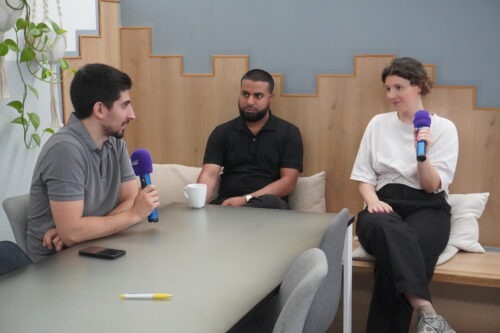
In the first part, Leonie Stoll was guided through the neighbourhood by Alparslan Korkmaz, project coordinator of the “Azubi Buddy” [“Apprenticeship Buddy”] programme, and by Samir Abrar, project worker and advisor. What remained was an impression of contrasts.
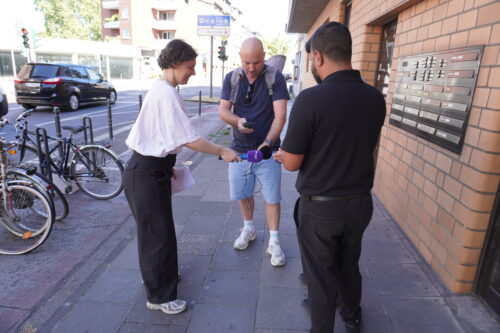
Korkmaz and Abrar describe Kalk as a liveable and open neighbourhood in which people share both joys and sorrows; at the same time, surveillance cameras on the main street generate a sense of insecurity. At first glance, everything one needs for daily life is infrastructurally in place, from nurseries and schools to a hospital. On closer inspection, however, there is a shortage of apprenticeship places and employment for young people. The fact that young people growing up under these conditions feel left behind and, lacking alternatives, begin to drift is then not a question of individual disposition, but a question of opportunity.
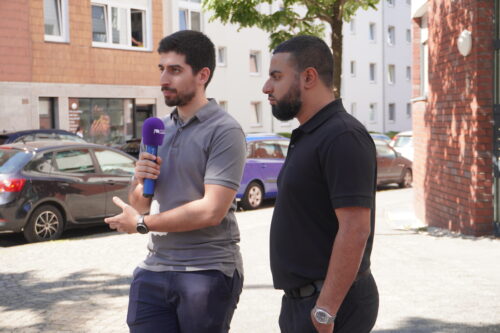
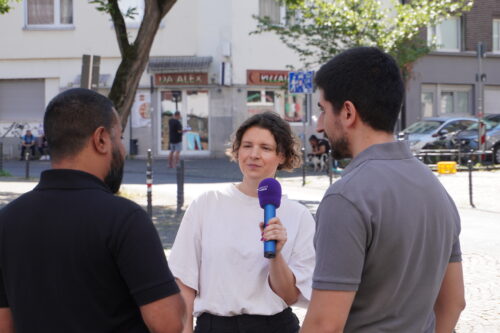
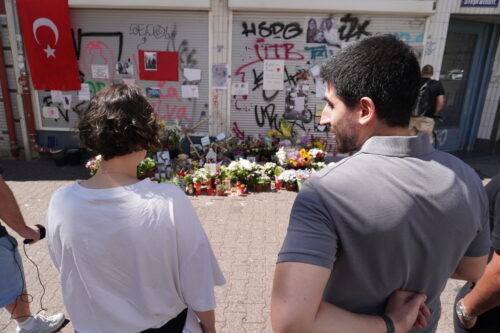
The advisors counter this with an approach that is easy to describe but difficult to sustain: needs-oriented support without coercion, on equal terms, whether when applying for an apprenticeship place, filling in official forms, or navigating other everyday obstacles. That this approach works is evident from unassuming signs: clients recommend the association to others, some become active themselves, or come by with their families and a small token of thanks to share their successes.
Part Two: Trust That Cannot Be Applied For
In the second part, Christoph Rass spoke with Mimoun Berrissoun, founder and director of the association, on Sounds Fresh about the organisation’s beginnings and the obstacles encountered over the past thirteen years.
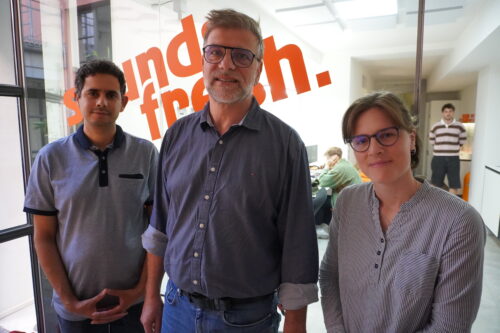
What distinguishes 180 Grad Wende from other prevention services available in Kalk and in other neighbourhoods perceived as ›problem areas‹ is the trust that the association’s active members enjoy. Berrissoun and his colleagues know the district and its residents, and they are known there. Trust of this kind cannot be put out to tender or applied for: it develops over years, in a place, through people.

Yet herein lies a structural contradiction. The association works to create lasting structures, while itself depending on fixed-term funding. Most staff members are employed on a project basis, meaning that time and personnel are repeatedly diverted into applying for the next round of funding rather than into the work itself. Relationship-building requires continuity; project funding does not provide it. A rethinking of the funding system, Berrissoun argues, would be a prerequisite for established actors to work more effectively. He articulates the association’s goal as the prospect of its own dispensability: to ›infect‹ as many young people ›with good things‹ that he and his fellow campaigners can gradually step back.
What the Episode Asks
For the CRC 1604, this visit amounts to more than a reportage. The research consortium investigates how migration is produced: not the movement itself, but its meaning — that is, the question of who is regarded as a migrant, whose difficulties are attributed to their background, and who is required to explain themselves. Such attributions arise in statistics, in public debates, in funding programmes. They also arise in neighbourhoods like Kalk.
The work of 180 Grad Wende engages with precisely these attributions, though usually in the opposite direction: it attempts to remove labels from young people. The counsellors witness the damage such labels cause earlier than researchers do, namely in those who are unable to move forward because of them. In fact, the association thereby calls into question a category that migration research itself employs: when young people of the third generation, born and raised here, encounter the same barriers as newly arrived migrants, ›migration‹ explains very little. The question that then arises is rather why certain attributions prove so stubbornly persistent.
This reversal is at the heart of the episode, and it affects those involved on both sides. Research, too, operates under fixed-term contracts and funding dependency; the logic the association describes is not unfamiliar to academia. In the concluding conversation, Leonie Stoll and Christoph Rass will discuss precisely this: what they heard in Kalk, and what it does to their own conceptual frameworks.
Outlook
“Die Place Changer” is planned for the second series of “Production Site”. A release date has yet to be confirmed. The episodes of the first series, including “Die Vorreiterin” [The Pioneer] with migration researcher Czarina Wilpert, a trailblazer in the field, and “Der Grenzgänger” [The Border Crosser] with journalist Gerhard Kromschröder, are available to listen to online here: https://www.uni-osnabrueck.de/sfb1604/production-insights/podcast
Find the original post at History@SFB 1604 | »Die Place Changer«: Podcast-Aufnahmen bei der 180 Grad Wende in Köln-Kalk. on nghm.hypotheses.org.
This post was automatically translated from the German original.