Research Revisited: Digitally Remembering Maly Trostinets – Trinational Cooperation Opens Up a Forgotten Site of Extermination

This post was automatically translated from the German original at
Research Revisited: Maly Trascjanec digital erinnern – Trinationale Kooperation erschließt einen vergessenen Vernichtungsort.
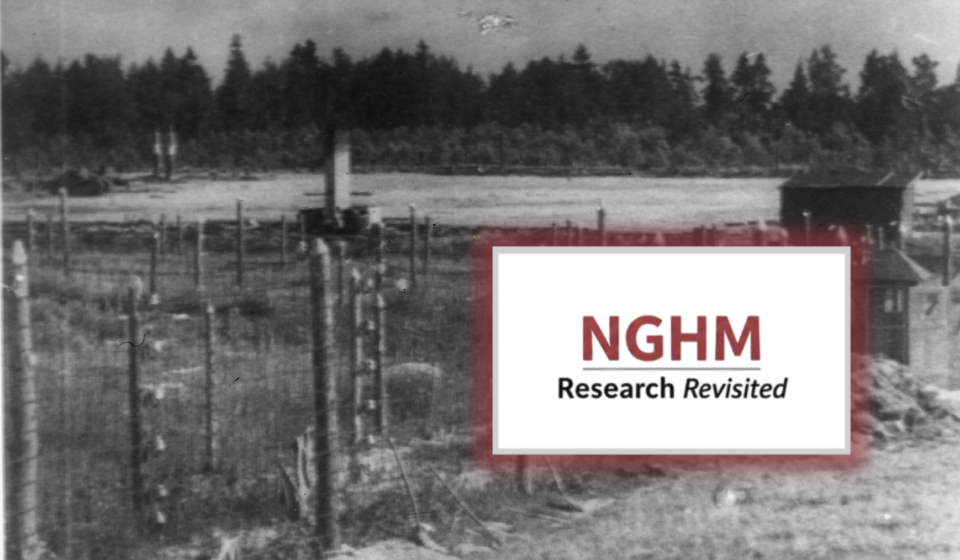
Between 1942 and 1944, approximately 60,000 people were murdered at Maly Trascjanec southeast of Minsk. This extermination site thus ranks among the largest scenes of the Shoah in the territory of the occupied Soviet Union. Nevertheless, Maly Trascjanec remained almost invisible in European memory culture for a long time. A trinational project by the Universities of Osnabrück and Vienna as well as the History Workshop “Leonid Levin” in Minsk set itself the goal from 2021 to 2022 of digitally developing this forgotten site and making it accessible from multiple perspectives. The results of this collaboration have been online since May 2022 and belong to the most important projects we want to present in the “Research Revisited” section.
An extermination site that remained forgotten for a long time
Maly Trascjanec is today a suburb of Minsk. Between 1941 and 1944, the German occupiers established a camp here and used the surrounding forest areas, particularly the Blahaǔščyna clearing and the Šaškoǔka woodland, as their killing site. Here, not only Jews deported from Central Europe were murdered, but also Soviet civilians, members of the intelligentsia, partisans, and people who were abducted from Minsk prisons as suspected resistance members. The corpses were buried in mass graves, later exhumed and burned as part of Aktion 1005 to eliminate traces of the crime.
While names like Auschwitz, Treblinka or Sobibór are firmly anchored in the collective memory of the Shoah, Maly Trascjanec played no role in German and Austrian memory culture for a long time. The site was also initially neglected in Soviet historical politics before the first memorial stones were erected in the 1960s. Only after the end of the Soviet Union and particularly since the 2000s did interest in this site of violence grow. In 2015 and 2018, new memorial installations were created based on civil society initiatives, including the “Forest of Names” and the “Last Path”. Nevertheless, Maly Trascjanec remains little known outside of Belarus.
Trinational cooperation under pandemic conditions
This is where the project “Virtual Tour for the Multi-perspective Development of the Maly Trascjanec Memorial Site” began, which was funded by the Foundation Remembrance, Responsibility and Future within the framework of the “Youth Remembers” programme. From January 2021 to May 2022, students from Belarus, Austria and Germany worked together in parallel seminars and joint workshops to digitally develop the extermination site. The project was led by Dr. Aliaksandr Dalhouski from the History Workshop “Leonid Levin” in Minsk, Prof. Dr. Christoph Rass from the University of Osnabrück as well as Prof. Dr. Kerstin von Lingen and Prof. Dr. Claudia Theune from the University of Vienna.
The collaboration took place under the difficult conditions of the Covid-19 pandemic, which made direct encounters impossible. All the more remarkable is that it succeeded in establishing an intensive transnational cooperation over more than a year, in which different perspectives on the extermination site were productively connected with each other. The Belarusian students examined the memory culture on site and tested the emerging digital tours in the field. The Viennese students reconstructed the paths of the victims from Vienna to Maly Trascjanec and conducted interviews with descendants of the murdered. The Osnabrück students dealt with the perpetrators, the transformation processes of the site and the memory culture.
Six exhibitions, multiple perspectives
The result of this collaboration are six digital exhibitions, which were realised under the editorial leadership of Annika Heyen from the NGHM team and Franziska Lamp from the University of Vienna with the open-source platform Omeka and illuminate various aspects of the extermination site:
From Osnabrück:
The exhibition “Maly Trascjanec: The Perpetrators“, developed by Nils Kaschubat, Johanna Schweppe, Paulin Wandschneider and Frank Wobig, names those responsible for the murders in Maly Trascjanec and documents their actions. Using post-war trial records, biographies of the perpetrators are reconstructed and critically questioned as to how “normal” their lives were. The exhibition thus makes clear that the Holocaust depended on the active participation of many individuals.
The exhibition “Maly Trascjanec: The Memory Culture“, developed by Ron Wilke, Kristin Waßmann and Michelle Ostermaier, documents the various layers of memory of Maly Trascjanec. It shows how the site was initially neglected in Soviet times, then selectively remembered and finally redeveloped after 1991. An interactive map provides an overview of the memorial landscape and its development.
The exhibition “Maly Trascjanec: Transformations of an Extermination Site“, developed by Peter Kamp, Tatjana Rykov, Rukia Soubbotina and Charlotte Vöhl, traces the changes to the site from 1941 to today. It shows how the site was used during the German occupation, how it was initially used for other purposes after liberation and fell into disrepair, before gradually becoming a memorial site. The exhibition makes visible the many layers of transformation that shape today’s appearance.
From Vienna:
The three exhibitions under the title “Path of Memory” were created by students from the University of Vienna and take a different perspective. They follow the path of the victims from Vienna to Maly Trascjanec and address their persecution, deportation and murder.
“Path of Memory I: The Disenfranchisement in Vienna and Deportation to the East“, developed by Claudia Adebayo, Judith Alberth, Sarah Appl, Tina Baumann, Max Berghof, Francesco Bisaccia, Julia Greithanner, Jürgen Gruber, Melissa Gruber, Peter Hinterndorfer, Lena Hummer, Maximilian Karner, Max Neuhold, Lisa Reicher and Astrid Striessnig, is dedicated to the apartments from which Viennese Jews were expelled, the collective apartments and assembly camps as well as the railway stations from which the deportations took place. The exhibition attempts to make the perspective of the persecuted visible and to show how Aryanisation was concretely carried out.
“Path of Memory II: The Persecution and Extermination in Malyj Trostenez“, developed by Arlo Newton Kleewein, Raphael Günter Kräuter, Johannes Mayer, Ruben Elias Oppenrieder, Anna Schantl, Konstantin Schischka, Stefan Schranz, Viktoria Schwammel and Teresa Unger, deals with the sites of persecution and extermination in Minsk and Maly Trascjanec. The exhibition addresses the various victim groups and deals with archaeological finds and material traces of the crimes.
““Path of Memory III: Remembering Malyj Trostenez” addresses central sources such as the so-called Seiler Report, an important testimony from a Viennese survivor. For this exhibition, the students conducted interviews with descendants of victims and addressed post-war justice as well as Austrian memory culture in relation to Maly Trascjanec.
From Minsk:
The Belarusian students Maria Ivanova, Darya Iljankova and Natalja Holubeva examined the local memory culture and memorial landscape, researched sources and materials, and contributed to all project outcomes. They tested the digital tours and accompanied the translation of all materials into Belarusian and Russian.
Methodological Reflection: Omeka and Student Research
For us, the project was remarkable not only in terms of content but also methodologically. The use of Omeka as a platform for the digital exhibitions enabled students to independently develop complex presentations. The free and cost-effective software facilitates working with metadata and the narrative linking of objects to exhibitions. This makes it particularly suitable for teaching projects in which students should not only conduct historical research but also learn to prepare their results for a broader public.
The transnational collaboration under pandemic conditions presented major challenges for all participants. Joint workshops had to take place online, direct exchange on site was not possible. Nevertheless, through regular Zoom meetings, joint seminar events and working groups, a productive cooperation was established. The students learned not only to work with historical sources but also to collaborate across national and linguistic boundaries and to integrate different perspectives.
Impact and Continuation
Since the digital opening on 10 May 2022, the exhibitions have been visited by thousands of users. The site has been continuously expanded, including with English language versions of the exhibitions. The project has provided important impulses for remembering Maly Trascjanec and shown how digital formats can contribute to bringing forgotten sites of the Shoah back into public consciousness.
With the project’s completion, a new phase of cooperation between the History Workshop Minsk and the University of Osnabrück began simultaneously. In the follow-up project “Virtual Learning Site Malyj Trostenez“, again funded by the Foundation Remembrance, Responsibility and Future, a didactic concept for historical educational work was developed. In cooperation with Prof. Dr. Lale Yildirim from the History Didactics Department of the University of Osnabrück (now at the University of Kiel), a workshop plan for history teaching in Germany and Belarus was created that didactically develops the digital exhibitions and tours.
Recognition
The project “Digitally Remembering Maly Trascjanec” exemplifies how productive transnational cooperation in historical studies can be and what possibilities digital formats offer for Public History. The collaboration across national boundaries made it possible to bring together different perspectives on the extermination site: the local Belarusian memory culture, the Austrian perspective on the deportations from Vienna, and the German engagement with the perpetrators and the transformations of the site.
Special thanks are due to Dr. Aliaksandr Dalhouski from the History Workshop “Leonid Levin” in Minsk, who led the project and contributed the Belarusian perspective. Prof. Dr. Kerstin von Lingen and Prof. Dr. Claudia Theune from the University of Vienna contributed significantly to the project’s success with their expertise in history and historical archaeology. Prof. Dr. Christoph Rass led the Osnabrück working group and coordinated the technical implementation together with Annika Heyen.
Our project sees itself as a contribution to European memory culture. It makes visible a long-forgotten site of the Shoah and shows that critical historical research and communication are possible even under difficult conditions. The digital exhibitions and tours are freely accessible at malytrostinec.nghm-uos.de and invite engagement with the history of Maly Trascjanec.