Team NGHM in Tutzing | Conference “From Geneva to Schengen

By Annika Heyen and Jessica Wehner · Originally published on nghm.hypotheses.org
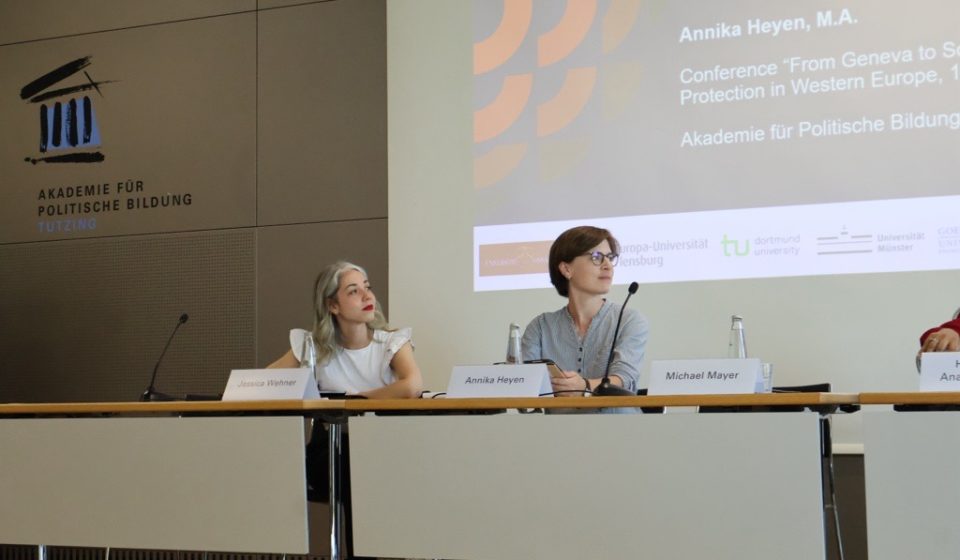
during the conference (Photo: Marcel Berlinghoff)
From 29 June to 1 July 2026, Jessica Wehner and Annika Heyen participated, at the invitation of Michael Mayer (Akademie für Politische Bildung Tutzing) and Frank Caestecker (Ghent University), in the international conference “From Geneva to Schengen. Shaping Immigration and Refugee Protection in Western Europe, 1951–1994.” The conference took place at and was hosted by the Akademie für Politische Bildung Tutzing on the shores of Lake Starnberg – in partnership with Ghent University – and offered Wehner and Heyen the opportunity to present insights into their doctoral projects to an international audience.
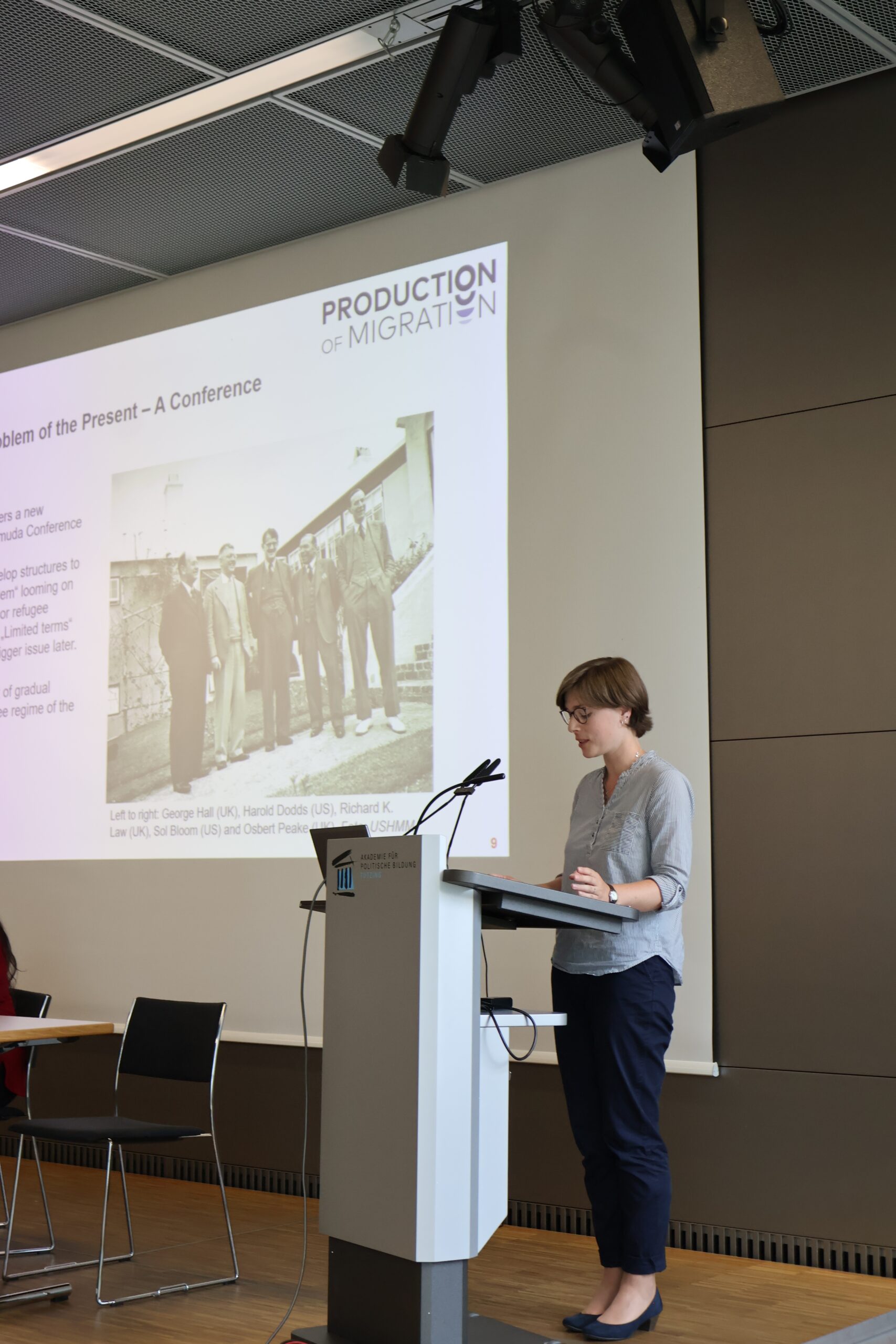
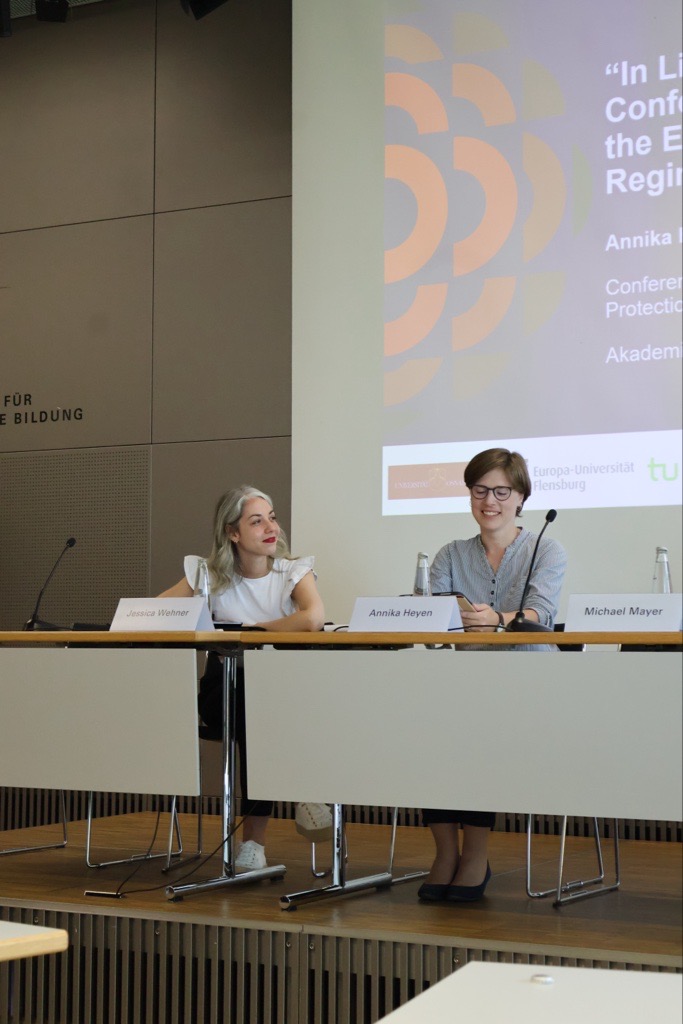
presentation (Photo: Marcel Berlinghoff)
Annika Heyen put forward her approach of examining the 1943 Bermuda Conference – hitherto studied exclusively from the perspectives of Holocaust research and Jewish Studies – through the lens of migration history. Drawing on a case study of the conference’s own mandate as well as the proposed mandate of its principal outcome, the revived Intergovernmental Committee on Refugees, she presented her argument under the title “‘In Limited Terms’: The 1943 Bermuda Conference on the ‘Refugee Problem’ and the Emergence of the Post-War Refugee Regime.” Her thesis holds that, while the conference took place in response to public pressure on the governments of the United States and the United Kingdom arising from the “problem” of persecuted Jews in Europe, it was already oriented toward the future. Her argument rested on the observation that the Allies were able to draw on the experience of the First World War to conclude that the actual “refugee problem” would only begin once hostilities had ended, and that, in the course of the conference, they sought to establish international structures through the revival of the IGCR in order to meet this challenge. To this end, reforms of the committee were necessary that would endow it with the flexibility required to respond to any new development in the refugee crisis. While the participants of the Bermuda Conference were thus discussing a relatively small group of just 56,000 persons for whom they hoped to find solutions even under wartime conditions, they proposed a more broadly formulated mandate for the IGCR. It was to take steps
“… to preserve, maintain and transport those persons displaced from their homes by their effort to escape from areas where their lifes and liberty are in danger on account of their race, religion or their political beliefs.” (US and UK Delegations to the Bermuda Conference, Final Report to the Governments of the United Kingdom and the United States of America, May 20, 1943, National Archives UK, National Archives UK, FO 371/36725.)
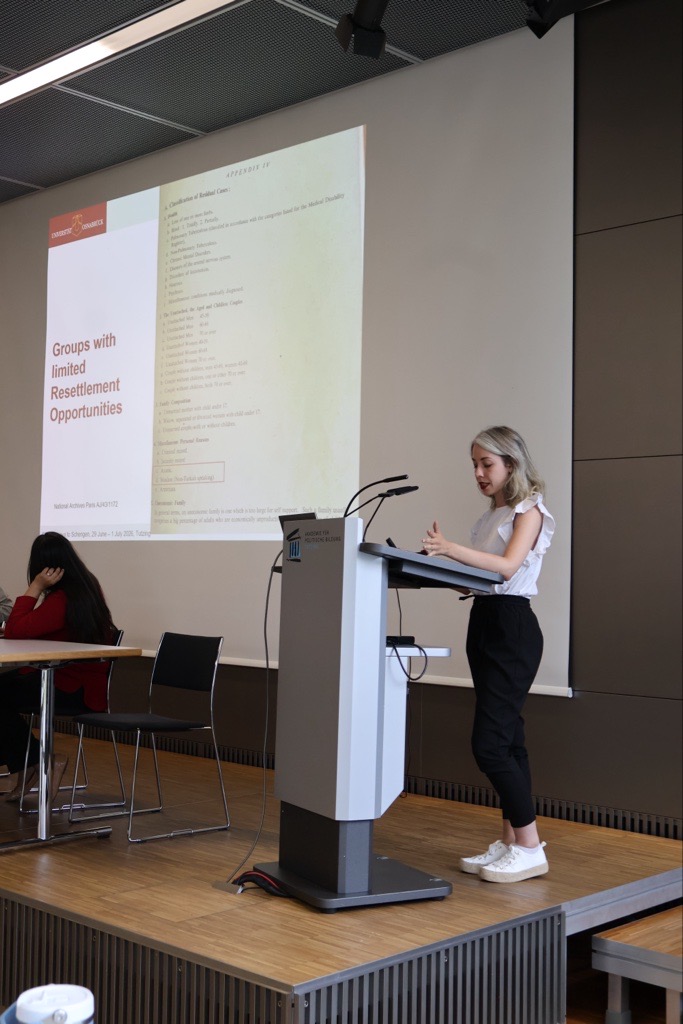
presentation (Photo: Marcel Berlinghoff)
Jessica Wehner addressed current findings from her doctoral project “Norms, Practices and Marginality. Negotiations at the Margins of Displacement Management in the International Refugee Organization (1946–1952).” Central to this is the significance of whiteness in various negotiation processes within the post-war migration regime, in which forced migrants were to be categorized through the assignment of status. Drawing on examples of individuals read as “Muslim” or “Asian” within the broader category of “Displaced Persons,” Wehner discussed the challenges these groups faced in negotiating DP status and resettlement options, and how the outcomes of these negotiations opened or foreclosed opportunities for mobility. The paper engaged with questions of racialized attribution and the associated (un)desirability of persons read as non-Western.
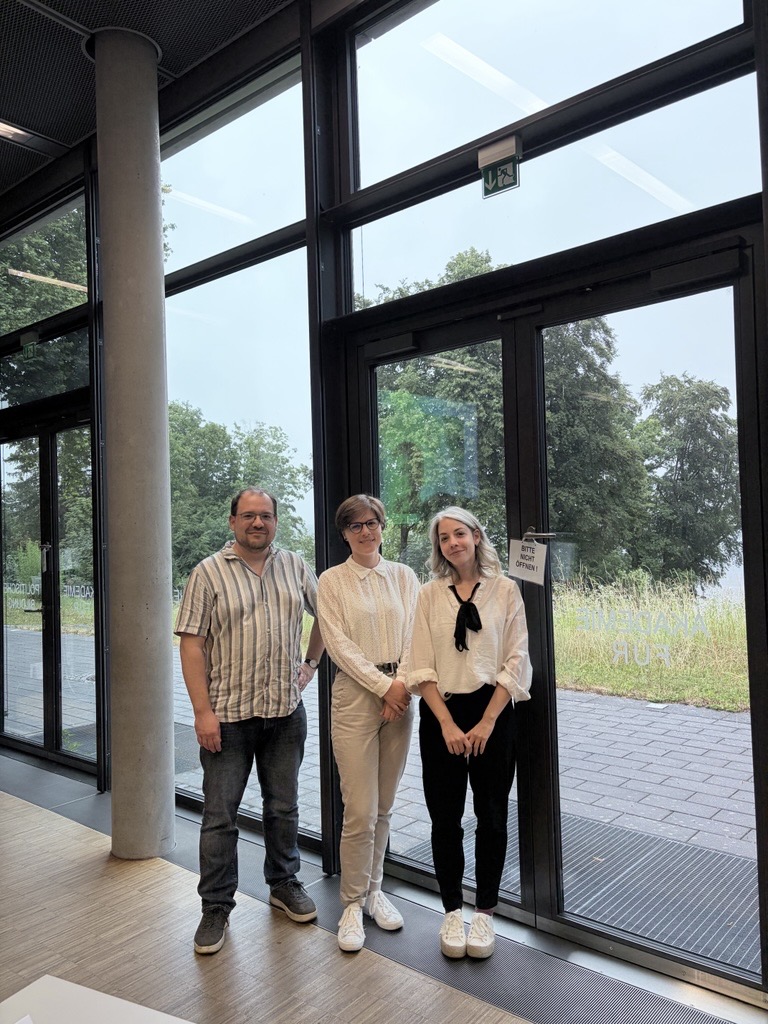
and Jessica Wehner (Photo: Akademie Tutzing)
A number of colleagues and friends from Team NGHM were also in attendance. Another familiar face from the Collaborative Research Centre 1604 “Production of Migration” was Isabella Löhr, PI in project A5 “‘Refugees’ and Others: The Production of Flight-Related Figures since the 1970s”, with her paper “Being a Refugee in Post-War Germany: The Internationalisation and Political Belonging of a Contested Figure.” IMIS colleague Marcel Berlinghoff presented on “Humanitarian Admission and Political Constraints: The Ambivalent Resettlement of Vietnamese Boat Refugees in Europe.” There were also reunions with, among others, Matti Välimäki, who had been a visiting scholar at IMIS earlier in the year, and Philipp Strobl, with whom NGHM has collaborated closely over recent years in the field of DP research.
Find the original post at Team NGHM in Tutzing | Conference “From Geneva to Schengen” on nghm.hypotheses.org.
This post was automatically translated from the German original.