


























NGHM-Tracker (7/26)
The monthly newsletter of the Working Group on Contemporary History and Historical Migration Research at the University of Osnabrück. By Eduard Usov & Jessica Wehner. June brought a remarkable thematic density: displacement, memory, and the question…

›Production Site‹ | The First Episodes of the SFB 1604 Podcast Are Online
Czarina Wilpert, Gerhard Kromschröder, and the question of who studies migration, who describes it, and who is heard. The first episodes of ›Production Site‹ are online, and with them, the podcast of the Collaborative Research Center 1604 ›Production of…
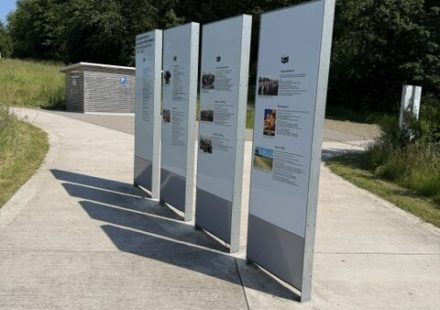
Production of ‘Volksgemeinschaft’. Notes on a Conference in Hameln
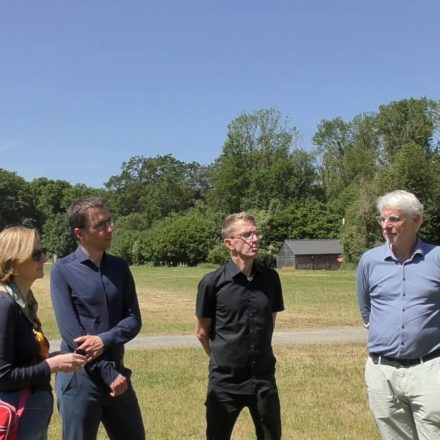
The conference From 18 to 20 June 2026, the Dokumentations- und Lernort Bückeberg invited participants to Hameln, to the premises of the Zedita, in cooperation with the Stiftung niedersächsische Gedenkstätten and the Institut für Didaktik der…
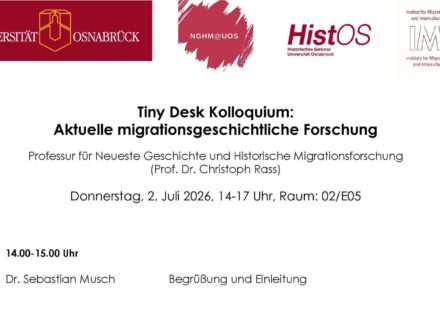
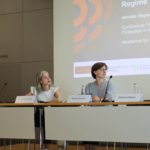
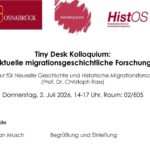
Announcement: Tiny Desk Colloquium on 2 July 2026: Current Research in the History of Migration
On 2 July 2026, the sixth edition of the NGHM Tiny Desk Colloquium will take place. Once again, young historians from the University of Osnabrück will have the opportunity to present outstanding theses, and our guests will have the chance to present and…
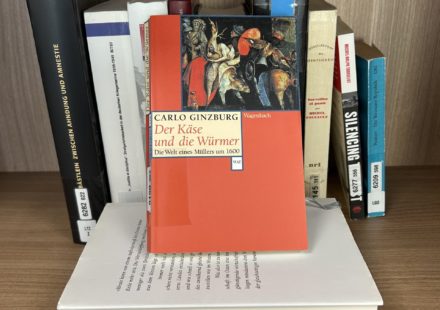
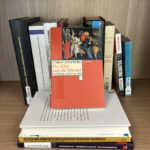
NGHM reads | Carlo Ginzburg: The Cheese and the Worms (1976)
What can we learn from the words of a Friulian miller about the world of the late sixteenth century, and why from his words in particular? Carlo Ginzburg's The Cheese and the Worms, the next title on the NGHM reading list, is one of the classic texts of…

NGHM reads | Michel-Rolph Trouillot: Silencing the Past (1995)
What happens to a revolution that the dominant thinking of its time considered 'unthinkable'? Michel-Rolph Trouillot's Silencing the Past. Power and the Production of History, the eighth title on the NGHM reading list and this time assigned to the field…
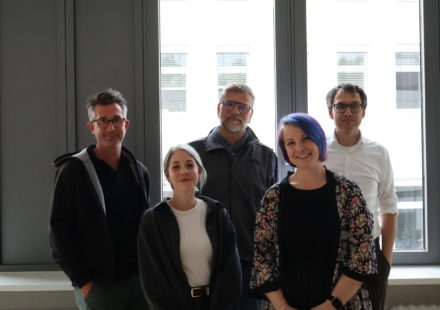
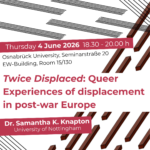
›Twice Displaced‹: Queer ›Displacement‹ in Post-War Europe, Lecture of 4 June
4th Alfred Landecker Lecture with Samantha K. Knapton (University of Nottingham) When Pierre Seel, having returned to Alsace in 1945 after the camp and the Wehrmacht, wrote decades later about his liberation, he articulated a sobering finding: the true…

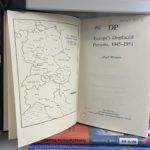
NGHM reads | Mark Wyman: DPs: Europe’s Displaced Persons, 1945–51 (1989/1998)
What happens to millions of people whose suffering under persecution and violence-induced mobility does not end with the conclusion of the war in 1945, but instead enters its own distinct, difficult-to-grasp next phase? Mark Wyman's DPs: Europe's…
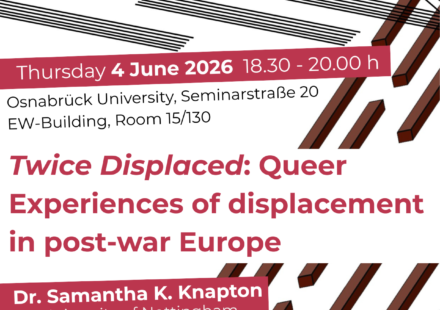
Invitation: Lecture by Dr Samantha Knapton on Queer Experiences of Displacement, 4 June
On June 4 (6:30 pm), the Working Group on Modern History and Historical Migration Studies warmly invites you to a public evening lecture at 15/130. Samantha Knapton from the University of Nottingham will deliver a lecture in English titled "Twice…

NGHM-Tracker (6/26)
The monthly newsletter of the Working Group on Contemporary History and Historical Migration Research at the University of Osnabrück. By Eduard Usov & Jessica Wehner. May was marked by a remarkable diversity of activities, ranging from archival…

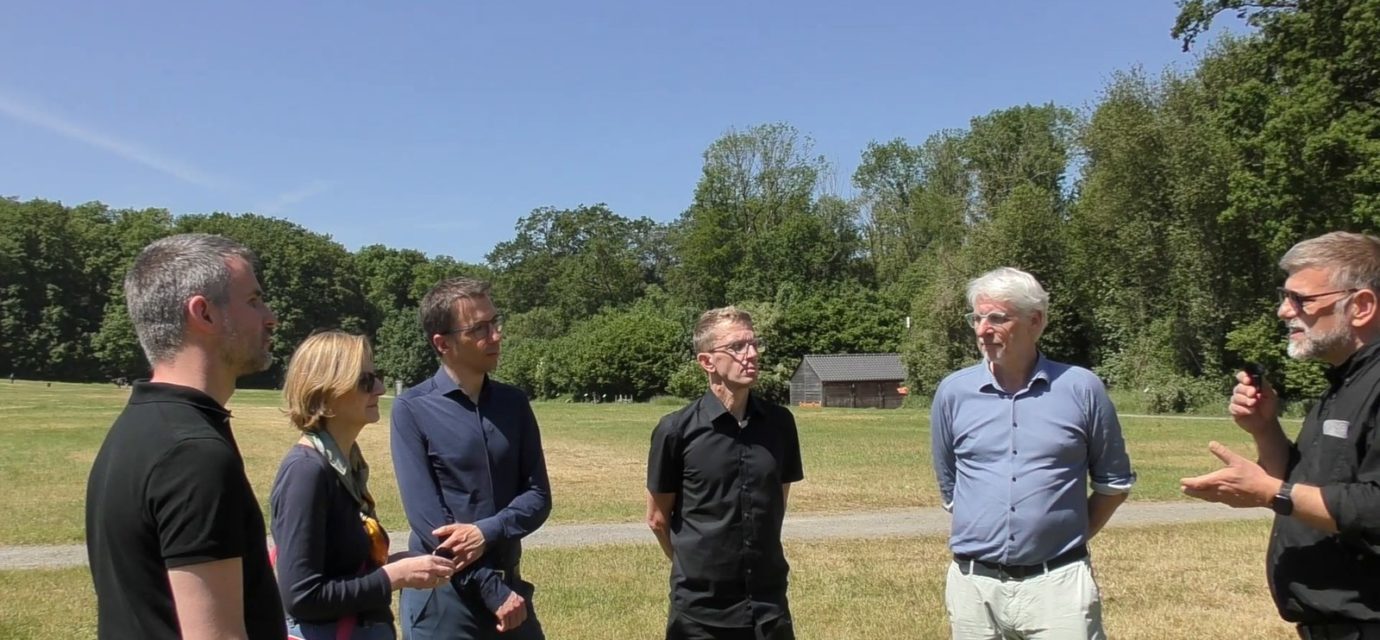
Research Revisited | Twelve Years of the Interdisciplinary Working Group Conflict Landscapes at the University of Osnabrück
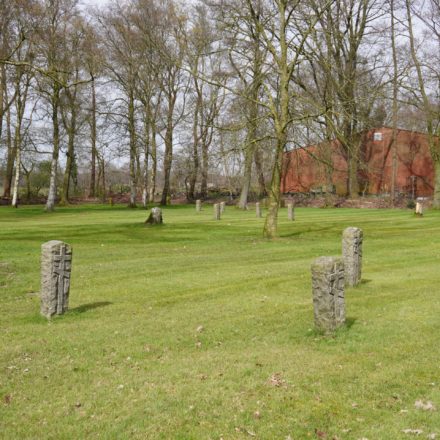
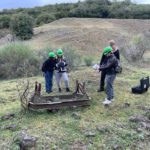
Conflict Landscapes in Osnabrück: An Interim Assessment after Twelve Years In spring 2026, the project "The 'Emsland Camps' as a Conflict Landscape in Transformation. Research-Based Learning at the Interface of University Teacher Education, Memorial…

NGHM reads | Michel Foucault: Surveiller et punir (1975)
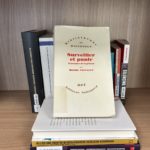
How did the spectacle of torture become the silent routine of the cell? Michel Foucault's Surveiller et punir, the fifth title on the NGHM reading list and an example from the field of social-theoretical foundations, answers this question with a…

NGHM reads | Barbara W. Tuchman: The Guns of August (1962)
Can a history book prevent a nuclear war? Barbara W. Tuchman's The Guns of August, the fourth title on the NGHM reading list, chosen from the field of women historians and narrative historiography, recounts the first thirty days of the First World War as…

NGHM-Tracker (5/26)
The monthly newsletter of the Working Group on Contemporary History and Historical Migration Research at the University of Osnabrück. By Benjamin Look & Jessica Wehner. April brought a remarkable density of impulses, ranging from Florence to…

NGHM reads | Klaus J. Bade: Europa in Bewegung (2000)
Is migration the exception or the rule of European history? Klaus J. Bade's Europa in Bewegung, the third title on the NGHM reading list, comes from the field of migration history and theory and answers this question with a comprehensive synthesis that…

NGHM reads | Christopher R. Browning: Ordinary Men (1992)
Who were the perpetrators of the Holocaust? Christopher R. Browning's Ordinary Men, the second title on the NGHM reading list, this time selected from the field of National Socialist history and Holocaust research, offers an answer that…

Hidden Legacies, Untidy Endings. Notes from the InechO Conference in Florence.
What happens to an international organization after it has ceased to exist? On 23 and 24 April 2026, the Alcide De Gasperi Research Centre at the European University Institute in Florence convened a conference of the InechO project (International…

NGHM reads | Edward Hallett Carr: What is History? (1961)
With Edward Hallett Carr's What is History? our series "NGHM reads" begins, in which the 65 titles of the NGHM reading list from the field of historical theory and historiography are presented. Carr's six lectures, delivered in Cambridge in 1961 and…